A leaked video has revealed that Microsoft has explored building a dedicated AI OS powered by Microsoft Edge and a new lightweight Windows codebase called Win3. This exploration was codenamed Aion, and was built around web tech, placing Copilot at the heart of the experience.
The 3 minute video, which my sources say is real, was first leaked on Discord server BetaWiki and provides a handy walkthrough of what looks to be real (but early) working code, showcasing a new desktop UI that features a similar Taskbar along the bottom, Start menu-like interface powered by Copilot, and more.
"Aion is an example of a web-based agent OS that natively builds Copilot into the core of the shell," says the video's narrator. The entire experience is built around Copilot and a multi-modal input box, which is where users go find files, open apps, and browse the web.
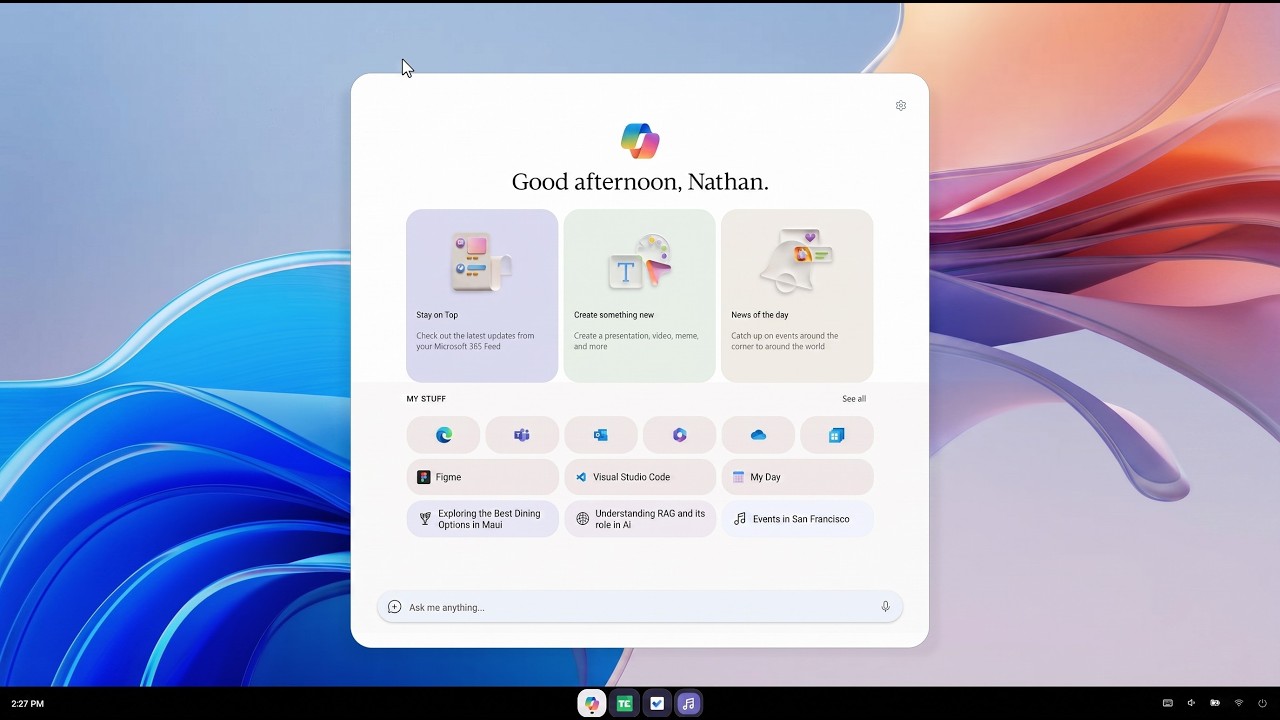
The Taskbar includes a unique feature called "Spaces" that automatically groups your apps and sites into a bucket on the Taskbar that you can quickly return to at a later point. These spaces appear in the Start menu too, providing a one-click method of opening multiple things at once.
The video explains that Aion is built around the web, meaning it doesn't run native Windows apps. It only runs web apps and websites, leaning on Windows 365 to remote into a Cloud PC and stream desktop apps if the user needs access to one.
The video does mention that there's a version of Aion that also runs on top of Windows 11, which would presumably support running Windows apps natively. But the version in the video appears to be based on the Win3 version, which sources tell me is a stripped back version of the Windows codebase that does not include support for legacy Win32 apps in exchange for faster updates, longer battery life, and better security.

My sources also say this video is quite old, recorded sometime in 2024, and it's unclear if this was just a Hackathon project or something more. I understand that Aion was experimental in nature, designed to explore what a desktop UX is capable of if built from scratch around an agentic AI. That means it's unclear if Aion is something that Microsoft ever intends to ship.
With that said, it would be surprising if some of the lessons Microsoft has learned from the Aion project aren't already shaping the version of Windows shipping today. While I don't expect Aion to ship as depicted in the video above, agentic OS capabilities are already finding their way into Windows 11.
Microsoft has also recently announced Project Solara, an agentic OS experience that utilizes just-in-time UI to generate experiences as the user asks for it. It runs on both AOSP and Windows, similar to Aion. Perhaps Aion evolved into Solara?
Either way, this is a fascinating look at what what at least one team thought the future of desktop computing could be like with Copilot at the heart of the experience. Given the sheer backlash around Copilot in the last year or two, I wouldn't be surprised if Microsoft is already rethinking much of this.
Windows Central reached out to Microsoft for comment, but the company declined to provide one.

Join us on Reddit at r/WindowsCentral to share your insights and discuss our latest news, reviews, and more.