


"Tough decisions" are ahead, said Xbox CEO Asha Sharma.
This week, Xbox CEO Asha Sharma outlined stark warnings about the health of Xbox's business, noting a 3% accountability margin delivery, in a drop year-over-year.
How did we manage to get to this point? A string of misses, a massive memory crisis, and a circle of incongruous subsidies have made Xbox's business model buckle under its own weight. Here's what I've learned over the past couple of days.
A sprint of big misses and disruption at Xbox Games Studios

One major aspect of Xbox's margin crisis revolves around Xbox Game Studios, I'm told, where a variety of high-profile misses and difficult integrations have seen other parts of the business subsidize the losses.
Microsoft has had some major wins with some of its titles, of course. I'm told Age of Empires, Flight Simulator, and of course, Forza Horizon have all been major success stories for Xbox Games Studios, as well as things like Sea of Thieves, Oblivion Remastered, and Grounded. However, much of the profitability for these projects was cannibalized, at least in part, by some of the misses.
Games like Avowed, Keeper, Kiln, South of Midnight, Hellblade 2, Forza Motorsport (not Horizon), and The Outer Worlds 2 didn't come within range of expectations set by Microsoft's spreadsheets, I'm told — either in terms of raw sales on external platforms or via Xbox Game Pass engagement and retention data. Other canceled projects like Perfect Dark, Everwild, and ZeniMax's "Blackbird" also represented huge amounts of investment that ultimately went nowhere. Inertia at The Initiative, in particular, was a huge drag on Xbox's profitability margins, and disruption at Undead Labs was also notable following the departure of founder Jeff Strain — although the latter is on track now, and State of Decay 3 is looking incredibly promising.

Indeed, Fable too has been an incredibly tough project to put together, given that ForzaTech had to effectively be built around a genre it wasn't designed for. In the early days, there was much debate about simply building Fable on Unreal Engine owing to mature tools, in-house expertise, and support studios, but ForzaTech won out. It could end up being a good thing in the longer term, as I'm told Xbox is increasingly looking at leveraging its in-house engines over external vendors to reduce costs. But at least for now, ForzaTech extended Fable's development out further than it otherwise might've.
Microsoft has also canceled a run of third-party projects at various degrees of lost investment, including a shooter from John Romero and a very costly vehicular service game project from Avalanche, which you might remember as Contraband. Many other projects within Xbox Games Studios and via third-party publishing also didn't meet Microsoft's expectations, including the likes of Minecraft Legends, Ninja Gaiden 4, Minecraft Earth, Bleeding Edge, Towerborne, and others.
Xbox's CSO Matthew Ball signalled an intent to double down on fewer, tentpole franchises moving forward. Microsoft has been investing in Blizzard to boost production on franchises like Overwatch, Diablo, Warcraft, and soon, StarCraft as well, for example. Microsoft has been frustrated by the lack of a new Fallout game to capitalize on the TV show's runaway success, for example. There's also Halo, which I'm sure nobody will argue has been maddeningly mismanaged in recent years.
Where all of this leaves some of Microsoft's "AA" productions remains to be seen. There seems to be less room than ever in the industry for games that aren't laser-focused on grabbing attention in what is arguably the most competitive entertainment medium on Earth right now.
Spreading the subsidies and the memory drought

Microsoft and other companies love subscription model services because it gives you a steady stream of predictable income among the "hits and misses" of regular game development. Microsoft hasn't been shy to admit that its $30 price hike last year absolutely battered the business model. When you consider that Xbox Game Pass has been subsidizing departments that haven't been able to deliver fully yet, you can imagine what kind of damage that did on top of everything else.
Indeed, the notorious "30% accountability margin" target I'm told was actually an average. Some parts of the business were operating up to a 40% accountability margin to offset the misses in other parts.
Putting Call of Duty into Xbox Game Pass cannibalized both sides. As players fled the $30 price tag, there was less money for Xbox Game Pass to subsidize Call of Duty's cannibalized sales for those who remained. The model broke under its own weight and had to be reset back to its lower price, wiping out a year or more of growth.
To make matters worse, Xbox struggled to secure anywhere near enough memory with fixed prices necessary to keep its hardware margins healthy. I'm told Xbox is losing not dozens, but more in the hundreds of dollars per Xbox Series X|S console sold right now, with Asha Sharma noting that wholesale memory prices have risen 700% since the Xbox Series X|S was costed out.
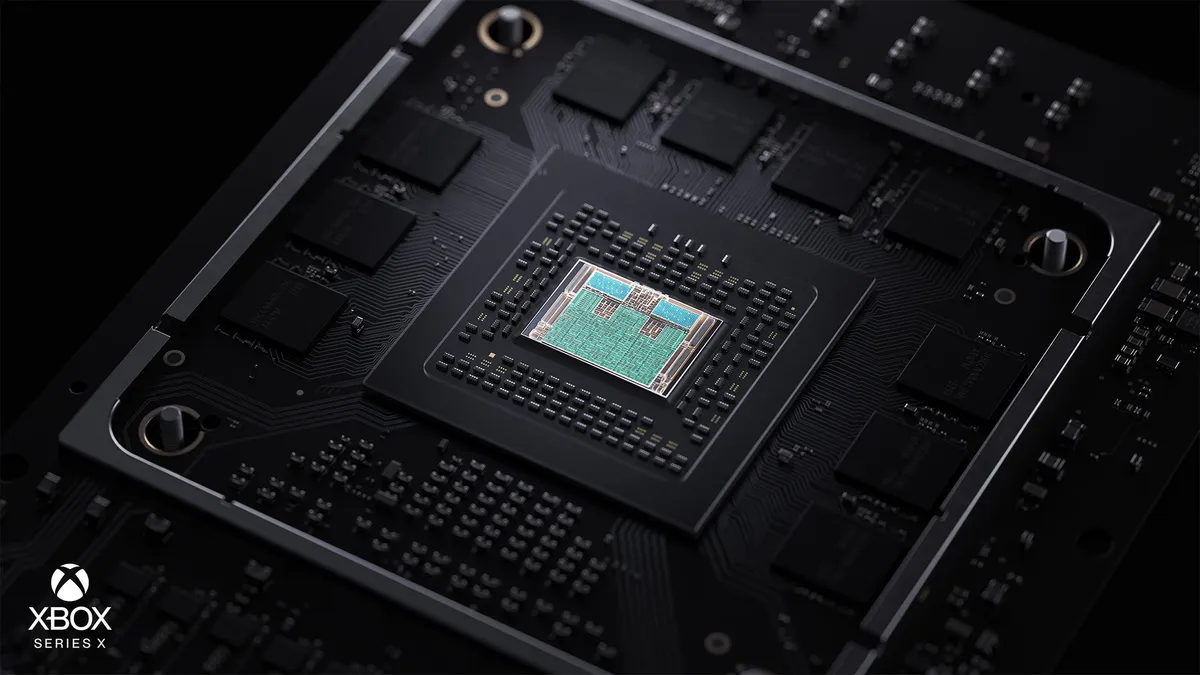
With Xbox unable to acquire hardware to sell to find new members in Xbox Game Pass, which has been the pot of money Xbox has been using to subsidize other parts of the business, once again, the model began to break down.
It was then that Microsoft was also using Activision-Blizzard profits to subsidize Xbox, but when Call of Duty had an off year ... once again, it compounded the problems for that subsidy.
Xbox Game Pass going to $30, Call of Duty having an off-year (thanks to Arc Raiders, Battlefield 6, and a generalized backlash to its weird skins), and the artificial intelligence compute gold rush on memory all coalesced for Xbox at the wrong time.
This is before you even consider the existential issue of Gen-Z and Gen-Alpha simply not caring about traditional console gaming at the replacement level the industry would like to see.
The path forward

So, where do we go from here?
Microsoft has a number of levers that it will likely explore in the future. Nintendo has already been flirting with $80 games, and I wouldn't be surprised if Microsoft gives that another go with some specific games. Microsoft will also likely look to OEMs to produce Xbox Helix-style consoles for specific markets, reducing or avoiding tariffs, supply chain problems, and shipping costs. I could see, for example, Microsoft fully licensing out the Xbox brand to ASUS to build Xbox Helix for China, Taiwan, and other local markets. They've already done as much with the Xbox Ally. Perhaps we'll see multiple SKUs of Helix, perhaps with a "bring your own NVME SSD and controller" to bring down upfront costs.
For Game Pass, Microsoft could explore pulling some of its biggest and most expensive games out of the service. Forza Horizon would likely sell huge amounts still without Xbox Game Pass. I could also see Microsoft add some kind of Xbox Game Pass Ultimate Plus model where you pay a bit more, and can pick "premium" games you want in the service, like Call of Duty, for example, or the World of Warcraft subscription. I think we'll also see a cheaper Xbox Game Pass tier, powered by ads from Bing.
Xbox CEO Asha Sharma warned that "tough decisions" were ahead for Xbox. It seems that we'll find out exactly what that means in the coming weeks.
On the other hand, I'm not sure why Microsoft would want to reduce the desirability of Xbox Game Pass Ultimate, given how much it has been subsidizing other parts of the business and given its reliability as an income stream. But like Call of Duty, perhaps they'll just spreadsheet out the idea that some titles would end up making them more if they were separated out.
I think what we'll also sadly see is some Xbox studios either spun off as indie, as was the case with Toys for Bob, or placed under the reins of another publisher, like Tango. I sorely hope not, but many in the industry and inside Xbox are expecting studio closures too from within Xbox Games Studios, and potentially the cancellation of some third-party projects that haven't even been revealed yet.
Xbox CEO Asha Sharma warned that "tough decisions" were ahead for Xbox. It seems that we'll find out exactly what that means in the coming weeks (or even days).

Join us on Reddit at r/WindowsCentral to share your insights and discuss our latest news, reviews, and more.

