


For Xbox, the changes have been coming in thick and fast.
Under new Xbox CEO Asha Sharma, Microsoft's gaming division has already made a flurry of pro-consumer changes to the platform. From the return of feature updates for Xbox Series X|S, the revival of Xbox FanFest shows, to the reversion of the wildly unpopular 50% Xbox Game Pass Ultimate price hike of last year. Sharma has the Xbox community energized in a way that I haven't seen in at least a couple of years.
Yesterday, Asha Sharma and content lead Matt Booty published a blog post on Xbox Wire detailing the division's new mission statement. "Microsoft Gaming" is dead; we're now returning to Xbox, and Asha and the team spoke on re-evaluating various aspects of its business.
Microsoft has done some deep damage to Xbox with its decision-making in recent years. A disastrous 30% margin demand from Microsoft corporate effectively had Xbox running on austerity measures, at a time when competition is more aggressive than ever. I understand that margin pressure has now been lifted, and Microsoft has (at least for now) indirectly admitted that its profit goals were ridiculous and unprecedented, frankly.
This gives Asha Sharma a decent amount of breathing space to improve Xbox and prepare it for the next phase of its life cycle, whatever that may look like. It's with that in mind that I present this: a list of the biggest issues I think Xbox is facing today, both from my own perspective and inspired by community sentiments I read every day across social media and in my DMs. Xbox has already identified most of the issues quite adeptly, but there's a lot of context that I feel should be out there.
For sure, Asha Sharma and the team have made all the right moves so far, but difficult decisions will lie ahead. She might just have the most difficult job in all of gaming right now.
Xbox marketing (and lack thereof)

One of Asha Sharma's recent moves was to kill the anti-Xbox "This is an Xbox" marketing campaign, which paradoxically suggested that users shouldn't buy Xbox products. Instead, it advertised competitors' platforms and systems, including Google's Android of all things, to the detriment of Xbox hardware.
It's probably no shock that Xbox hardware has been in free-fall decline over the past couple of years. It's not entirely attributable to this marketing cycle, but for me, it certainly doesn't help that Xbox hardware marketing is practically non-existent.
RELATED: Xbox needs to stop apologizing for its existence
Perhaps there's not much point in marketing Xbox Series X|S at this point, but with Grand Theft Auto 6 on the horizon, it's insane to me that Microsoft hasn't made more of an effort. This is going to be a major, landmark, console-exclusive game (at least for a time), and Microsoft's hardware marketing presence capitulation is going to quite effectively hand over an entire generation of younger gamers to PlayStation.
For a very basic example: Microsoft owns Call of Duty; it owns Minecraft. It makes zero effort whatsoever to tie these absolutely massive brands to its console hardware. This needs to change immediately for the brand's visibility, in my view.
Xbox PC presence and discoverability

Microsoft identified Xbox's PC presence as a major pain point, and a pain point it indeed remains. The Xbox PC app has improved by leaps and bounds over the past couple of years, but sadly, it's still nowhere near where myself and many others would like it to be. It's still at times disgustingly slow and unresponsive, especially on gaming handhelds like the Xbox Ally. And navigability and discoverability are relatively poor through it, too, compared to Steam.
I don't think the Xbox PC app does a good enough job at showcasing games at a glance, either. The console-like tiled interface doesn't do enough to leverage mouse navigation or desktop use, where platforms like Steam, for example, make finding new games and content very easy with mouse-over glanceable information, superior community tools and curation, and perhaps more crucially, solid performance.
The Xbox PC app may need some kind of overhaul to get to where it needs to be, throwing out the sluggish codebase they have now for something more responsive. I'm not sure what the answers are here, but if the next-gen Xbox Helix is indeed a full-blown Windows PC, as I expect, the Xbox PC app as it is today cannot be the standard interface. It's still not good enough.
Furthermore, organic developer support is also not good enough. It can't be the case that Xbox PC users are consistently second-class citizens in this ecosystem. Whether it's on sales (often Microsoft's own games are on sale on Steam but not on Xbox PC), content and developer support, or general performance — a lot of work needs to be done here.
Developer back end systems
Perhaps Microsoft could win some more organic developer support if the back-end systems were more robust.
One thing that really, really bugs me about being an Xbox-first "game journalist" is the fact that developers often skip out on Xbox review codes. I'm told part of this revolves around difficulties generating codes vs. Steam or PlayStation. If you ever wonder why there are so few reviews for Xbox versions of games on Metacritic vs. other platforms, the ease of access to codes is at least part of it.
I'm no developer, but I'm told through various conversations that Xbox's developer environment is a weird mishmash of old systems and overlapping processes. Developers tell me that Xbox certification is among the most aggressive and slow, making shipping games more difficult in the Xbox ecosystem. Developers also can't set up and manage their own sales easily on the store, and even big publishers struggle to set up Xbox Play Anywhere entitlements and things like that, owing to their complexities.
Microsoft has already been doing some great work in this area, but I suspect Asha Sharma's dev tooling and platform background will help here. This is in addition to reduced margin pressure, allowing Asha and the team to more deeply invest.
The AI angle, and keeping Microsoft "happy"

At a recent event, Microsoft CEO Satya Nadella described how he's all-in with Xbox gaming for the long haul, donning an Xbox hoodie in the process. But you have to wonder to what extent in reality.
Microsoft is a company dominated by its share price and shareholders, much like any other publicly traded entity. The current hotness in tech is AI and adjacent computing paradigms. Microsoft was an early investor in OpenAI, but its own consumer-grade AI projects haven't really seen much, if any, real traction with the public.
Copilot has found its way into government ops and big corporations, but the gaming audience, especially, generally seems to hate AI anything these days. Even if the monthly active users for the tech are in the billions.
Asha Sharma has an AI tools background within Microsoft. There's doubtless some sort of "AI play" for Xbox in amongst all of this down the road, whether it's AI super resolution upscaling tech or something we have yet to even conceive. Sharma is nailing the basics right now. But Microsoft has this uncanny knack of stepping on rakes. Will there be a point when Microsoft's c-suite shows up to ask how Xbox plans to somehow contribute to its "AI" vertices?
Customer support (and lack thereof)
I remember back in the Windows Phone days when Microsoft had a retail store presence and a pretty, actually great customer service layer. When I had issues with my old Surface Book 1 or Surface Pro 3, Microsoft support was pretty adept at getting them solved promptly. You could talk to humans fairly easily via chat interfacing, too.
These days, you're lucky if you get to talk to a human at all. The same is true across Microsoft's service game-oriented subsidiaries as well, including Blizzard and Bethesda.
This isn't necessarily an Xbox-specific issue, since Microsoft joined practically every big company on earth in outsourcing and hamstringing its customer support operations. Its retail stores have all been closed, save for a couple of flagships, and human-led customer support is skeletal and underfunded. If you have an issue with your Microsoft Account, a Kafkaesque maze of AI robots and canned responses awaits you.
At least weekly, often twice weekly, I receive DMs from people who have been banned from Xbox Live and Microsoft's entire ecosystem by extension. Many tell me stories of how Microsoft's support acknowledges that a hack or breach has taken place, but offers no help or support in regaining access to accounts. For many, this often represents thousands of dollars in digital games or decades worth of lost digital photos and documents in OneDrive.
I'm actually planning a larger article on this point, but Xbox, and honestly, Microsoft all up, could do with some serious investment in this area.
A global Xbox
Another point of contention pertains to how Xbox shows up in non-English regions.
Microsoft is a U.S. company at the end of the day, but its Anglo-centricism has been an issue across its entire stack for a long time. Microsoft products and services are staples in the U.S., UK, Canada, Australia, and so on, but even just finding an Xbox at a retail store in Germany has always left me confused.
Microsoft has painfully underinvested in Europe, Asia, and other major markets across Xbox's entire life span. There have been efforts to change that, but none of it goes anywhere near far enough.
Finding stock of Xbox Series X|S hardware outside of the U.S. and UK has often been a point of contention. Social media presence and supply for the Middle East, Latin America regions, South and East Asia, and other major markets have been anemic. We all know about Xbox's battles in Japan, too.
If Xbox is going to be world-class and compete with the best of them, more effort should also be focused on regions where Xbox can potentially win support. Xbox FanFest going global is a great start, mind.
Xbox hardware and ecosystem desirability
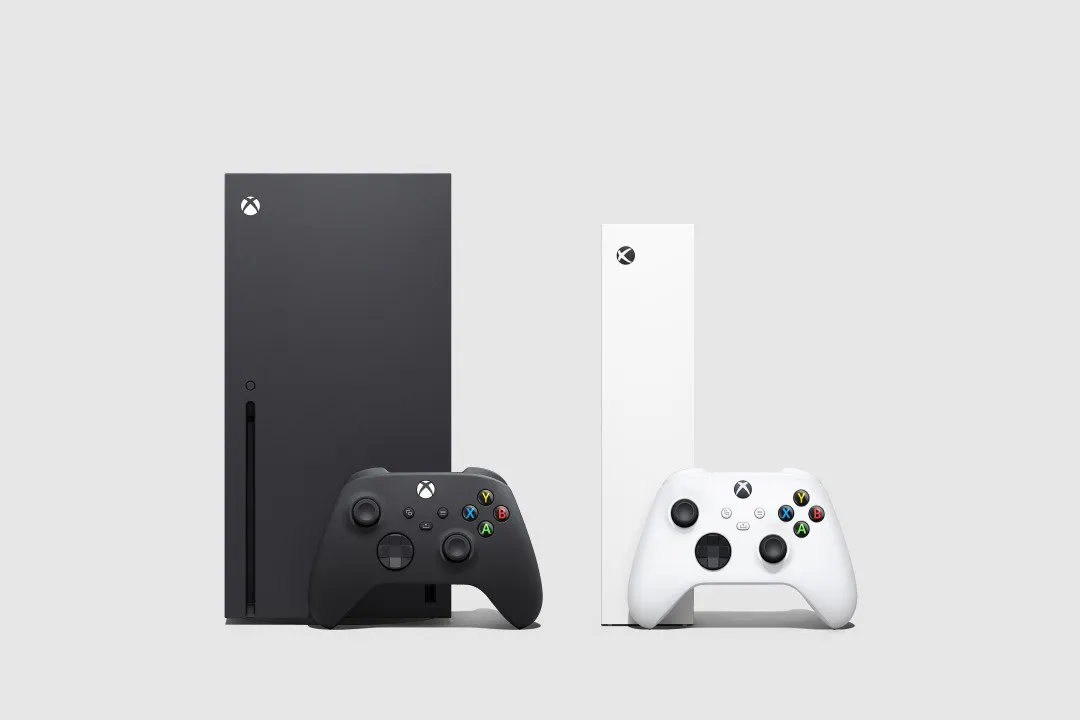
The Xbox Series X|S roared out of the gate when it launched in 2020, and even managed to beat PlayStation in certain months in the U.S. when supplies were constrained, but those times are over.
Over the past few years, Xbox has posted near free-fall declines in its console hardware ecosystem. Xbox isn't exactly suffering in a vacuum, though, as other companies have also seen declines in interest. Youngsters simply aren't coming into the ecosystem at the same cadence they once were, with new users effectively stagnant for the segment. Roblox and other cheap forms of entertainment, such as TikTok scrolling, have eaten into interest in video game consoles. But even among enthusiasts, Xbox hasn't exactly been showing up as well as it could be.
There's been little to no marketing of Xbox Series X|S consoles. Microsoft has also joined other consumer electronics companies in struggles to keep costs down, owing to tariffs and other supply chain issues emanating from the United States' current administration. But that hasn't stopped PlayStation and Nintendo from quite adeptly outselling Xbox in the United States, which should be its home turf.
I'm not sure exactly how I would solve it. There's a big desirability gap between Xbox and its competitors. For many, though, it starts with exclusive games.
The Xbox exclusive games issue

Last year, Microsoft effectively ripped the soul out of Xbox by announcing its most iconic home-grown character, Master Chief, would appear on competitor platform PlayStation for the first time.
We all knew it was coming, but it was an inflection point for the Xbox community, and represented, wholesale, Xbox's decline as an ecosystem, a community, and a brand.
There's not a ton of real evidence that exclusive games would help Xbox hardware to sell. But if not exclusive games, then what?
I can't help but feel like if Xbox had stayed the course, and spent at least 5 years advertising high-quality, exclusive content, it would have had a net positive impact on Xbox's competitiveness against other gaming platforms.
Assuming the games are actually good, Xbox had a real opportunity here to show up strong in 2026. Halo Campaign Evolved, Fable, Forza Horizon 6, and Gears E-Day could've and should've been an opportunity to showcase what Xbox is willing to do for users who show up in their hardware ecosystem. Marketing against Call of Duty, a big 2026 Showcase, 25th anniversary celebrations, and co-branding with Blizzard at BlizzCon. Advertising the Xbox Series S as the "most affordable" way to play GTA 6.
Xbox could've done a lot with content recently, but instead, it spent the last couple of years helping PlayStation and other platforms make more money instead. Fallout 5 and Elder Scrolls 6 being exclusive to Xbox absolutely, surely, would sell consoles. Right? Well, maybe not.
I don't have all the data Microsoft does, and maybe it wouldn't work. But it's still the hottest topic being discussed among Xbox fans right now. And it's something that Asha Sharma and the team at Xbox will struggle to keep ignoring long-term. Sharma says she's "re-evaluating" Xbox's approach to exclusive content, but whatever form that takes has clear pros and cons for the business.
I think ultimately Microsoft needs to compete harder for the types of players that exist today, given that youngsters are patently disinterested in the medium for whatever reason. At the very least, compelling exclusives could convince people to pick up an Xbox as a companion device, and then world-class features and services might gradually win them over into regular users on top.
But for those users, Microsoft needs to answer this: Why buy an Xbox if PlayStation offers the same content, in addition to Sony's exclusive games?
That's the biggest and most simple question Asha Sharma and Xbox need to answer for me, and most likely the wider market.

Join us on Reddit at r/WindowsCentral to share your insights and discuss our latest news, reviews, and more.

