Microsoft's former Windows head, Steven Sinofsky, has been revealed to have shared confidential email chains and sought career and PR advice from Jeffrey Epstein over a decade ago. The latest batch of Epstein files released last week reveals that Sinofsky was taking advice from Epstein on how to negotiate his retirement package after the debacle that was Windows 8.
The files (via Bloomberg) also reveal that Sinofsky shared with Epstein a confidential email exchange between himself, then CEO Steve Ballmer, and then COO Kevin Turner from November 2012 that reveals the moment it became clear that Surface RT was not going to be the success story that Microsoft believed it would be.
"MS wrote off 900M on inventory...this is a mail thread from November saying this will happen" Sinofsky says in an email to Epstein.
What follows is a fascinating look at how Microsoft leaders navigated the realization that Surface RT had flopped.
"We're really in a very tough spot and I feel like we're on the verge of an unrecoverable situation," Sinofsky laments in an email to Ballmer. "We are going to be sitting a very large inventory very soon and there's no real potential to have sales keep up with inventory growth unless we stop manufacturing, and the implications of that are significant."
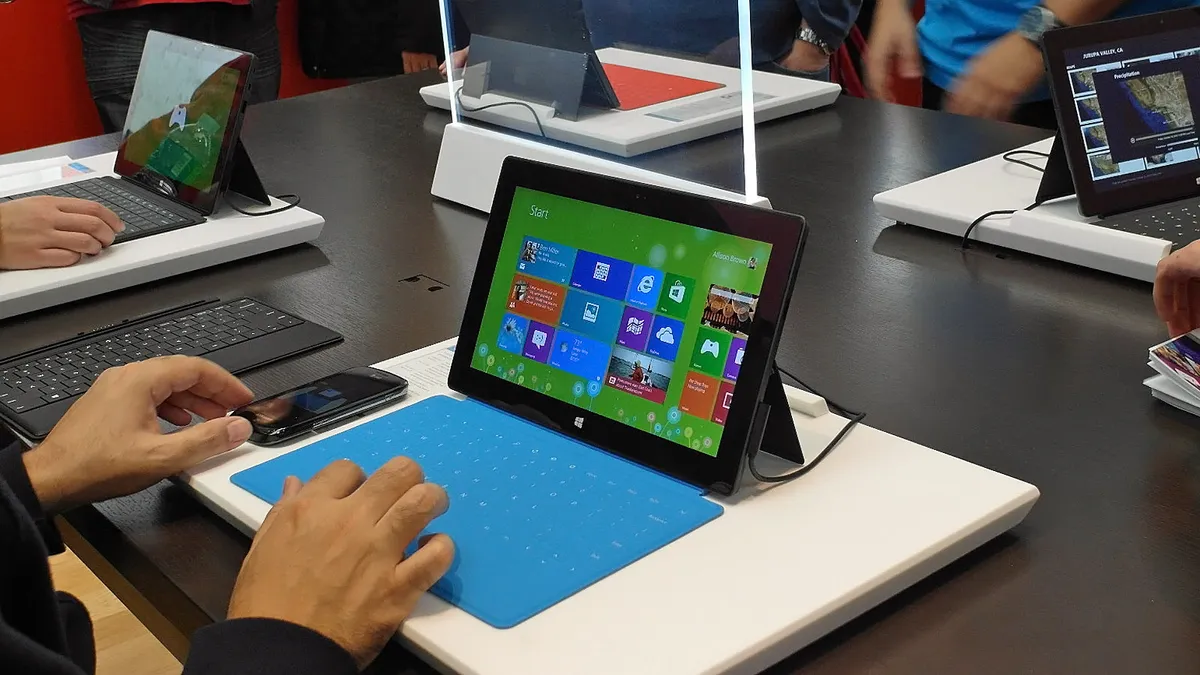
This thread reveals that Microsoft was sitting on a boatload of Surface RT inventory that it wasn't able to shift. At the time, Surface RT was only available via the Microsoft Store, and Sinofsky believed that a potential solution to improving sales was to make the device available to buy at third-party retailers.
"The solution is to broaden our retail footprint as fast as possible outside the US, and to extend our retail presence in the US ... My suggestion is to rapidly move on this starting Monday—putting people on planes to make deals. If we don't want to do this right away then we are going to need to do something about production as we will reach an inventory level that cannot be sold through in 2013."
Ballmer's response is equally fascinating. "This is a huge decision with ramifications on consumers, retailers and oem's. Our OEM's would certainly be upset, given their expectations. The timing does not allow care. I do not want to make a mistake on this."
By this point, Sinofsky appears to be in panic mode: "Surface is about to catastrophically fail in a very public way. We don't know how to explain selling 1/10th the number of devices as the lowest end of the lowest expectation. Word will get out very soon. There is no long term without this."
Kevin Turner's input is notably a lot more optimistic about the state of Surface. "Explaining our Surface performance through the Holiday is very positive, simple and straightforward in my view.... It is also the truth.... The gist of our message would be "We are new into pc/tablet hardware business. We purposefully limited our distribution to our own stores and on-line to learn about the product and how it would be received by consumers and to allow us to refine our manufacturing, supply chain and logistics in preparation to bring it to mass retail in 2013. The response from consumers has been incredible, our stores have been over-run with customers wanting to learn more about surface and the selling performance of the devices has exceeded our expectations. We are now in a position to bring this wonderful product to everyone through our retail channel partners in the first quarter of 2013 as we launch our Pro version." I think this is one of the easiest stories we have ever told."
Turner was also worried about what the ramifications from OEMs would be should Microsoft expedite retail availability. "OEM's would be incensed... Communication that we are doing this before Dec. 1 would be brutal, bloody and further damaging to our trust/relationship. There is no way to spin this as we would be taking money out of our OEM's pocket directly in this holiday selling season. We simply can't do a quality job of this communication in this time frame and it will be viewed as very insincere given the timing."

At the time, Microsoft entering the PC space was a controversial move amongst its hardware partners. Nobody was sure if Surface was going to steal market share from Dell, HP, Lenovo, and other top PC makers. Ultimately, this never happened, but in November 2012 nobody knew that would be the case, and so Microsoft needed to tread carefully.
"I just went through the math again and the cost of shutting down production is off the scale. And the ability to sell thru what we are making just can't happen if we don't act now," Sinofsky said. "There's a really big financial issue. Even opening the door now doesn't escape the sell thru math but gives us a shot."
There's much more to the email thread, including stock details and other concerns and issues that Surface was facing. It's a rare, but fascinating look into how members of Microsoft's Senior Leadership Team discussed the colossal failure that was the first Surface RT.
Microsoft famously wrote off $900 million worth of stock in 2013, but the company pushed through and turned Surface into a staple of the PC industry that continues to exist to this day.
As to why Sinofsky was sharing these emails with Epstein is a question that doesn't have an answer currently. It's clear that Sinofsky was in frequent contact with Epstein in 2012-2013, often seeking career and financial advice and communicating about the tech industry in general. Sinofsky's wife, Dr. Melanie S. Walker, was hired as Epstein's science adviser in 1992. Former Microsoft CEO Bill Gates is also known to have met with Epstein on a number of occasions.

Follow Windows Central on Google News to keep our latest news, insights, and features at the top of your feeds!