


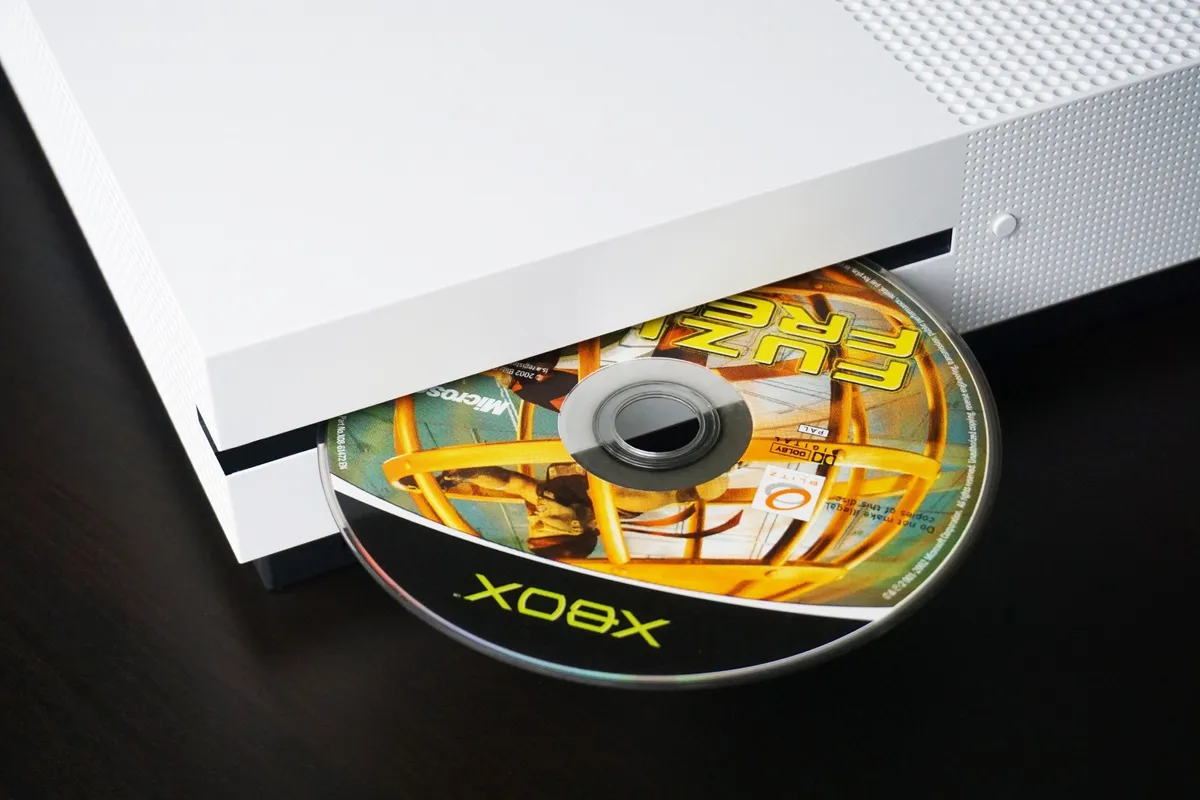
It's been a rough week for console gamers. First, Sony announced it's putting an end to physical disc production in 2028, meaning the PlayStation 6 will be strictly digital.
Over on the Xbox side of things, our sources (via Managing Editor Jez Corden) suggest that Microsoft is also leaning away from including a disc drive in its next-gen console.
Sony didn't think gamers were unhappy enough this week, and the company also confirmed that it's shutting down the PS3 and PS Vita digital storefronts as early as August 2026 in some regions. Whatever hasn't been downloaded once the stores disappear is, for all practical purposes, gone.
What's really irking me and countless other gamers is the expected blow to game preservation.
This is exactly the sort of combo knockout that the Video Game History Foundation (VGHF) has been dreading and warning gamers about for years. The VGHF's director, Frank Cifaldi, wrote a lengthy response to the news on Bluesky.
Statement from VGHF director Frank Cifaldi on the discontinuation of physical PlayStation media, and the closure of the PS3 and PSP digital storefronts.
— @gamehistoryorg.bsky.social (@gamehistoryorg.bsky.social.bsky.social) 2026-07-02T13:18:13.377Z
Cifaldi notes that "museums and archives have been preparing for this future for a while," and that console games pressed to discs have long been a poor way to preserve due mainly to day-one patches downloaded from the cloud (which might not always be available).
Cifaldi's frustration isn't exactly directed at Sony, but rather at the gaming industry as a whole, and what it expects comes next for institutions like the VGHF.
If platforms like PlayStation and Xbox are going to retire physical media and kill old storefronts, the least the games industry could do is help find a legal way to preserve old titles.

Instead, groups like the Entertainment Software Association (ESA) have "repeatedly opposed the efforts of cultural heritage institutions to reform digital copy protection laws to make it easier to do this work."
Alongside the Software Preservation Network (SPN), the VGHF has been putting in work in recent years to create some sort of DMCA exemption for historic archives and libraries.
👉 Subscription gaming is inching toward a world where players own nothing at all
In 2024, the US Copyright Office famously shot down an appeal to grant that sort of exemption, with lawyers stating that there was basically no way to have the correct safeguards around that sort of preservation effort. So what's the next step?
No one thinks game preservation is wrong; the disagreement is over who should be trusted to solve the problem, and so far, there's no clear answer.
What's left for game preservation but piracy?
I'm certainly not the only one who thinks that, in the face of blocked legal efforts, piracy is the only real way to preserve video games.
Responding to a post on Bluesky stating that "piracy is the only extant form of media preservation that exists in games right now," Cifaldi said, "This is accurate."
As the director of a historical video game preservation institution, and someone who has dedicated his entire adult life to this cause, this is accurate. We have attempted to work with the industry's trade organization to find a legal path forward, but they refuse to offer a meaningful alternative.
— @frankcifaldi.bsky.social (@frankcifaldi.bsky.social.bsky.social) 2026-07-02T13:18:13.339Z
I can see an obvious contrast here to the platform I imagine most of our Windows Central readers are already thinking about.
PC gaming has long been a digital medium, but the end of discs was more like a retirement after many years of dutiful service rather than an abrupt end as decided by industry giants.
Because of how open PC gaming has always been, it's much easier to preserve games. GOG does a great job of keeping old games alive. There are plenty of storefronts available with different and overlapping titles. Community efforts and modding revive old games all the time, and emulation is only growing.

The PC I built a few months ago can usually run the games I grew up on decades ago. Consoles, increasingly, can't promise the same thing. Nowhere close, especially with how gated everything is.
With one of the biggest perks of console gaming gone, what's left? Ease of use? Sure, but PCs are quickly catching up with Windows Xbox Mode and SteamOS. Low cost? Maybe, but next-gen consoles are going to cost a lot more than I think most people can fathom.
Would you rather see older video games disappear than see them pirated? Do you agree that when there's no legal path forward, the only answer is to break the law? Let me know in the comments section below!

Join us on Reddit at r/WindowsCentral to share your insights and discuss our latest news, reviews, and more.

