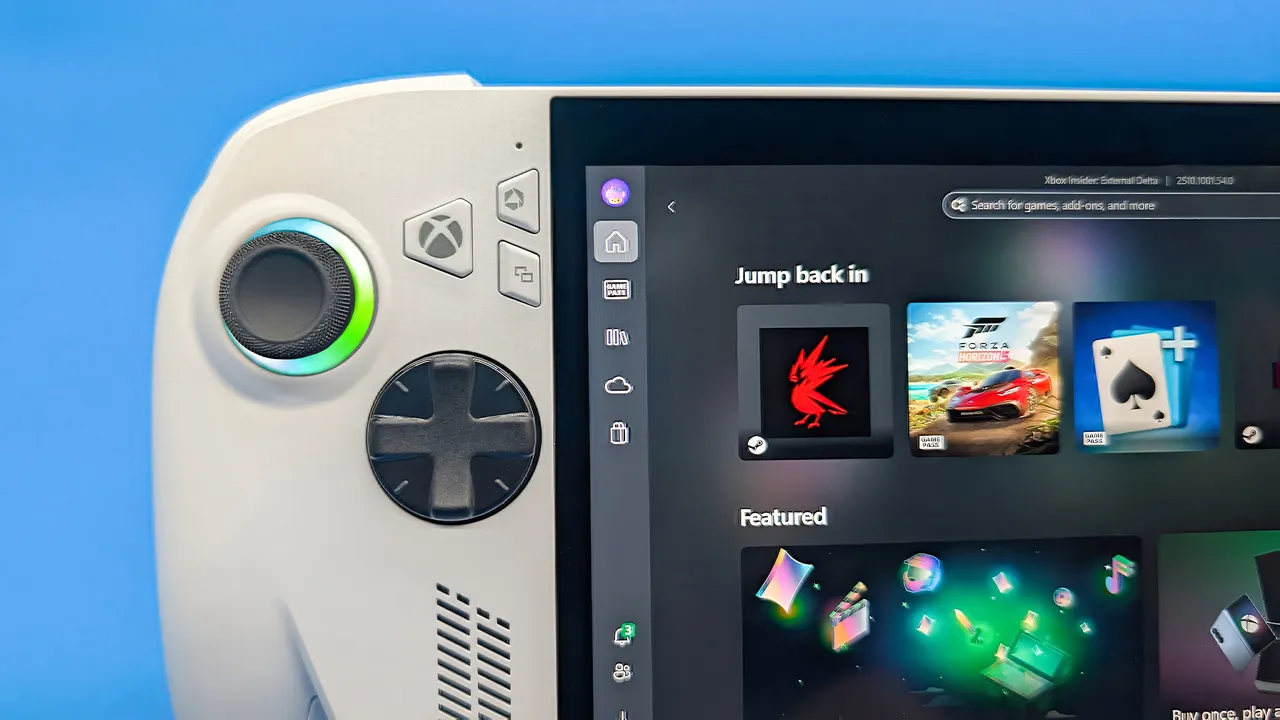
One thing I've been thinking about a fair bit recently is Microsoft's original pitch for Xbox Helix.
Former CEO Phil Spencer was teasing for years before Project Helix was revealed that it would run PC games. He talked about platforms like the Epic Games Store on Xbox Helix, for example, opening up the platform to new business models and aligning more closely with traditional PC gaming — albeit designed for the living room.
In 2026, we're in a very different universe, though. The memory crisis has made consumer tech less affordable than ever. The console market has traditionally been the "affordable, simple" alternative to PC gaming. Several price increases later, it increasingly looks less like the "affordable" option and more like the "nerfed" version of PC gaming.
As an "open" PC, Xbox Helix could end up being absurdly expensive
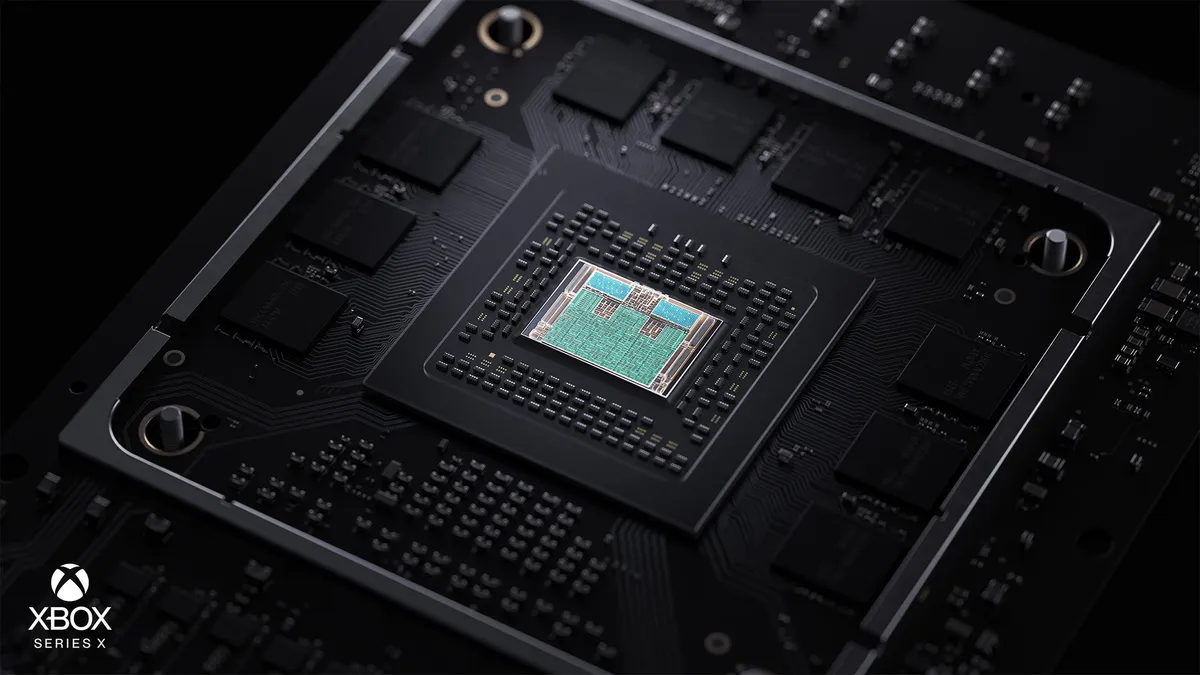
As an open device, Xbox Helix would likely be far too expensive to justify purchase for the vast majority of traditional console gamers, and parents raising the next generation of potential console gamers as well.
Users are already stretched on affordability, and gravitating towards cheaper experiences. Free-to-play titles are eating into legacy core gaming paradigms, and parents are putting their kids on Roblox and old iPads instead of considering increasingly expensive consoles. Roblox is bigger than Steam and PlayStation combined right now ... driven in large part by Gen Alpha and younger Gen Z audiences.
By making Xbox Helix an "open" device, that traditional software sales subsidy goes out of the window. Microsoft would have to price Helix as a high-end PC, profiting on the hardware, rather than the software, if it couldn't guarantee users would remain in its ecosystem. This is one reason why the Steam Machine ended up being so expensive. If you can install Windows on it and ignore Steam, why would Valve ssell the hardware at a loss? It simply isn't viable.
So ... if Xbox Helix is to come in at a reasonable console-like price point, doesn't that mean it has to be a closed box, subsidized by software sales rather than hardware profitability? These are the questions Xbox CEO Asha Sharma and Xbox CSO Matthew Ball are likely grappling with right now.
PlayStation has pulled out of PC, eliminating one potential major advantage

Under former CEO Phil Spencer, Xbox began putting their games on rival platforms, including PlayStation. This did a huge amount of brand damage to Xbox, leading customers current and potential to think that Xbox was preparing to exit its ecosystem all together.
I've written extensively on why Xbox ditching all forms of exclusive content seemed like a terrible idea, but the crux is ultimately why would you choose an Xbox when you can choose a PlayStation which will ultimately have both Xbox and PlayStation's games?
New CEO Asha Sharma is pulling Xbox games off PlayStation in the future, though, bringing Xbox in line with other major industry players again. But where does that leave Xbox Helix?
PlayStation announced internally a short while ago that it was planning to drop Steam and PC ports for its single player titles entirely. It experimented putting some PlayStation classics like God of War and The Last of Us on PC. But Sony clearly feels (rightly, in my view) that they're simply training users to ignore PS5, and maybe consoles in general.

Obviously, in a world where Xbox wasn't going to have any form of console-exclusive content, Xbox rocking up with Steam and Epic Games Store would incidentally impose the same limitation on PlayStation.
Even if Sony wasn't going to offer Xbox users its games, at least you could open up Steam and play Sony's back catalog there instead. I doubt Sony considers Xbox Helix to be a big threat to PlayStation, but the idea of an "Xbox branded" device having carte blanche access to Sony "exclusive" games probably felt at least a little uncomfortable to them.
Now PlayStation has pretty much officially jumped ship, and Xbox is also doubling down on its own exclusives, it disrupts at least one long-term major selling point of Xbox Helix's previously planned model.
But the truth is, PlayStation games on PC have hardly moved the needle. PC has reams of Windows-exclusive titles that haven't ever come to console, and in some cases likely never will. Factor in mods, big-hit indie titles, and other PC franchises that aren't even on Steam like World of Warcraft ... well, perhaps PlayStation ditching PC isn't even a big deal in the Helix model.
... But, what about money?
The memory crisis breaks the economics: open consoles would be priced like high-end PCs

The current-gen consoles are now the most expensive video game consoles in decades thanks to the RAMpocalypse. Demand for AI infrastructure has pushed prices of memory chips to historically high levels, decimating consumer electronics across the board. PC shipments are down, smartphones are getting ever more expensive, and lower-volume systems are also getting hard hit.
Nintendo Switch, PS5, and Xbox Series X|S consoles are far more expensive than they were at launch, marking a historic first. Typically prices come down over the course of a generation, but no longer.
For Xbox Helix and the PlayStation 6, this presents a huge dilemma. Next-gen consoles are usually expected to be more powerful than their predecessors, not less powerful. Price increases have historically been expected, but nobody expected, much less wanted, a $1000+ video game console.
The Steam Machine represents a scary vision of what next-gen could look like for Xbox Helix. This is a "console" that behaves like a PC, is fully open, and thus not subsidized by closed-ecosystem software sales. Because of that, it costs over $1000 for the base model, while simultaneously being less powerful than a much cheaper PS5 or Xbox Series X.

If Xbox Helix is indeed an "open" PC, Xbox would have no choice but to price it like an "open" PC. The Xbox Ally also costs $999.99 because ASUS cannot make their money back on the software sales, given that they have no real distribution platform of their own.
Thanks to the RAMpocalypse, those wafer thin margins get even trickier. I've been told Xbox is losing around $150~ per Xbox Series X|S sold recently due to memory price increases, and will continue to lose money per device even after the planned August 2026 price hike. Now imagine 50% or more of those Xbox Series X|S users bypassed the Xbox ecosystem and went straight to Steam to buy games. The margins would be even worse, without any form of software sales subsidy. Xbox wouldn't have a business at all.
Indeed, internal Xbox documents from around last winter received and verified by Windows Central offer some insights into how Microsoft's Xbox Ally gaming PC is going on that front.
Around 75% of Xbox Ally owners also own Xbox Game Pass Ultimate or PC Game Pass, which is an impressive figure. But the purchasing behavior of non-subscription holders offers a bleak picture for the Xbox PC store attach rate — an insight into how Xbox Helix could go if it were "open."
Around 75% of Xbox Ally owners also own Xbox Game Pass Ultimate or PC Game Pass, which is an impressive figure. But the purchasing behavior of non-subscription holders offers a bleak picture for the Xbox PC store attach rate — an insight into how Xbox Helix could go if it were "open."
Of non-subscribing users: If an Xbox Ally user was also an Xbox console owner, around a quarter of those users also made purchases on the Xbox PC ecosystem. However, if the Xbox Ally owner was not an Xbox console owner, that figure dropped to a measly 2%. Suggesting that almost 100% of non-Xbox owning, new Xbox Ally owners simply went straight to Steam.
If Xbox Helix simply became a defacto "Steambox" for new users, the profitability would have to come out of the upfront hardware cost, otherwise Microsoft stands to potentially lose millions on the hardware ecosystem in general. With the RAMpocalypse and user behavior data from the Xbox Ally experiment, Microsoft might be reconsidering this aspect of the box. Otherwise, it stands to just accelerate another generation of users to free-to-play games, Steam, and mobile slop.
But ... Asha Sharma has professed that Xbox Helix WILL support PC games ...?

But ... the contracts for AMD's Xbox "Magnus" PC-console hybrid chips are already in place. The silicon is already being pressed, the whole platform has been costed up and approved.
Indeed, Xbox CEO Asha Sharma reiterated fairly recently that Xbox Helix will "play your PC games." Although, Xbox CSO Matthew Ball did say that "aspects" of Xbox Helix were being re-evaluated.
In light of the constraints outlined above, how might this end up going down?
- Option 1: Some kind of paywall or subscription to open up to third-party stores?
This one seems fairly unlikely to me frankly, but I've seen some suggest that Xbox could set up some kind of paywall to trigger access to Steam and other storefronts.
If we assume that Microsoft doesn't want to make a box that is straight up unaffordable, one way it could ensure it still has a software subsidy and make the margins work on the other side is by having users pay for a "Pro" version that actually is open.
Perhaps they could do two separate versions, similar to Windows RT or "S Mode" which was locked to the Microsoft Store, and offer a premium version that is fully like a PC, but comes with PC-style price tag.
I suspect that would be difficult to market and explain, particularly given how Asha has suggested that Xbox Helix will play "your PC games," ... but they've never explicitly said Steam would be on it.
- Option 2: Semi-open, revenue sharing model with Epic Games' on PC or other strategic partners.
One thing that struck me as odd is, when Phil Spencer talked about the next-gen Xbox having other stores, he actually never did mention Steam. He mentioned things like GOG, and the Epic Game Store, but he never actually did say Steam itself would be on the box to my knowledge.
Indeed, maybe Microsoft's plan has been to work with partners directly in a more curated fashion. On the Xbox PC store for example, we see platforms with extensions plug-in to Xbox PC, such as Battle.net and Ubisoft Connect.
Perhaps it was never really about Steam, but more about giving platforms the option to work directly with Microsoft on some sort of revenue-sharing model, which would keep the hardware subsidized but give platform holders more control, and a bigger cut of the profits.
Xbox PC sales do pay out at 90% to developers, rather than the console-oriented 70%. But ... we get into hardware subsidy problems again when we talk about some of this stuff.
- Option 3: Fully open, absurd price point and all?
The third and final option ... perhaps it will simply sport a PC-style price tag. Perhaps the plan is for Xbox Series X|S to have an unnaturally long life span, and for Xbox Cloud Gaming to do some heavy lifting for those who can't afford the Unaffordable-Console-Future.
I find it hard to imagine an Xbox console with a >$1000 price tag. I'm not sure how Xbox can achieve a <$1000 price tag with a device that sports full Windows-style openness, especially when Xbox's own data shows new users go straight to Steam when given the chance.
If Xbox has to make a profit on the hardware, and is effectively making a Steam Machine in all but name, nobody will buy it. But Asha has promised access to PC games on Xbox Helix ... but then, surely that does mean it'll have Steam, right? Could it be a half-way house with direct partnerships with Epic Games and other platform holders? Or will it have some kind of paywall "Pro" option to remove an artificial, arbitrary block, like Windows "S Mode"?
I'm sure these discussions are happening at a high level at Xbox right now ... what do you think should happen? Hit the comments, lets discuss it.
UPDATE: Edited the section about Xbox losing $150~ per device to clarify that the losses reflect recent Xbox Series X|S batches, owing in large part to memory price hikes.

Join us on Reddit at r/WindowsCentral to share your insights and discuss our latest news, reviews, and more.