The most fractious decision Microsoft has made for Xbox in the past two years pertains to that of exclusivity, with Xbox famously giving up on the idea that its console platforms should have any form of unique content.
As we head into 2026, Microsoft is poised to celebrate the 25th anniversary of the Xbox platform. Icons like Master Chief from Halo, platforms like Forza, and nostalgic experiences like Fable are set to take center stage. But there's a cloud hanging over them, for better or worse. This past week, Microsoft also revealed the next-gen Xbox hardware, Project Helix, set to run both PC and Xbox games out of the box.
Microsoft has fully dropped Xbox exclusivity for all of its iconic games and worlds and will now potentially make more money from PlayStation's audience over its own homegrown Xbox ecosystem. This incentivizes Xbox's first-party teams to prioritize PlayStation, potentially leading to a cascading downward trajectory for the Xbox first-party platform.
The reason why they're doing this is pretty basic — it's about money. Microsoft's unwillingness to invest in Xbox when it mattered post-Xbox One has left the console install base beleaguered, and more recently, Xbox Game Pass economics seems to have cast a negative cloud over the balance sheet of its internal studios.
The end of exclusivity in search of new sources of revenue, i.e., via PlayStation and Steam, has put Xbox in something of a downward spiral for relevance in recent years. It's firmly on incoming CEO Asha Sharma to navigate how best to position Xbox for the "next 25 years," as she put it in a recent all-hands meeting. As Xbox heads further towards launching its next-gen Helix platform, should exclusive content play a role here? Most of you seem to think the answer is "yes."
In a poll on X, 14,000 people voted in favor of Xbox having at least some form of exclusivity
Should Xbox have exclusive games?March 3, 2026
So far, a clean 70% suggest that Xbox should have at the very least some form of exclusive content delivery. As of writing, 42.8% said Xbox games should be entirely exclusive, and 27.2% said at least some games should be exclusive, or there should be some form of timed exclusivity. Only 12.4% said Xbox should have no exclusive games, and a further 17.6% said they don't care either way.
I'm in two minds about Xbox's exclusivity debate, speaking purely for myself. In a perfect world, no game would be exclusive. Creators and artists should enjoy the biggest canvas possible for their games, moving across every platform and reaching the biggest audiences. We don't live in a perfect world, though.
Microsoft has locked millions of people into its ecosystem, myself included, via non-transferable digital games. It's not illogical in this context to have a vested interest in the long-term health of the platform and the long-term viability of the non-transferable content we've purchased.
It's not just games either. It's friends, communities, save files, and created and curated content — it's the whole hobby. It's not a "console war" mindset to care about whether or not Xbox dies, despite how some people like to paint the argument.
I've debated Xbox figures, fans, and myself back and forth about this whole thing. There are obviously multiple complex angles to consider here.
For Xbox first-party, namely CCO Matt Booty's org, it would be more efficient to only need to focus on one platform, and that would be the biggest, i.e. PlayStation. I'm not sure what incentives exist for Matt Booty and the plethora of subsidiary studios, many of whom were multiplatform prior to acquisition, to contribute to the Xbox platform ecosystem.
I know from speaking to sources that internal debates over exclusivity have been as fractious as they often have been online — as studios question why they're given targets to hit with one arm tied behind their back, both in terms of platform exclusivity and in giving away games "gratis" via Xbox Game Pass.
But it was the Xbox community and customer base that made many of these games success stories in the first place, particularly games that were previously always exclusive, like Halo, Gears, Forza, and, now, Fable. All of which will now show up on PlayStation, eliminating the need to ever buy an Xbox.
I understand the logic behind leveraging PlayStation's install base. It offsets risk and allows Microsoft to invest more heavily in the quality of its games. Fable seems to have reached for a quality bar that frankly hasn't been typical of Xbox's first party for story-based games. But I would say it has been quite inarguably devastating for the Xbox hardware ecosystem and potentially for competition in the space too.
Xbox between a rock and a hard place — of its own making
Microsoft's strategy around exclusives is one of loud capitulation, as PlayStation is rumored to even be pulling back from PC releases, doubling down on its own ecosystem instead. People sense weakness in Xbox and Microsoft. Why invest in a platform where the company itself isn't visibly assured of its viability?
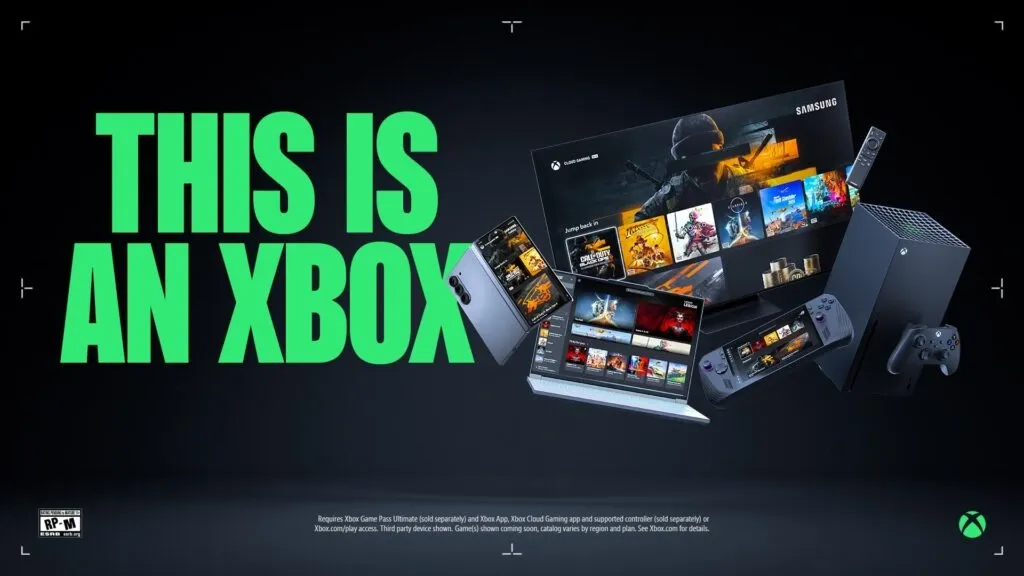
Microsoft's entire strategy over the past couple of years has been confusing as hell, with Xbox alumni following with portents of the platform's demise and divestiture. Microsoft's astoundingly weird "This is an Xbox" marketing campaign only compounded matters, which seems to be the first marketing campaign in history that actively tells users not to buy the company's products.
Microsoft has had to contend with various external factors, such as tariffs, inflation, evolving user behavior, competition from non-gaming paradigms, and beyond. But of the things it did have control over, it hasn't exactly presented a cohesive message. It hasn't presented a will to fight back or projected an image of strength and stability.
Xbox remains the only platform whose viability is questioned regularly and loudly in the mainstream. And simple narratives like "no exclusives" do far more heavy lifting at setting the tone than trying to explain the complexity of genuinely good Xbox features like Xbox Play Anywhere, free cloud saves, cloud gaming, and the rest of it.
Incoming CEO Asha Sharma says she wants to commit to the "return of Xbox," which she describes as having a renegade spirit for innovation. That will start with Project Helix, set to hybridize Xbox and Windows PC platforms into a single experience. Is that enough by itself?
For me, "return to Xbox" needs to begin with answering the simplest of questions: Why should someone buy an Xbox in 2026 or, furthermore, the next-gen Xbox in 2027-28? If it isn't exclusive games, then what is the answer?
If you can't answer "why Xbox" cleanly for today's attention-deficient market place, there could be a problem.
Should Xbox have exclusive games?
The debate over whether or not Xbox should have exclusive content has reignited since new CEO Asha Sharma took the reins. What do you think?

Join us on Reddit at r/WindowsCentral to share your insights and discuss our latest news, reviews, and more.