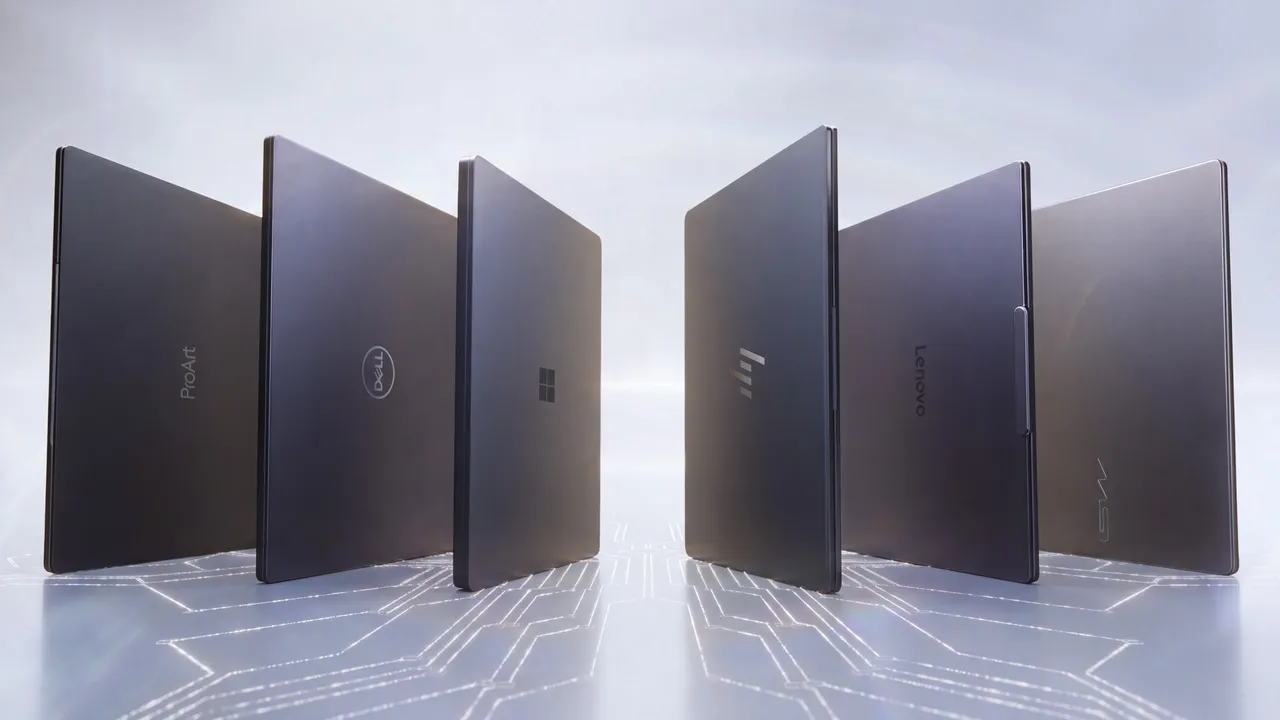
The next‑gen Xbox is starting to take shape, and new signals from ASUS suggest Microsoft is targeting 2027 for its next major hardware push. That lines up with what I reported last year: Microsoft’s future console is shaping up to be far closer to a streamlined Windows 11 gaming PC than a traditional Xbox box.
The idea is simple but bold. The next Xbox would run a TV‑first console interface by default, but underneath, it’s essentially a full Windows machine capable of running Xbox titles, legacy games, and a wide range of PC software. If Microsoft pulls this off, the next generation won’t just be about faster hardware; it’ll be about redefining what an Xbox actually is.
For an idea of how the Gen 10 Xbox will function, you can look to the current Xbox Ally. The Xbox Ally platform from ASUS is a hint at a very early version of the next-gen Xbox console formula. The Xbox interface will sit on top of Windows, disabling unnecessary processes to create a gaming-first environment. You will be able to exit out to full Windows, much like you can exit out to Linux on the Steam Deck, and run practically any program or accessory you can think of.
Turn your next-gen Xbox into a streaming PC, coding station, music production studio, or whatever else. The difference here is that the Gen-10 Xbox "PC" will also run all of your current Xbox games, in addition to games from Windows 11 PC stores like Steam.
A lot of the finer points are shrouded in mystery, though. How powerful will this thing be? What kind of price will it have? When will it launch? Here's what we know so far.
AMD CEO Lisa Su hints at Gen-10 Xbox launch window

Last summer, Xbox President Sarah Bond reiterated commitment to first-party Xbox hardware, after the ASUS-made Xbox Ally had people wondering if Xbox would simply license out the brand. Bond noted that it had entered a multi-year partnership with long-time collaborator AMD for the next-gen Xbox, and that it would retain backward compatibility with all current Xbox console games.
Since then, we hadn't heard a great deal (officially at least) about how the project has been progressing, until now. In an earnings call with investors, AMD CEO Lisa Su offered a hint at the timeline for the next-gen Xbox.
"Development of Microsoft's next-gen Xbox featuring an AMD semi-custom SoC is progressing well to support a launch in 2027," Su said (via Tom's Hardware).
I've been reporting for a while that Microsoft's landing strip for the next-gen Xbox is indeed 2027. Although, I'm told Microsoft insiders were a little taken off-guard by Lisa Su's comments on Xbox's Gen-10 timeline.
AMD's internal codename for the Xbox SoC is "Magnus," our sources confirm, although that is not Microsoft's codename for the actual device itself. I've been reporting for a while that Microsoft's landing strip for the next-gen Xbox is indeed 2027. Although I'm told Microsoft insiders were a little taken off guard by Lisa Su's comments on the Gen 10 Xbox's timeline.
Microsoft hasn't fully internally committed to a hard 2027 launch window for the next-gen Xbox platform, since so much of it hinges on improvements to Windows 11 and other factors. Microsoft's Windows and Xbox teams are collaborating harder than ever to get the OS into shape for a polished, console-like experience on Xbox. And thus, they aren't forcing themselves to adhere to a specific hard cut-off point. You can think of 2027 as the "best case scenario," but having a polished experience is the north star for Xbox.
There are a lot of moving parts, in essence, both on the software and hardware sides.
What to expect about the next-gen Xbox's cost

There are a ton of rumors flying around about potential price points for the next-gen Xbox, but the truth is, Microsoft itself doesn't know how much the next-gen Xbox will be just yet.
It's for the same reasons that Valve has yet to announce the Steam Machine price, and why ASUS waited until the very last minute to announce the Xbox Ally price. Global tariffs, component costs, geopolitics, and supply issues have prices heavily in flux right now.
With RAM costs spiralling and U.S. tariff taxes pushing up consumer prices, price-consciousness seems to be a hotter topic than ever. TV manufacturers are abandoning 8K resolutions for their next-gen TVs owing to price, and Nintendo recently warned investors that it may be considering a price increase for its Switch 2 platform. So it's no surprise that one of the questions I'm asked most often pertains to the next Xbox's price.
It does sound as though the next-gen Xbox is pushing for a more premium experience from its first-party offering, but that doesn't mean Xbox will suddenly become inaccessible for those who can't justify the spend.

Indeed, I'm told Microsoft expects the Gen-9 Xbox Series X|S and PS5 to have a longer tail than usual as a result of this "broadening" hardware endpoint ecosystem. It's only been recently that PS4 and Xbox One consoles have stopped seeing a full complement of major AAA games, with many service games still maintained on those older systems.
So, even if the next-gen Xbox comes in at around $1,000 dollars as some expect, Xbox Series S players shouldn't expect to be suddenly cut off and priced out. Developers of all shapes and sizes, Microsoft included, are building games that target the Nintendo Switch 2, Steam Deck, and other lower-end types of devices. That'll continue for a good chunk of time, even after the next-gen Xbox launches.
On that point, I'm told Microsoft is also working with OEMs such as ASUS and the like to build a variety of options for next-gen Xbox gamers across a range of price points, like the two Xbox Ally models. Despite rumors to the contrary, I'm told Microsoft also still wants to make a first-party Xbox handheld eventually, too, even if the traditional next-gen Xbox console is the focus for now.
Xbox's first-party console will be the baseline, quintessential "Xbox" experience, but we could see more expensive, even more super-premium Xbox "consoles" from Microsoft's Windows partners, as well as slimmed-down, more affordable options on top. Expect a smorgasbord of innovations in the coming years on this front, from a variety of companies.
Xbox's most ambitious hardware platform yet

The Gen-10 Xbox platform is undoubtedly Microsoft's most ambitious gaming effort in history. Having the Windows and Xbox teams collaborate so closely has huge potential for gamers, but also represents similarly huge challenges.
I wrote this week about how issues with Windows have often been hitting the Xbox Ally PC gaming handheld. It's not fun when it happens, but it's giving Microsoft valuable data on how Windows behaves when treated in a more console-embedded way. Microsoft's roadmap for the Xbox Ally is ambitious, and it'll see some major improvements and new features in the coming weeks, too.
Microsoft is currently testing a new NPU-powered highlights reel feature for the Xbox Ally X, which will take your gameplay clips and automatically generate a shareable video of your best gameplay moments. This feature is slated to drop in March, 2026, all being well. If these new types of features land well on the Xbox Ally X, they'll find their way into the next-gen Xbox, too.
Microsoft is building a hardware ecosystem that revolves around that "Xbox Everywhere" identity. We could start to see new accessories that dovetail into this ecosystem even before the next Xbox launches later this year.
The next Xbox platform not only lets you choose what hardware experience you want, but what storefront you want to use. In the future, you can expect a variety of Xbox devices of all shapes and sizes, from an array of traditional Microsoft OEM PC partners.
Xbox aims to grow the entire industry all up, which in its view, means breaking down arbitrary barriers, promoting cross-play multiplayer, cross-platform saves, and cross-platform purchasing. Its Xbox Play Anywhere program is designed to facilitate this, but it's also why Microsoft has been bringing its games more aggressively to Steam, PlayStation, and Nintendo Switch 2 as well. Microsoft has also been working to open up the Xbox platform for developers, making it easier to submit and publish new games. We should hear more updates on this front at GDC 2026.
For customers, the next Xbox platform not only lets you choose what hardware experience you want, but what storefront you want to use. Epic recently told us it's ready to bring its own Epic Games Store to the next Xbox, and Steam is a clear shoo-in.
Xbox likely won't expect the kinds of volumes seen by previous generations with its first-party offering, but it doesn't need to. You can think of the next-gen Xbox similarly to how Microsoft handles Surface — a curated boutique experience in a wider Xbox hardware ecosystem. The software is the platform, and software ubiquity is the goal. But that isn't to say Microsoft is abandoning its own hand in the hardware ecosystem. In fact, it's expanding it, arguably more aggressively than ever.
We've already seen the ASUS Xbox Ally, but we'll see even more of these types of partnerships in the future, complete with the custom Xbox console compatible SoC designated by AMD as "Magnus."

Opening up Xbox to OEMs and the wider Windows ecosystem should help Xbox and its partners deliver more curated, tailor-made experiences for specific markets, across different types of users, form factors, and price points. Meeting players where they are is now the firm's primary aim, both in terms of software and in terms of use case scenarios. In the future, you can expect a variety of Xbox devices of all shapes and sizes from an array of traditional Microsoft OEM PC partners.
The fundamental vision for the original Xbox revolved around bringing Windows to the living room. In a way, we've come full circle here. It's Microsoft's most ambitious hardware plan since the inception of Windows itself, but also, for Xbox, probably its most risky.
It sounds incredibly exciting on paper, but can Microsoft pull it off? We'll find out together.


Follow Windows Central on Google News to keep our latest news, insights, and features at the top of your feeds!