


I was recently reminded of something Amazon chairman and founder Jeff Bezos said at a talk a few years ago, and given the direction artificial intelligence is taking, it seems increasingly relevant today.
Microsoft has made no secret of its plans to create an "AI first" Windows, with tensions between users and shareholders essentially reaching fever pitch over the last year or so. Microsoft (oft-nicknamed Microslop in the AI era) has been leveraging its OpenAI-powered chatbot Copilot in a variety of half-baked integrations across its various products.
There's a Copilot button in Outlook now, not that it can read your emails. There's a Copilot button in Microsoft Paint, for some pointless reason. And even Notepad, which was supposed to be the light-weight alternative to Word, now also inexplicably has Copilot text generation integration. The list goes on.
Over the past few weeks, I've been trying very hard in good faith to understand Microsoft's consumer strategy here. The consumer-grade Copilot apps and features simply aren't good by any objective measure. In years past, Microsoft would've slapped a (beta) tag on this type of thing to explain the performance delta. Yet here, Microsoft is actively marketing Copilot — and worse, many of the prompts and features it showcases in Copilot marketing don't actually work as advertised.
Could there be an ulterior motive here? Well, perhaps Jeff Bezos touched on at least one possible explanation.
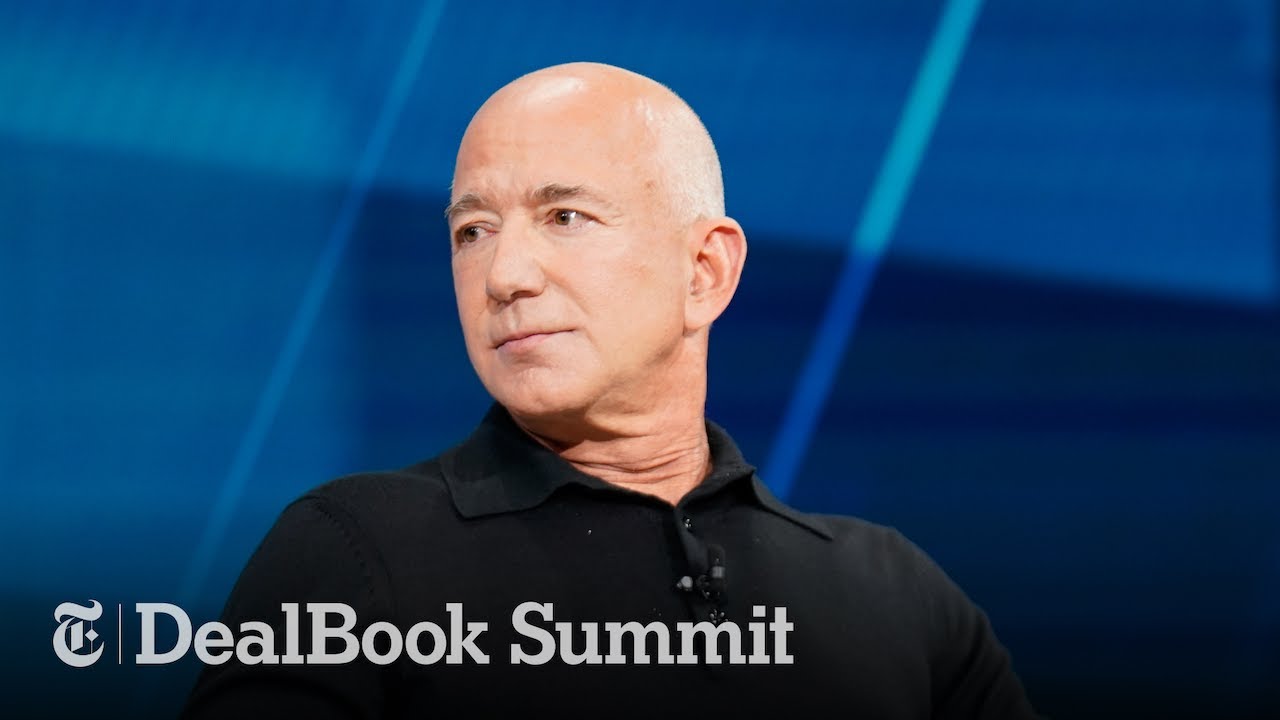
Bezos himself says in this piece that humans tend to over-estimate risk and under-estimate opportunity, and while Bezos has undoubtedly misfired on various lofty predictions in the past, his foresight with regards to things like online retail and cloud compute absolutely cannot be denied. Bezos is one of the most successful tech entrepreneurs in history after all, and his ability to predict and leverage trends has been a big part of that.
So, what prediction did Bezos make back then, that seems particularly poignant right now? Bezos thinks that local PC hardware is antiquated, and that the future will revolve around cloud computing scenarios, where you rent your compute from companies like Amazon Web Services or Microsoft Azure.
Bezos told an anecdote about visiting a historical brewery to emphasize his point. He said that the hundreds-year old brewery had a museum celebrating its heritage, and had an exhibit for a 100-year old electric generator they used before national power grids were a thing. Bezos said he saw this generator in the same way he sees local computing solutions today — inferring on hopes that users will move away from local hardware to rented, always-online cloud-based solutions offered by Amazon and other similar companies.
Bezos described a future that is already coming true in various ways.
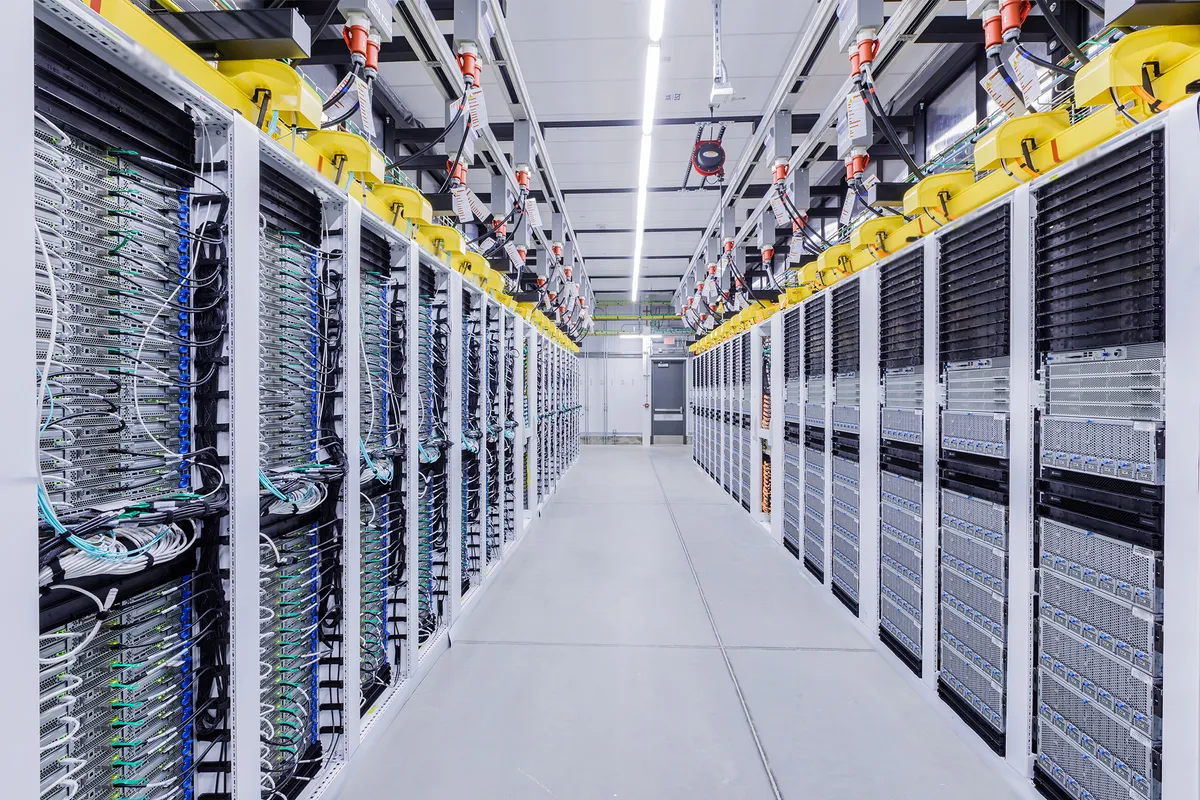
The very idea of simply owning a screen, keyboard, and mouse, and using Windows remotely via a subscription will likely send shivers down many of your spines — but you have to consider the trends here.
Hundreds of millions of us have already given away ownership over music, TV shows, and movies to cloud companies like Spotify and Netflix — both of which run on Amazon Web Services. Cloud gaming products like Amazon Luna, NVIDIA GeForce Now, and Xbox Cloud Gaming are all seeing steady growth, too — but it's not just about these niche scenarios.
The vast majority of apps and services people engage with online are all entirely cloud-based, from Fortnite to TikTok. Is it really so far fetched to imagine that most people would most likely be "fine" with renting their full computing solutions from companies like Microsoft and Amazon?
There's nothing wrong with it as an option, of course. But what if we end up not having a much of a choice in the coming years?
We've written a fair bit about how DRAM prices are becoming untenable for consumers. Companies like Dell, ASUS, and others have signalled price increases across their PC range in the coming weeks, with chip companies like Micron and Samsung flat out refusing consumer-grade orders for DRAM allocations. Micron has shut down its consumer operations for DRAM in their entirety.
And why? The answer is AI. Or, well, the answer really is cloud.
Will the death of affordable PC components force regular folk to hunt for cloud computing solutions?

AI needs the "cloud" in order to run. Every ChatGPT question, Grok bikini deepfake, or Copilot MS Paint memeslop requires cloud compute to generate. That means DRAM, but also increasingly other components too. SSD storage is the next component expected to hit a shortage, battering consumer prices hard in the process.
Those who have decent PC, gaming consoles, and laptops today are likely insulated in the near term, but what about the long term? What about when those components inevitably break down, or get broken? What will prices look like in 2-3 years?
Some analysts suggest RAM prices could stabilize in a year or two, but consumers are effectively competing with nation states when it comes to some of these components. AI proponents like OpenAI's Sam Altman have legislators convinced that the tech is a matter of national security, either by way of military applications or as-of-yet unrealized technological discoveries and advancements. Luckily for Altman and shareholders, those unrealized promises require trillions of dollars worth of investment, specifically in cloud computing solutions, to actualize.
There's a hard cap on the amount of chips the human race can physically produce at any one time, at least as of writing. With nation states effectively printing money to outbid consumer tech companies on basic components, I'm not sure demand will come down any time soon. That is, of course, unless those investors and nation states stop believing AI can deliver anything more impressive than repackaged reddit answers, memeslop, and blog posts for the vast majority ...

Microsoft was already working on a cloud-based version of Windows for consumers, based on its business-grade cloud PC product Windows 365. It has seemingly deprioritized the consumer version over the past few years, doubtless in part because the economics don't work today, given that you can still get pretty cheap, but also decent casual laptops. But given the way things are going, I wouldn't be surprised if Microsoft ended up making another go of it.
Either way, cloud compute isn't exactly cheap to run either. Xbox Game Pass' 1440p cloud gaming costs $30 a month, and NVIDIA itself just added a 100-hour cap to its cloud gaming platforms, most likely because the economics simply doesn't work to make it any more affordable vs. what people are actually willing to pay. The same could be true for AI solutions like ChatGPT and Copilot. Are the products actually good enough for most people that you'd want to pay for them?
They're free right now as Microsoft et al. hopes to form habits around them and then eventually charge for them. But, if they took ChatGPT and Copilot away from users tomorrow and asked them to pay $10 a month for it, I think many of us would be like "nah, I'm good." These products right now are costing millions of dollars a day to run, and have yet to actually generate profitability for many of the biggest players. That's a real problem.
It's easy to get conspiratorial in today's times and presume that this was all part of some wider co-ordinated plan to rob us of the last vestiges of ownership, but unless something changes with regards to electricity costs and the like, I'm not seeing this future.
Cloud computing is essentially local computing with extra, quite pricy steps today for consumer use scenarios. Unless the economics of local hardware truly does fall off a cliff somewhere down the line, I can't see Bezos' vision of a cloud-only future coming true any time soon — even for casual PC users.
I'm sure these companies salivate at the idea of destroying all means of ownership. But, if Spotify and Netflix are evidence, perhaps people at scale really don't care either way.

Follow Windows Central on Google News to keep our latest news, insights, and features at the top of your feeds!

