


What a way to start the week.
After over a decade running Xbox and almost 40 years at Microsoft, Phil Spencer is stepping down. I'm told Spencer officially exits in October later this year. As implied in his previous email to staff, Spencer will spend much of the next year helping incoming CEO Asha Sharma acclimate to what might end up being the most challenging period in her professional career.
As of February 2026, Xbox is at a cross roads. The next couple of years will not only reveal whether or not Xbox survives as an entity within Microsoft, but also define whether or not Microsoft still wants to have any consumer-facing businesses whatsoever.
Farewell to Phil Spencer, the man who saved Xbox

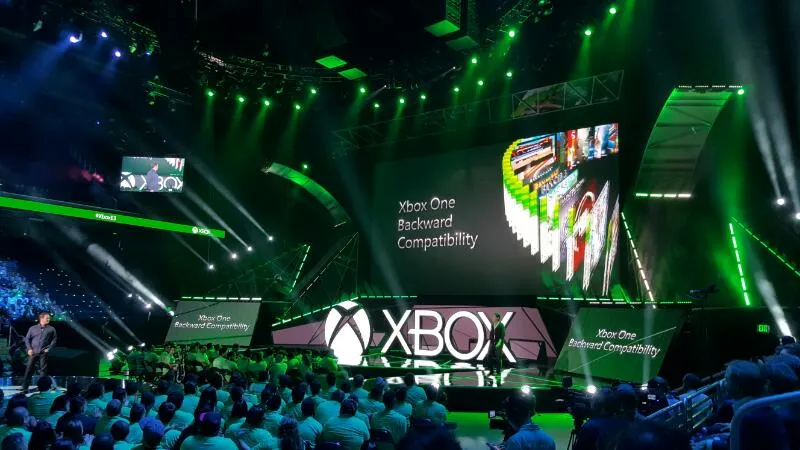
When we talk about Phil Spencer, we often think about big-hitting headlines from his career. I distinctly remember the reveal of Xbox backwards compatibility, which represented a significant investment to emulate classic Xbox and Xbox 360 games on modern systems. To this day, Xbox is the only place to play a variety of classic games, in situations where even their PC builds have been delisted — if indeed they exist at all.
This consumer-facing feature really typified "the good times" with Phil Spencer as Xbox lead. Spencer, backed by Microsoft, went on a shopping spree of major studios and franchises, including DOOM, The Elder Scrolls, Fallout, and many more. Xbox very loudly proclaimed it was an effort to bring exclusive content to Xbox. This was what fans wanted — and fans loved it.
Spencer's leadership style, candour, and frank communication style helped him connect with the Xbox audience in ways few gaming execs have. Spencer is an actual gamer — not simply a businessman, and that represented a breath of fresh air in the post-Xbox One period.
Spencer's ability to communicate empathetically and passionately not only helped him meet fans externally, but also navigate Microsoft's murky c-suite politics. Microsoft had historically always seen Xbox as an oddity within the wider organization, and Xbox previously sat underneath Windows, fighting the structure there for budget and investment.
For me, Spencer's greatest achievement was convincing the upper echelons of Microsoft to let Xbox stand on its own. As of 2026, Xbox is a bigger entity within Microsoft than Windows itself, which would've been hard to contemplate in years past. However, with its massive increase in size, came a massive increase in corporate scrutiny.
For years, PlayStation dogged Xbox's first-party games output with award-winning blockbusters like Spider-man, God of War, and The Last of Us. Despite all of Spencer's best efforts, Xbox was never able to fully deliver on its promises of the "Xbox Exclusive." Owing to the absolutely massive amounts of investment from the $72 billion Activision-Blizzard acquisition, Xbox was now on the hook to deliver similarly massive returns. And unfortunately, that required selling out on Xbox's previous promises.
Phil Spencer inherited an Xbox that was on its knees, and managed to convince Microsoft to stay the course. I'm not sure anyone else could have done this.
Microsoft CEO Satya Nadella publicly lamented the concept of "exclusive" software during regulatory hearings over their Activision-Blizzard acquisition. Regulators feared that by acquiring Call of Duty, Xbox would be in a position to exclude PlayStation and other competitors from access. This was silly, of course. Call of Duty depends on that massive audience in order to operate. Unexpectedly for Xbox customers and industry analysts alike, Microsoft would also eventually extend the Call of Duty multi-platform model across its entire business.
Indeed, the entire gaming industry has seen a deluge of upheaval over the past couple of years, and nobody is really safe. Even industry leader PlayStation has shuttered studios over the past couple of years, as post-pandemic playtime hours have fallen away to mobile-first games like Roblox, and non-gaming entities like TikTok and Instagram. Apps like Polymarket and OnlyFans siphon away cash from young males — gaming's traditional core audience.
Weighed down by the Activision acquisition, anaemic playtime hours and pressure from Microsoft corporate, Spencer's Xbox has made a string of unpopular decisions over the past couple of years. Cancelled projects, studio closures, price hikes, and a general focus away from the Xbox console has stressed the brand, as well Spencer's legacy.
With iconic franchises like Halo, Forza, Fable, and Gears of War are now slated for competing platforms — industry analysts, fans, detractors, and even Xbox itself have struggled to answer the question "Why Xbox" in 2026.
But, it's thanks to Phil we're able to still ask this question at all.
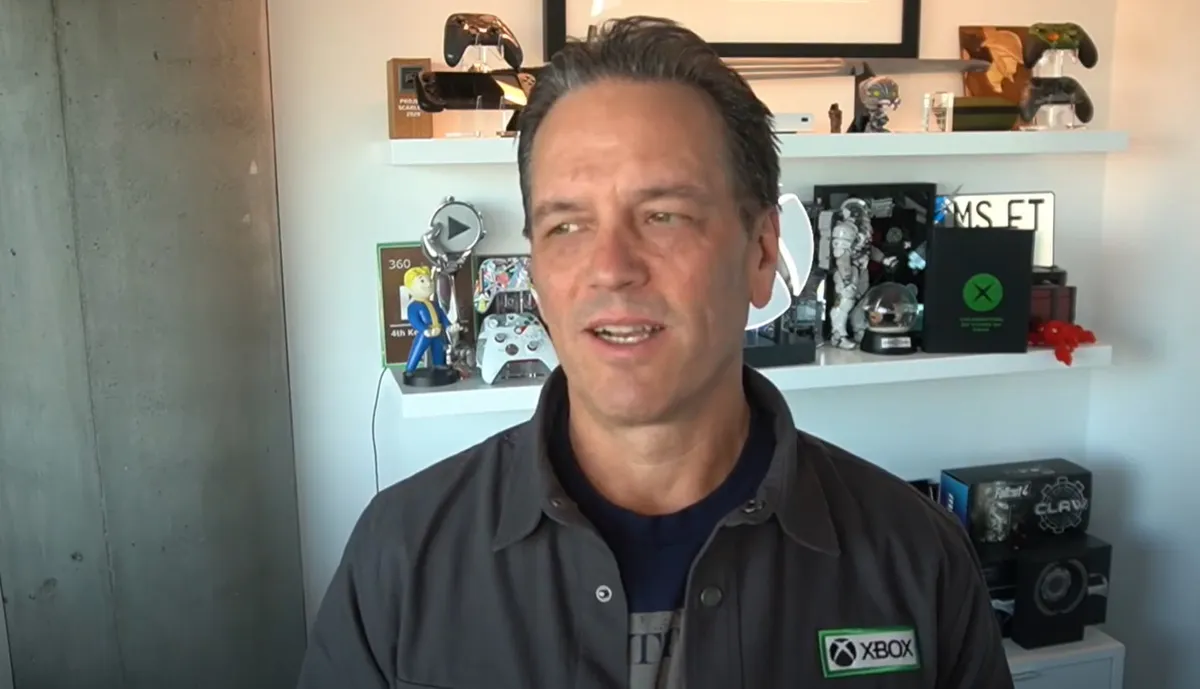
Phil Spencer inherited an Xbox that was on its knees, and managed to convince Microsoft to stay the course. I'm not sure anyone else could have done this. Spencer then went on to navigate Xbox through its most difficult period in its 25 year history.
Through innovations like Xbox Game Pass, Spencer and his team found ways to help traditional game developers find funding at a time where venture capital firms began closing their doors. Investments in Xbox Cloud Gaming help anchor Xbox within the wider Microsoft cloud-oriented mission with Azure, and has helped it reach new audiences in regions where taxes and tariffs preclude access to traditional console hardware. Spencer's investments in Xbox PC and the hybridized SoC from AMD will also protect current audience's content ecosystem for the long term future.
Spencer's legacy for me is in the rescuing of Xbox. The games industry is an incredibly tough business. It's a uniquely complex intersection across multiple art and technological disciplines and mediums. It's exposed to every headwind imaginable, and vulnerable to both cultural and economic changes in ways that other industries simply aren't. To navigate this unscathed would be a Herculean task.
Few would've stayed the course as long as Spencer did. Despite the fact Xbox is faced with more challenges than ever, Spencer leaves Xbox in a far stronger than when he found it. With hundreds of millions of monthly active users across its portfolio, Xbox is no longer a Microsoft oddity — it is now an iron clad pillar of the entire operation, and firmly embedded in Microsoft's future. For me, that is Spencer's greatest success.
By retiring now, Phil Spencer is setting the stage for new types of innovation and expertise that Xbox, and honestly, the entire gaming industry desperately needs.
Enter Asha Sharma, tasked with finding Xbox's future

Xbox impacts the lives of millions of people. Whether they're customers, employees, or developers — Xbox has delivered billions in revenue to creators, fosters the ecosystem upon which entire businesses thrive, and is a cornerstone of rest and recreation for millions of people. People are passionate about Xbox, to say the least.
Many of us have literally hundreds, if not thousands of dollars digitally locked into the Xbox ecosystem. It's then not without some logic that people are concerned about the present day situation for the brand. Hardware sales have utterly cratered. Xbox Game Pass Ultimate is now prohibitively expensive. Game development cycles are longer and more expensive than ever. And GenZ and GenA apparently do not care about console gaming.
It's within this confluence of challenges newcomer Asha Sharma finds herself. She's a former Meta VP, known for the growth of Facebook Messenger, and has also found a ton of success integrating AI features into Microsoft dev platforms, including Github Copilot — which is arguably one of the few actually good AI tools out there.
I would say that it's this intimate knowledge of tooling, potentially good and genuinely useful AI integrations for developers, as well as hyperscaling social platforms that made Sharma a top pick for the Xbox job.
Sharma's appointment and AI background was met with immediate alarm from some corners. I've seen typically reasonable industry analysts proclaim Xbox's death (for the 100th time this fiscal) based entirely on Sharma's resume. It's odd, given the fact Asha Sharma has left every platform she worked for much larger and stronger than when she found it.

Sharma's letter to staff hit the right notes, and acknowledged the impending AI critique by emphasizing that Xbox wouldn't indulge short-termism and "soulless AI slop," as she put it. But for me what's most compelling about Asha Sharma is her background at Facebook and Messenger.
Microsoft famously and somewhat ironically donated the Messenger copyright to Facebook. Many of us of a certain age remember growing up with MSN Messenger, rather than Facebook Messenger, which was the defacto internet text-based communication tool of the 90s and early 00s. Microsoft utterly squandered MSN Messenger, and it ironically found its successor in Facebook Messenger, which Sharma was instrumental in scaling into its own entity.
In 2026, Xbox's problems are numerous, but a core issue facing the entire industry is social media adjacency. Rather than leaning into the social media revolution, Xbox retreated from it with its tail between its legs — it faded into the background, handed the keys to its social graphs to Discord, Reddit, and other platforms, and has allowed its own messaging tools to die on the vine.
This is important, because gaming's most popular platforms right now are inherently social. Xbox has the foundations of a social network, but the older cohorts running Microsoft never understood social media, nor really internet culture in general. Sharma's experience could be the catalyst to help Xbox and perhaps the entire traditional console industry find its footing in an era dominated by short-form video, algorithms, and encrypted chat tools.

This is why the discourse around her chops as a "gamer" are asinine. The competition gaming is facing is from non-gaming platforms you need someone who understands that universe in order to compete with it.
Sharma's job is not to make games, it's to discover the catalyst that will help Xbox grow and scale in ways that Facebook, Messenger, and Instagram scaled. Games aren't Xbox's issue today. The primary issues revolve around ecosystem access, as well as demographical and social. And these issues aren't unique to Xbox, either.
Still, the uncertainty is valid and well-founded. Microsoft as a corporate entity is prolific for disappointment and abandonment. Broken promises, a shareholder-first attitude, and short-termism has defined Satya Nadella's Microsoft for me. Which is why it was quite surprising to see Nadella mention Xbox as a "long term" play.
Indeed, gaming is not a quarterly business. It's based around hits and misses, blockbusters and risk-taking. It's also an opt-in hobby underpinned heavily by culture and sentiment — things Microsoft corporate absolutely does not understand. Perhaps Asha Sharma will be the person to help not only Xbox, but Microsoft all up, understand where it has been failing here.
Xbox at a cross roads, an xroads if you will

Nobody knows what will happen this year as Asha Sharma begins to shape her vision for Xbox and implement her agenda. I've seen everything from mild hopes and dreams to wild doomerism and cynicism. Some have hopeful optimism, for simple upgrades like new Xbox achievement features, or a return to Xbox exclusives. While others are already whittling kindling an X-shaped funeral pyre.
Xbox will never go away, but the extent to which it could fundamentally change remains to be seen. In the near term, Asha Sharma will be under fair and unfair levels of microscopic scrutiny, likely unlike anything she has previously experienced. I would say we should give her the grace to actually show us what she can do, but this is the internet after all, where cynicism and doubt reigns supreme. Although, Microsoft has earned itself a fair bit of that.
And therein lies the core challenge for me — can Asha Sharma refocus an Xbox that has struggled to really define itself in the past couple of years? Can she change the way the Xbox ecosystem is perceived? Can she win organic developer support for Xbox PC? Can she fight off short-termism from Microsoft corporate? Will she bring back Banjo?!
I'm more than willing to give Asha Sharma the benefit of the doubt, but earning the kind of credibility Xbox desperately needs will take a spectacular amount of work and consistency — do Asha Sharma's bosses have the patience to actually give her chance to cook? That, above all, is my biggest concern.
What do you think about Spencer's retirement and the Xbox shakeup?
There is a LOT to digest here, so we're curious as to what you think. Drop us a comment on your predictions for the next-gen leadership at Xbox and whether this is a good thing or bad!

Join us on Reddit at r/WindowsCentral to share your insights and discuss our latest news, reviews, and more.

