I'm a big fan of the Windows Subsystem for Linux (WSL) not least because I like Linux, and it means I can run it from the same PC as Windows 11 without the need for virtual machines or dual-booting.
It's been around for quite a while now and is a pretty powerful tool for developers, especially, and it's come to light that for Canonical, at least, WSL might soon be the biggest source of users of Ubuntu.
It comes to light from comments made by Canonical's VP of Engineering, Jon Seagar, actually back in April to The Pragmatic Engineer‘s Gergely Orosz spotted by the team over at Windows Latest.
Not only is Ubuntu growth on WSL continuing to increase, it's actually starting to outpace the desktop. So much so that it's expected that Ubuntu on WSL will soon be bigger than native Ubuntu use.
“In a year, the growth in our WSL numbers is significantly higher than the growth in Desktop usage numbers. I expect to see more Ubuntu WSL users than ‘native’ Ubuntu users over the coming months.”
Jon Seagar, VP of Engineering at Canonical
Obviously Linux is more than just Ubuntu, and its overall use is still dwarfed by Windows 11. But Ubuntu is one of the biggest distros, and this is pretty interesting to hear.
WSL does have GUI support for apps, but it's not the same as running a full desktop, but in most cases, developers and system admins don't need a full desktop. The terminal is just fine, and WSL has seamless integration into Microsoft's VS Code as well.
I've written in the past that WSL is a great tool to use to learn about Linux as a beginner since you can fire it up within the comfortable surroundings of your existing Windows 11 PC. But that same principle can apply for professionals who need access to both.
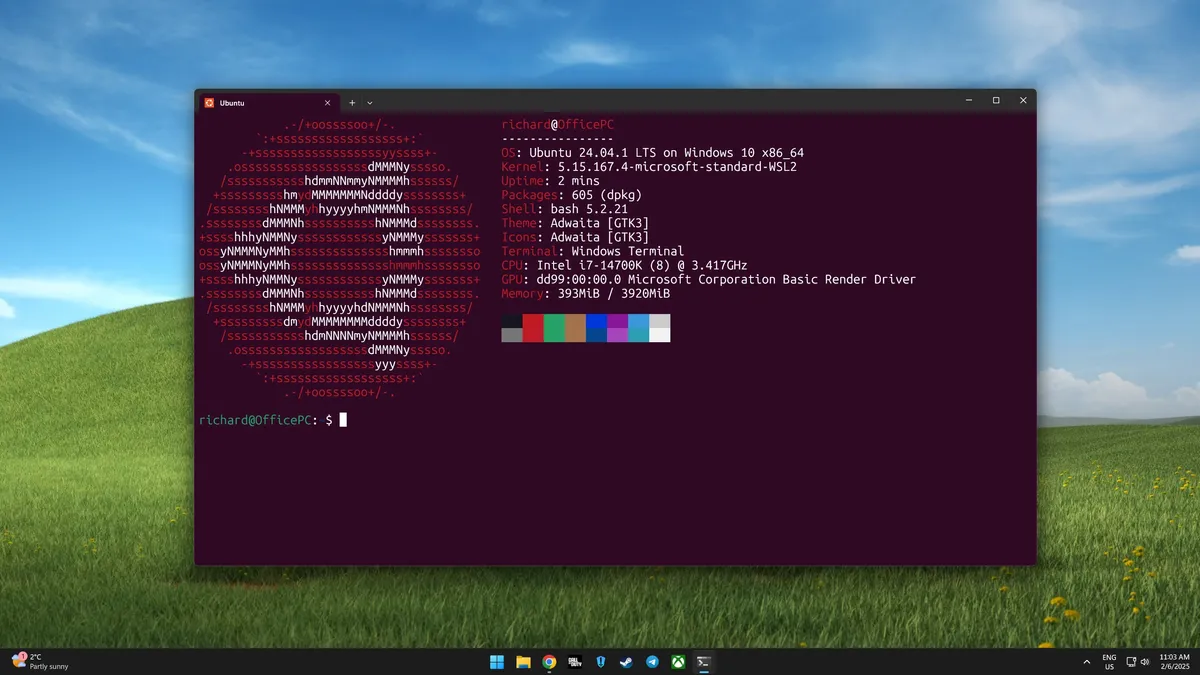
It's convenient and gives access to the Linux tools needed, including nowadays for AI, and some tools are built specifically for or work best on Linux. But with WSL you have integration with your existing Windows 11 file system.
I use probably 5% of the potential of WSL on my own PC, but it's still one of the first things I set up whenever I'm moving on to a new machine. You're not limited to Ubuntu, either, with Fedora my own distro of preference. But there's plenty to choose from.
Microsoft keeps improving it, too. The most recent development is WSL Containers, and it even has its own version of Linux now for users to deploy in Azure Linux. There are still plenty of cases for having a bare-metal Linux machine, but with Windows 11 and WSL working together, you've got a hybrid that's good enough for many.

Join us on Reddit at r/WindowsCentral to share your insights and discuss our latest news, reviews, and more.