Apple has finally made a touchscreen MacBook Pro, and you know what? Good.
I’ve been using touchscreen Windows laptops for well over a decade. Microsoft made touch central to Windows with Windows 8 in 2012, and PC makers have spent the years since experimenting with convertibles, detachable keyboards, pens, dual-screen PCs, foldable displays, and nearly every combination of those ideas imaginable.

Now Apple has decided touch belongs on a Mac, too.
There’s an obvious temptation here to point and laugh, particularly given how long Apple spent telling everyone that touchscreen laptops were a bad idea. But I don’t think Apple adopting touch in 2026 is really the problem. Technology improves. Consumer behavior changes. Companies reconsider old assumptions. Ideas that didn't make sense 15 years ago can make considerably more sense today.
Companies should be allowed to change their minds. In fact, I wish more of them would.
What bothers me is the corporate absolutism that so often comes before the reversal, and how readily consumers absorb those talking points and repeat them as though they were established technological truths.
Your favorite company is not your friend

Steve Jobs didn't merely say that Apple wasn't interested in making a touchscreen Mac. In 2010, he argued that vertical touch surfaces were “ergonomically terrible” and that after using one for an extended period, “your arm wants to fall off.”
Apple continued defending that philosophy long after Jobs. Craig Federighi argued that reaching up to touch a screen was fatiguing, while John Ternus explained Apple's position in 2021 by saying the iPad was optimized for touch and the Mac for indirect input.
And now we have a touchscreen MacBook Pro.
Apparently, our arms have recovered.
I mean, Windows 10 came out 11 years ago and abandoned the Windows 8 approach you're criticizing. More importantly, what exactly is Apple doing here that Windows 10/11 haven't already done conceptually? The article praises Apple for keeping the familiar desktop UI while making elements more touch-friendly, adding touch gestures, increasing spacing between controls, and supporting things like pinch-to-zoom. That's essentially the post-Windows 8 approach Microsoft has been using for years: keep the desktop, accommodate touch where useful, and dynamically adjust parts of the UI for touch input. Windows 8 deserves plenty of criticism, but using it as the comparison in 2026 sidesteps 11 years of Windows development. If there's something fundamentally new about Apple's approach here, I'm genuinely curious what it is.October 28, 2026
But there was never anything inherently ridiculous about occasionally touching your laptop screen! You don't use a touchscreen PC by spending eight hours with your arm suspended in front of you like you're directing traffic. You type. You use the touchpad. You use a mouse. And sometimes a button is sitting right there on the screen, so you reach up and tap it.
That's it. Nobody needed a grand philosophical argument for why that was useful.
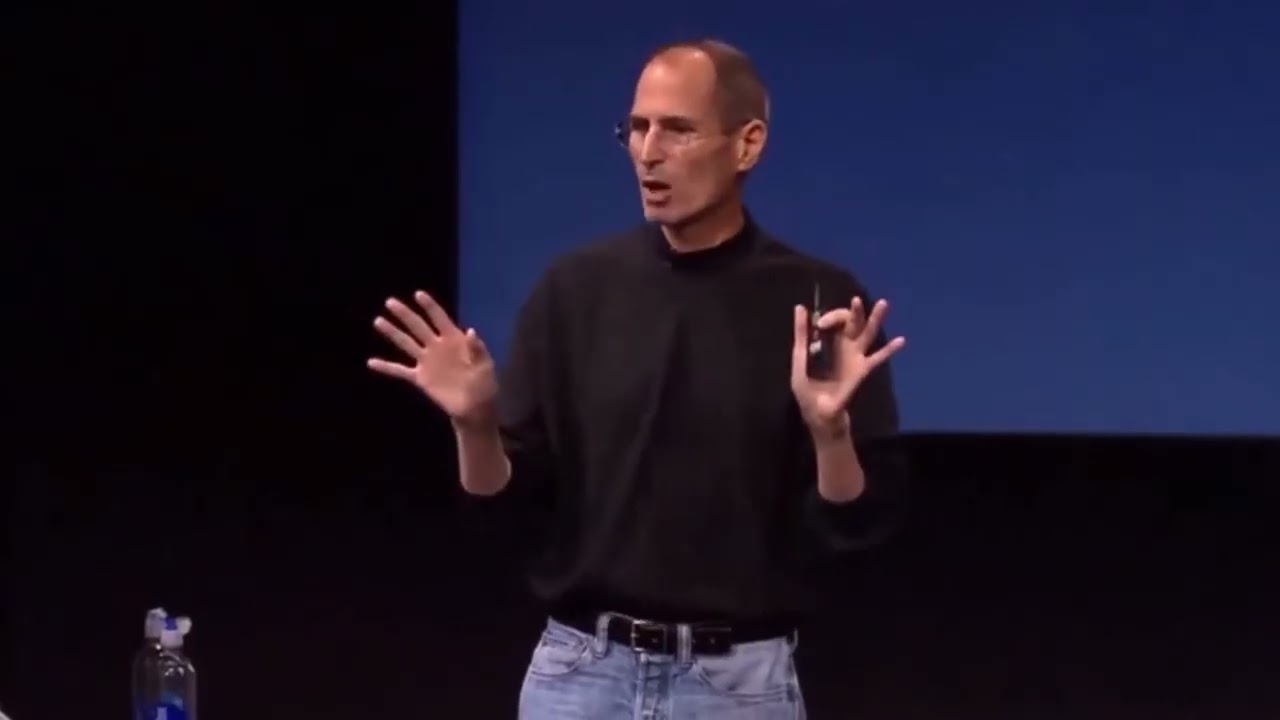
Microsoft certainly got plenty wrong with Windows 8, especially its attempt to aggressively redesign a desktop operating system around touch. But the underlying idea that a computer could accommodate a keyboard, mouse, pen and your fingers was perfectly reasonable. Windows laptop makers proved that years ago.
Yet because Apple didn't want to make that computer, the company's decision somehow became evidence among some of its most devoted followers that these computers shouldn't exist at all.
That's the part I think is worth remembering.
We've watched this happen before

And touch isn't an isolated example.
When Microsoft was trying to blur the line between tablets and PCs with Surface, Tim Cook famously compared converging products to combining a toaster and a refrigerator. Years later, Apple built the iPad Pro and paired it with increasingly sophisticated keyboard and trackpad accessories. The implementation is Apple's own, but the supposedly absurd idea of a tablet increasingly behaving like a laptop doesn't seem quite so absurd anymore.
I've seen the same attitude around foldables and devices like Surface Duo. Years ago, I found myself explaining to Apple fans, practically like children, why someone might find value in a large display that folds into something much smaller and more pocketable. The response inevitably centered on all the reasons folding phones were unnecessary, compromised, gimmicky, or "solving a problem that didn't exist" (the line always used by people with no imagination).

Now Apple is making foldable devices too.
And again, good. I want Apple to make these products. Competition drives improvement, and Apple entering a category can push everyone else forward. I recently discussed on Schwab Network (above) how strategically important the iPhone Duo is, and its growing pains—or whether it’s the perfect $2,000 phone—are less of a concern in the long term.
This isn't an admonishment of Apple for adopting ideas that competitors got to first. It's an admonishment of the corporate theater that often precedes those reversals, and especially of consumers who willingly participate in it.
Stop turning corporate PR into your personality

Every technology company does some version of this. Microsoft does it. Google does it. Samsung does it. Apple does it.
I've interviewed enough executives over the years to know the standard response when you ask why a product doesn't have some particular piece of technology. You usually get something along the lines of: We're watching the technology, we're talking to our customers, and when we think the experience is right, we'll consider it.
That's corporate PR, but it's also a perfectly respectable answer.
What companies shouldn't do, and what consumers absolutely shouldn't help them do, is transform today's product limitation into some grand design philosophy explaining why the missing technology is actually stupid.
(Anyone else remember Apple not making large iPhones because your thumb couldn't reach across the screen? yeaaahh...)
Companies have roadmaps. They have price targets, manufacturing constraints, engineering limitations, internal politics, and products they aren't ready to announce. Sometimes they haven't figured something out yet. Sometimes a competitor simply got there first.

And sometimes they're just wrong. Steve Jobs, Tim Cook, and Craig Federighi were wrong. And it wasn't the tech that changed; it was the opinion.
Consumers and the technology press shouldn't turn those temporary business realities into articles of faith.
Apple is particularly good at controlling the language around its products, which makes resisting this tendency even more important. When Apple doesn't offer something, there's often an impulse among its most ardent supporters to rationalize the omission and explain why nobody really needs it anyway.
Then Apple ships it, and suddenly it's useful.
That's why the lesson of the touchscreen MacBook Pro isn't that Apple lost, and Windows won. Frankly, that kind of platform-war thinking is just another version of the same problem.
@OABlanchard @TheRichWoods "He wouldn't be saying it today." Speaking for the dead now are we?October 28, 2026
The lesson is much simpler: stop putting corporations on pedestals.
You don't work for these companies. You don't owe them ideological consistency. Buy the products you like. Praise them when they're good. Criticize them when they're bad. And when an executive explains why a technology their competitors already offer is unnecessary, ridiculous, inelegant, or something customers don't want, maybe don't adopt that argument as part of your identity.
Because a few years from now, they may be standing onstage trying to sell it to you.
And when that happens, changing their mind is perfectly fine. Pretending they never told you otherwise is something else entirely.
But tell me, am I wrong or missing something? What do you think about Apple suddenly being interested in foldables and touchscreen laptops in 2026? Let me know in the comments.

Join us on Reddit at r/WindowsCentral to share your insights and discuss our latest news, reviews, and more.