Microsoft wants you to believe the “AI PC” is the future. Copilot+ laptops, neural processing units (NPUs), and promises of local AI magic are being pitched as the next great leap in personal computing.
But as we settle into 2026, I can’t shake the feeling that we’ve been here before—and that the hype may be running ahead of reality. Heck, even Dell made some news recently, noting the whole AI PC thing really isn't working as a pitch to consumers.
The AI PC promise
On paper, the AI PC sounds transformative. Dedicated NPUs promise faster, more efficient AI tasks without draining your battery or sending everything to the cloud. Copilot is supposed to become your ever-present assistant, summarizing documents, generating images, and streamlining workflows. Microsoft frames this as a paradigm shift: the PC finally catching up to the AI moment.

For professionals, students, and creators, the pitch is seductive. Imagine instant transcription, real-time language translation, or image generation baked directly into Windows. No subscriptions, no waiting for servers—just local intelligence at your fingertips.
There's blurring your background during video calls, active noise-cancelling for your microphones, and more, all of which used to tax your GPU, but now flows freely under the NPU without slowing your system to a halt.
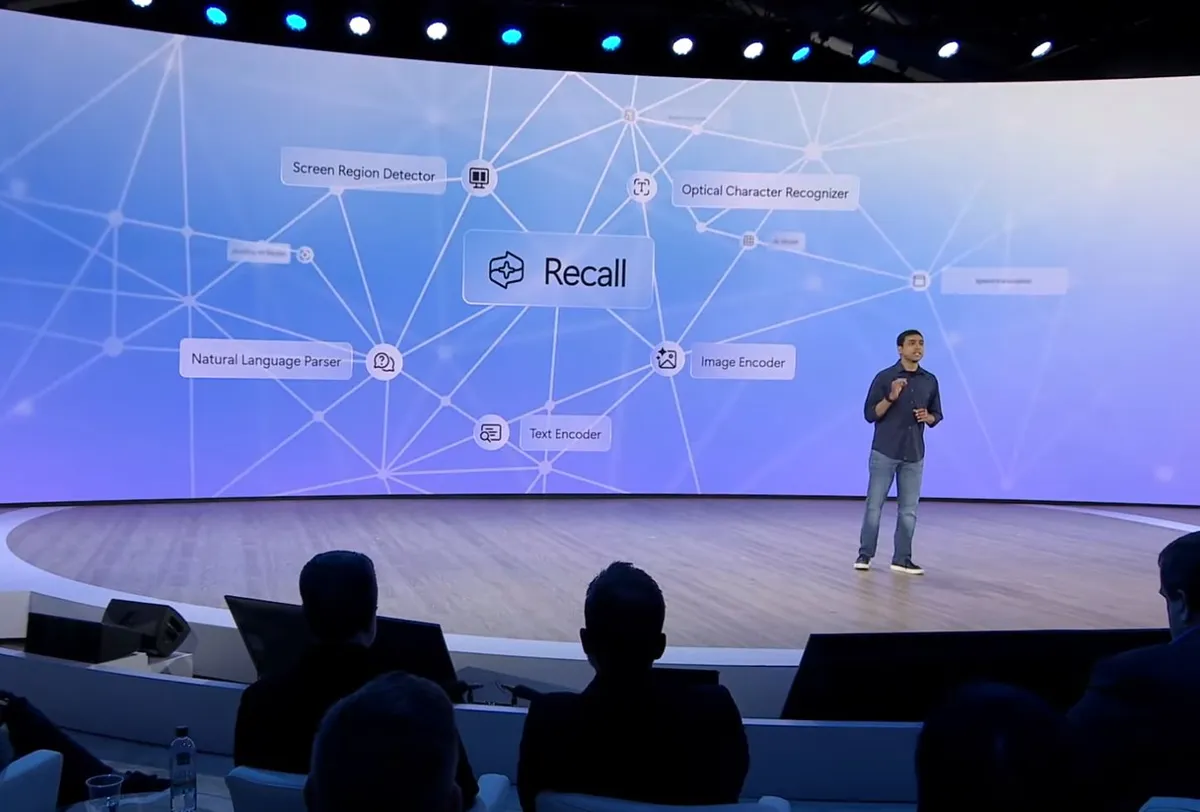
Things like Windows Recall are super impressive and barely dent battery life.
AI PC reality check
But here’s the rub: most users don’t live in that future yet. Early adopters report that Copilot often feels like a glorified shortcut rather than a revolutionary tool. Summarization and search are handy, but hardly worth buying a new laptop for. And the AI features that do exist are often locked behind Microsoft’s ecosystem, raising questions about openness and interoperability.
Moreover, those hybrid AI features have yet to materialize. Copilot is, for all intents and purposes, still 100% cloud based and never touches your NPU. Yes, Recall and video blurring do use that NPU effectively, but there have been no new features announced recently that take advantage of this hardware.
It’s hard not to see echoes of past missteps. Remember Windows RT? Surface RT? Both were ambitious, both misunderstood, and both ultimately abandoned. Even Windows Phone had flashes of brilliance before collapsing under the weight of poor execution.
The AI PC risks joining that lineage if Microsoft can’t prove its value beyond marketing slides.
The skeptic’s view

There’s also the uncomfortable truth that “AI PC” and, more specifically, Copilot+ PC, is, at least for now, a branding exercise. Much like “Ultrabook” or “netbook,” it’s a label designed to sell hardware in a stagnant market. Laptops have become commodities, and slapping “AI” on the box is a way to reignite excitement. But excitement without substance is a dangerous game.
Enthusiasts—our readers—see through this. They want performance, compatibility, and reliability. They want to know if their favorite apps will run better, if their workflow will actually improve, and if their investment will pay off.
Right now, the answers are murky
And, if I put my cynic hat on (and why not these days), it seems like companies are addicted to cloud processing, because they can charge you for it and justify building large data centers (often at taxpayer expense and where locals have to live with the effects).
And this is an issue. I've seen plenty of complaints online about Copilot being slow for users, due to the latency and cloud, and the non-native application effect of being more of a web-based client.
The optimist’s case?
To be fair, there’s a longer-term vision here. Local AI could become as essential as the GPU once was. Just as graphics processors unlocked gaming, design, and scientific computing, NPUs could unlock new categories of software we haven’t imagined yet. Microsoft may be planting seeds that will only bear fruit years down the line.
If that’s true, then the AI PC isn’t a misfire—it’s a foundation. But foundations are invisible to most users. They don’t buy laptops for what might happen in 2028. They buy them for what works today.
And that's what I find so frustrating. Qualcomm, arguably the leader in AI PC hardware, has its new Snapdragon X2 platform, like Snapdragon X2 Plus, launching in the coming months. It bumps TOPs from 40 to 80, and those NPUs are ubiquitous across its lineup, from the "cheap" low-end chips up to the high-end X2 Elite Extreme.
That's a ton of potential power, but Microsoft has yet to define any features that could leverage 80 TOPs. Instead, it's a "build it, and they will come" situation, where we need to wait for Windows 11 and third-party software to leverage it.
Cool, I guess?
Luckily, Qualcomm's NPU is not "extra," so you're not wasting money (indeed, Snapdragon PCs are often priced lower than Intel or AMD), and you still get all the other real benefits of its architecture, like exceptional battery life, reduced heat output, and a bevy of cores for powerful processing.
The big question for 2026
So where does that leave us? Is Microsoft genuinely building toward a new computing paradigm, or just trying to sell hardware in a market desperate for differentiation? The answer may depend on how quickly developers embrace NPUs and how aggressively Microsoft integrates Copilot into everyday workflows and gives it access to the NPU.
It's like running a video game that can't see your GPU.
For now, the AI PC feels like a bet. A big one. And like all big bets, it could pay off spectacularly—or collapse into another cautionary tale.
Closing thoughts

If Microsoft wants AI PCs to succeed, it needs to prove they’re more than marketing. Show us workflows that matter. Show us performance that changes the game. Otherwise, 2026 could be remembered as the year the AI PC joined Windows RT in the graveyard of good ideas.
The AI PC needs a reason to exist, and running on features a year old is not the way to sell it.
FAQ
What is an AI PC?
A laptop with a dedicated neural processing unit (NPU) designed to run AI tasks locally.
Why does Microsoft care?
It’s a way to differentiate hardware in a stagnant market and push Copilot deeper into Windows.
Should I buy one now?
Unless you need cutting‑edge AI workflows, the benefits are incremental. Most users won’t see dramatic gains yet.
On the other hand, most new laptops simply ship with the NPU on board, so it's not like it "costs you extra" per se; you just may find yourself not using the NPU as much as enjoying the long battery life, fast processor, and improved hardware. We just wrote about how laptop hardware has never been better, so it's not like buying an AI Pc is bad; it's just underutilized and premature.

I’ve laid out the hype and the skepticism—but now it’s your turn. Do you see AI PCs as the foundation of a new era, or just another marketing gimmick destined for the Windows graveyard? Tell us how you’re using Copilot today, whether NPUs make a difference in your workflow, and if you’d actually buy into Microsoft’s vision. Drop your thoughts below—we’ll feature the sharpest takes in next week’s column.