


When Diablo 2 launched in 2000, it essentially took over my gaming life. Never before had I played something so addictive. It was (and still is, to a certain degree) impossible to put down. Little did I know that I'd still be playing it 26 years later.
My love for action RPGs with isometric graphics and oodles of loot was indeed borne from my love of Diablo 2, and trust me when I say that I've tried almost every other game similar to the best there is.
Grim Dawn. Titan Quest. Nox. Torchlight. Last Epoch. Path of Exile. I could go on and on.
The thing is, none of these Diablo 2 competitors ever gripped me in the same way as Blizzard's opus. Hell, even Diablo 3 and Diablo 4 failed to get me to keep coming back in the same way that Diablo 2 continues to do today.
I've thought a lot about exactly what Diablo 2 does differently than its competition to make it so compelling, and I've never really been able to pin it down.
This mental block was recently lifted. In a video on his personal YouTube channel, Path of Exile co-creator Chris Wilson dropped some serious ARPG knowledge that made Diablo 2's appeal finally click.
Diablo 2's eternal appeal is all about ... breakpoints?
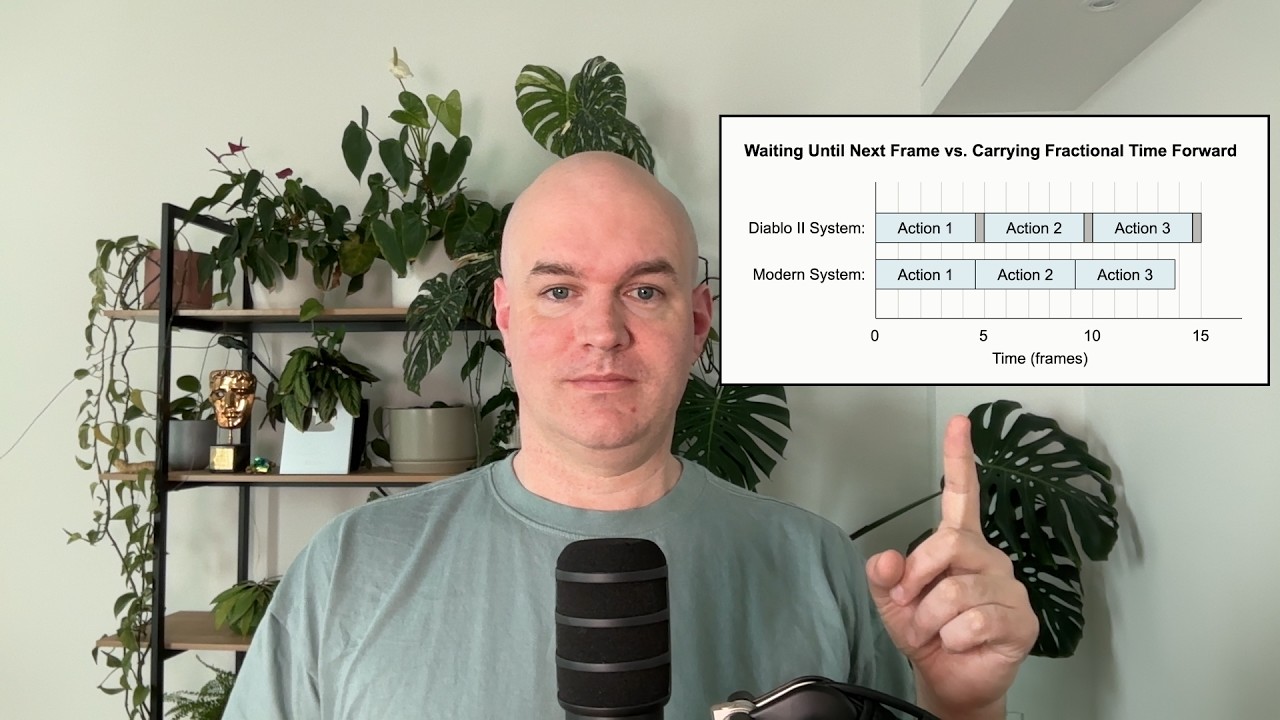
Chris Wilson helped create what is arguably the best non-Diablo ARPG around with the Path of Exile series. To say he knows a lot about the genre is an understatement, and the wisdom he shares in the video is proof.
Wilson argues that it's Diablo 2's breakpoints that make it particularly compelling.
In Diablo 2, rather than each piece of superior gear making a tiny change to your character's power level (as we see in most modern ARPGs), the effects are only felt once the numbers reach a certain threshold, aka a breakpoint.
Block rates, cast rates, attack rates, and hit recovery rates all depend on breakpoints. Diablo 2 was designed to run at an internal 25 frames per second no matter how many frames your PC is outputting, and each of the actions I just mentioned has to fit into that metric.

Wilson uses the Amazon's base faster cast rate number as an example. It takes 19 frames to complete, which eats up a big chunk of those 25 frames, and it only goes up by equipping new gear.
Here's the catch. The Amazon, in this case, only starts casting faster spells once those frames drop to a certain breakpoint. You need a total of 152% faster cast rate from gear in order to hit the lowest 11 frames per second casting speed, with several stops along the way.
If you aren't hitting those breakpoints, there's no actual difference in speed.
The consequence of this is that there are arbitrary sweet spots of attack speed, cast speed, and hit recovery that players want to reach because the jump in animation speed happens all at once. Players created tables of speed breakpoints and optimized their characters around these thresholds. [...] This behavior occurred because Diablo 2 measured animations in whole numbers of simulation frames. An animation would begin on one frame and finish a fixed number of frames later.
Chris Wilson
Wilson explains that modern ARPG systems "preserve a fractional time and carry it into the next action." This results in your toon acting at an average speed.
Diablo 2 does the opposite. It rounds "up to a whole number of frames and just discards that fractional time. " The result of this system is a series of meaningful power spikes that actually make your character feel so much more powerful.
Any Diablo 2 player who has slotted in a piece of Hammerdin gear that helps finally hit the final casting breakpoint knows exactly what I'm talking about.
Wilson explains the drawback to how modern ARPGs operate.
There are no particular values that suddenly grant a jump in power, because each incremental bonus already has an incremental effect. Despite this modern system being smoother and more predictable, I still see players asking if each new ARPG has speed breakpoints like Diablo 2 did.
Chris Wilson
The modern approach to ARPG power is indeed smoother and requires far fewer spreadsheets with listed breakpoints, but it's also far less rewarding.
Speaking from personal experience I have with Diablo 4, this seems to be the game's biggest problem. Everything feels the same all the time, and character progression is not even slightly engaging. Oh, look, a new piece of gear that's marginally better. Guess I'd better equip it.
Diablo 2's addictive qualities were not an accident
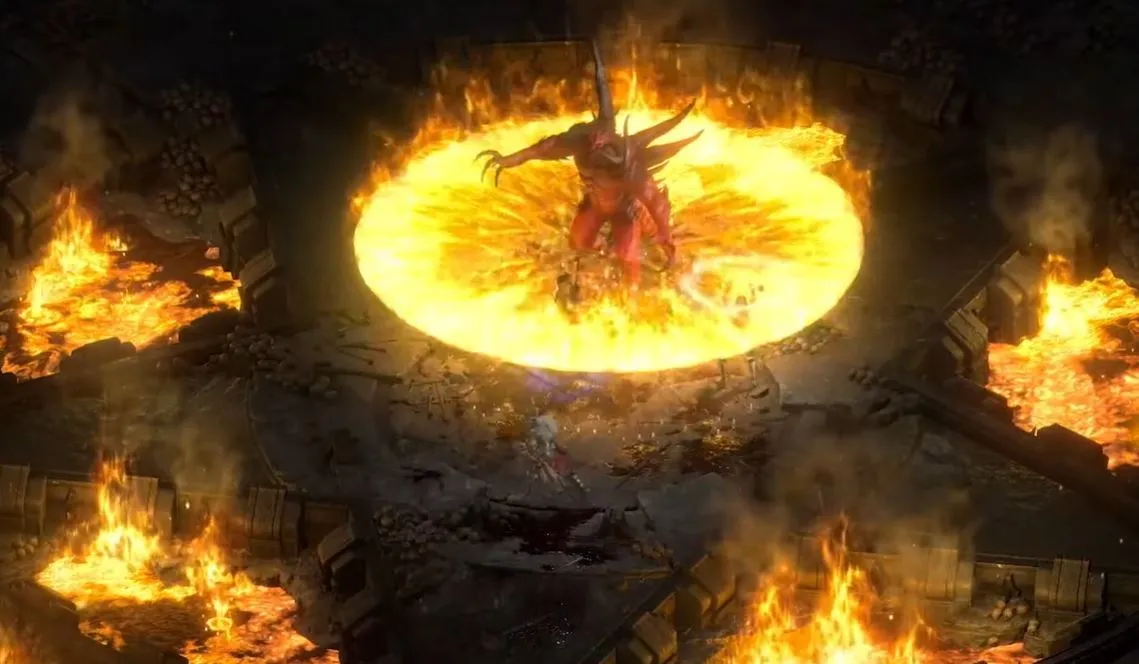
Wilson wraps up his video by stating that David Brevik, one of the original Diablo 2 creators, confirmed that breakpoints were an intended mechanic.
He confirmed that speed breakpoints were completely intentional and that he knew such rounding was occurring and did the math on it while developing the game.
Chris Wilson
Wilson adds that he doesn't think players "love inaccurate timing," but he does agree that "many players love systems where reaching a target requires planning and produces a noticeable payoff."
I've pored over breakpoint spreadsheets for so many hours it's probably better to measure in days, but for whatever reason, this mechanic never crossed my mind as what makes Diablo 2 so exciting.
For my other Diablo 2 diehards out there, do you agree with Wilson's analysis? What else do you think contributes to the game's lasting appeal? What are modern ARPGs lacking that would make them as compelling as Diablo 2? Let me know in the comments section below!

Join us on Reddit at r/WindowsCentral to share your insights and discuss our latest news, reviews, and more.

