


Xbox is at a crossroads, like many industries right now.
User behavior is changing at a rapid clip. The rise of new technologies like AI and infinite-scale "metaversal" games like Roblox is creating chaos for traditional platforms. Converge this with tariffs chaos, rising costs as component shortages bite, and competition from non-gaming addictive social media platforms: Xbox certainly has its work cut out.
To that end, Xbox CEO Asha Sharma has been tasked with reviving Xbox's fortunes and preparing it for the next decade. She's amassing a large force of new C-suite execs to foster some of these changes, including legendary industry analyst Matthew Ball.
Matthew Ball will be Xbox's new Chief Strategy Officer, essentially tasked with shaping how Xbox shows up now and in the near future. He's not long in the job, but we can already infer what he might do based on his industry-leading reporting into the state of gaming.
The traditionalist "console" universe is not a growth engine right now. PC, MENA, LATAM, China, and other emerging markets are.

Xbox CEO Asha Sharma already gave this one a shoutout, but Matthew Ball might turbo-charge it even further. As inflation and costs creep up, so too must growth to keep pace. The problem for traditional console platforms is that Western markets seem to have topped out and tapped out in some regards.
"U.S. (#1 market by consumer spend globally): Surveys consistently report that the share of the population that plays games has fallen by 2.5–4 points since before the pandemic," Ball explains.
If you've been wondering why games are being crammed with microtransactions and higher prices across the board, the answer is pretty obvious.
"Growth can only come from greater monetization of (ever fewer) remaining players. This can come from prices being forced up, players buying more, ads, or serving other business models (e.g., Amazon Prime, Google Cloud, etc.). If players don't spend more, all new investments (e.g., hiring, raises, new games, etc.) must be borne by existing players, or otherwise reduce publisher profits."
Obviously, increasing costs harms consumers for one thing, but it also constrains growth over time, potentially. It also pushes users increasingly towards free-to-play titles, which is another area of concern Matthew Ball identifies in his reporting. But Ball also identifies ways traditional platforms could potentially find growth using the "old school" methods: by increasing investment in markets Western companies have historically under-invested in and/or struggled in. Latin America, the Middle East, and China.
I could see greater investment attempts by Microsoft to break into new markets as a result. Indeed, Microsoft's Xbox Game Pass variant for China may have already leaked.
Microsoft has grossly neglected localization and stock levels in regions like the Middle East and Latin America, although China remains a different regulatory beast. But the fact remains that it's China that has captured a vast portion of all industry growth in recent years. It absolutely cannot be ignored as a growth vector, but at the same time, geopolitical challenges make China potentially elusive for Microsoft – owing at least in part to its military ties to the United States government. Navigating that one will probably be Xbox's biggest ever challenge.
The argument for (and against) Xbox games exclusivity

The Xbox Player Voice website has made it clear what the core audience wants above all else: exclusive games.
But ... the problem for Microsoft is that it doesn't make sense on paper. Matthew Ball lays it out pretty clearly: actual users who likely aren't reading this article or debating gaming on social media actually couldn't care less about exclusive single-player games.
"Since January 2021, free-to-play games average 45% of all PlayStation and Xbox time. Since January 2021, free-to-play games average 55% of all PC gaming time. Only 3.1–7.4% of global PC, PlayStation, and Xbox time goes to new, non-annual releases (and five games get half that time)."
PlayStation announced recently internally that its future single-player games would no longer come to PC at all. You could interpret this in one of two ways ultimately: that PlayStation thinks exclusive games will drive people to its ecosystem, or that the juice simply isn't worth the squeeze. Matthew Ball's role as an analyst will differ from his role as Xbox CSO. He could find that the amount of brand damage Xbox is doing to itself by putting icons like Master Chief on competitor platforms simply isn't worth that 7.4% maximum attach rate. It could also be framed as an argument to stop producing these types of games altogether, though. I'm not sure Microsoft could find viability as an entity that only produces free-to-play titles, though. Ball identifies Nintendo as a company that has continued to find success with the old school model, while also noting the Switch's unique hardware proposition as a potential factor.
But there's more evidence that Matthew Ball might favor exclusivity all up.
He's talking about mobile gaming here, but since he also identified PC as one of the only growth bright spots for Western publishers, you can infer Steam's similar 30% platform fee as a barrier for Xbox here. "Mobile remains the largest segment of the industry, but the platform tax imposed by the dominant app stores continues to extract an extraordinary share of total revenues," Ball continues. "The erosion in operating margins is exacerbated by the fact that mobile platforms take 30% of gross revenues before publishers see a single dollar. This structural cost has become more painful as development budgets rise and user‑acquisition costs soar."
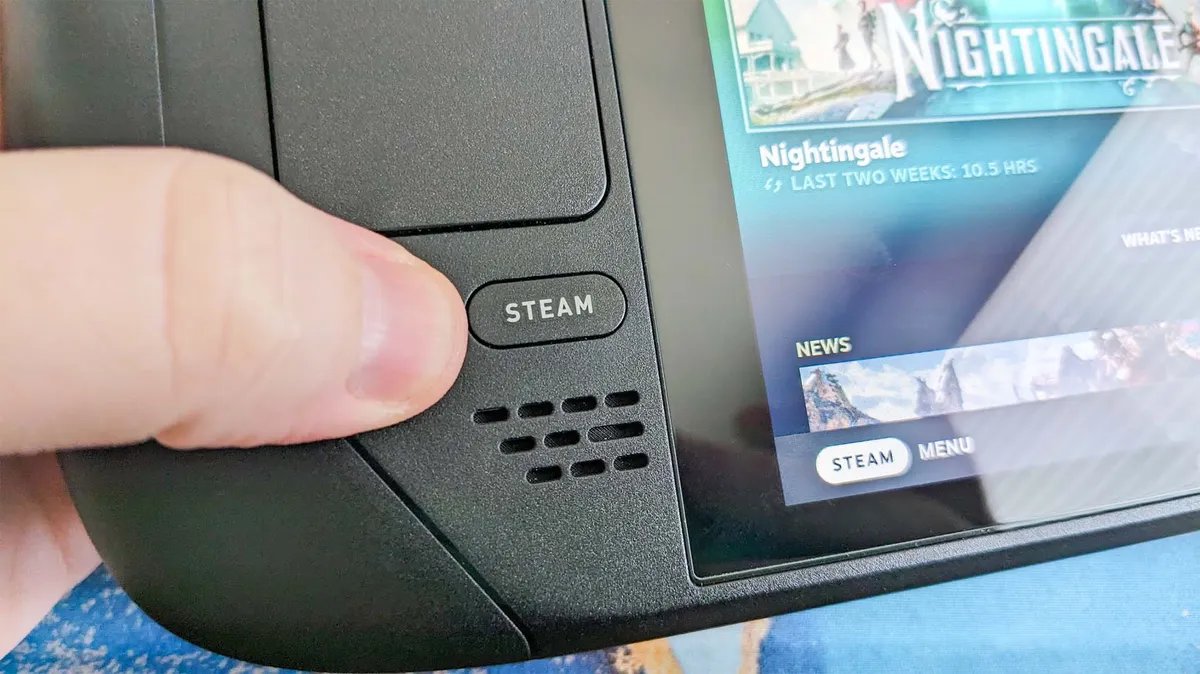
In my view, this is Ball identifying the problem of being a simple "publisher." Microsoft could devolve into being a publisher, but giving away 30% of its revenues to PlayStation, Steam, iOS, and Google Play will remain a barrier to growth either way. In my view, at least (which may well be wrong, obviously), this is an argument to strengthen Xbox's position as a platform holder, rather than capitulate.
Ball has identified the costs involved with producing games in traditional Western markets, too, as developing massive games in regions like China and Eastern Europe proves exponentially cheaper without a material decrease in quality. Ball noted how well outsourcing is doing as a growth vector. Microsoft has also quietly set up a studio in Poland to that end, dubbed Elsewhere, but we could see more outsourcing too. Minecraft Dungeons, for example, was created by UK-based Double Eleven.
"In 2025, outsourcing held a record 35.5% share of total content investment spend... Outsourcing's recent growth stems from a near-doubling of its share of net new content investment, representing ~65% from 2022–2025 (versus 33% from 2018–2022)."
Perhaps more worrying is what might happen to some of Xbox's smaller studios in this universe. Ball identifies how difficult it has become for new games to break through. Recent Xbox projects like Kiln and Towerborne weren't even a blip on the radar, sadly. Both represent millions of dollars in investment. Finding new players is tough, but getting those players to stray out of their free-to-play forever-game habits is tougher still.

"Individual games can only grow by stealing other games' players, playtime, or spend. An eat-or-be-eaten market means growing one title involves shrinking one or more others. It's even harder for new games to break through."
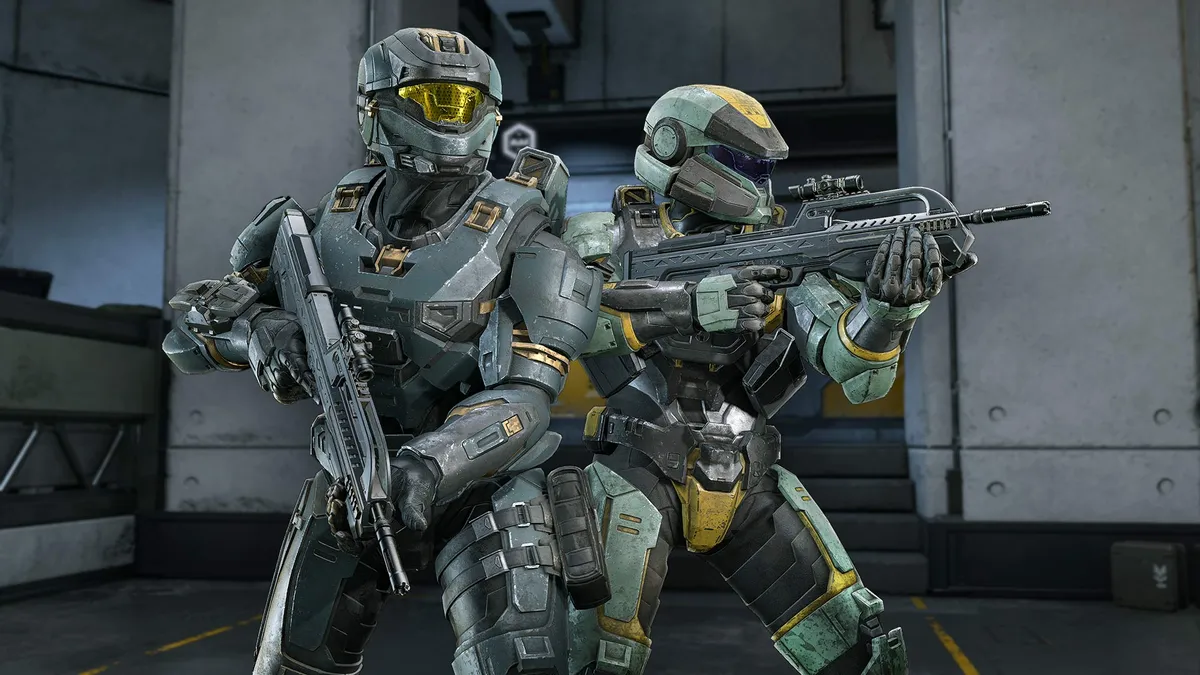
Perhaps we could see Ball double down on Xbox's long-neglected, albeit very visible, franchises. Microsoft's wholesale mismanagement of Halo is legendary, for example. I could see Microsoft investing more in fewer franchises to bring them up to a level that would make them difficult to ignore ... but building mega franchises is hard. Matt Booty also said to us in a previous interview that "everything big starts out as small," which makes you wonder if there could end up being a clash of ideologies there down the line. Taking zero risks on new IP doesn't exactly seem like a great strategy either.
Matthew Ball was previously head of strategy for Amazon Prime and was instrumental in putting it on the path that led to high-powered exclusive content, including Fallout, The Boys, and Rings of Power. Prime's growth as a destination for video as an incumbent is undeniable, and it was, at least in part, via vast investment in immediately recognizable franchises. He'll also have a unique understanding of how video games and TV shows based on them can catalyze each other ... perhaps we'll get a Halo TV show that'll be actually good.
Big changes to Xbox Game Pass might be on the horizon ... subscription fatigue is real, but direct-to-consumer and user-generated content is growing

Ball has written a lot about subscription fees and platform services as a growth vector for Xbox and other platforms, although he also identified it as a catalyst potentially harming packaged game sales. Platform services have grown 1.8x faster than the market rate, capturing 7% of industry growth according to his data. Packaged game sales, conversely, have shrunk by comparison.
"119% of net spending growth since 2020 has gone to platform services. Total spending on game sales and transactions is down nearly $3.7B per year (or 11%)." Ball emphasizes that the model of "selling games" is in decline owing to a variety of factors. "Console platform services (PlayStation Plus, Xbox Live & Game Pass, Nintendo Switch Online) have grown every year since 2019, even as game sales and transactions have declined. 119% of net spending growth since 2020 has gone to these services. This means the traditional model of selling games — including exclusives — is in structural decline."
There are multiple roads Ball could take with regard to Xbox Game Pass, but it's hardly as if Xbox Game Pass by itself is responsible for this wholesale decline. Xbox Game Pass only has around 30 million subscribers. Free-to-play games, mobile games, and other forms of entertainment have decreased spending on packaged game sales for every platform, far beyond Xbox's green walls.
Indeed, Ball mentions that the long-term viability of subscription bundles might struggle as our backlogs bite, and if users drill down into specific desires. There's more content than ever out there. Do we need all-you-can-eat? "Many players are choosing to spend directly on the specific content they value most rather than paying for broad subscription bundles. This shift reflects a desire for precision in spending and a reluctance to pay for large catalogs when only a small portion is used."
Xbox's previous CEO Phil Spencer talked about Xbox Game Pass as a content fund powering and funding traditional games, freeing them from the pressure of delivering hits with stable, guaranteed engagement revenue. It's unclear if Ball will disrupt that, or instead build upon it, since he argues both positions: packaged game sales have declined, but users are also showing signs of spending specificity. I've long heard rumors of an ad-powered Xbox Game Pass tier, and Ball explicitly talks about it throughout his presentation. "Today, ads remain rare among PC/Console games and services (with the exception of on-device/in-store ad units). But eventually, ads reach all addressable surface areas."
The amount of money actually flowing to game makers has arguably shrunk in this universe, with "services" capturing growth. You could infer this is because users' money and time are being pulled in more directions than ever, and subscription services and "free-to-play" have become more cost-effective vectors in customers' minds. Would eliminating Xbox Game Pass' day one games pledge return growth to traditional packaged games? The data doesn't seem to suggest that. It suggests it might just push even more users towards free-to-play titles instead, save for some big tentpoles like Forza Horizon and Call of Duty.
Ball has joined other analysts in identifying how "interactive entertainment" platforms have evolved beyond simple gaming. "Interactive entertainment is no longer limited to games. Platforms such as TikTok, Twitch, and OnlyFans command extraordinary amounts of user time and spending, often exceeding that of traditional game publishers," Ball explains. "Their creator‑driven subscription and tipping models allow them to scale engagement without the production costs associated with game development."
Xbox is well-positioned, potentially in a creator-first universe. Perhaps we won't be seeing XboxFans any time soon ... but Microsoft owns Minecraft and has frankly barely done anything with it from a platform standpoint. If it were me, I'd position Minecraft as Xbox's exclusive metaversal layer. Minecraft would be integrated into Xbox and Xbox PC at a platform level, both as a social system and a content delivery mechanism. Players should be able to represent themselves as Minecraft avatars on Xbox Live and create Minecraft games directly from their Xbox.
Ball continuously hails Roblox as the industry's most explosive growth area right now. It's frankly baffling that Microsoft hasn't leveraged Minecraft in any way, shape, or form to grow Xbox. Perhaps Ball agrees.
"At the end of 2024, Roblox had more DAU than PlayStation, Switch, or Xbox. A year later, DAU were up another 69% (with 3x as many DAU added as in the first year of COVID)," Ball explains. He goes on to describe the 'threat' of Roblox to traditional gaming models, noting that it's coming close to rivaling Netflix itself in use. "In fact, Roblox is starting to challenge Netflix for total hours of use. In 2025, Roblox hit 65% of Netflix's hours (82% in Q3), and while Netflix grows ~1% a year, Roblox manages 25–70%." Ball also noted that Roblox captured 60% of net non-China growth since 2021. Obviously, Minecraft is the big untapped goldmine (diamond mine?) here.
With regulators forcing iOS and Google to open their platforms up to third-party stores, could Xbox make a direct-to-consumer play here? It would take some significant investment to see through. The Xbox Mobile Store has been a struggling project for some time, and Microsoft's Minecraft operation is generally quite sluggish when it comes to updates ... a significant overhaul of how Minecraft shows up, to position it against Roblox, would be a huge undertaking.
Matthew Ball's role as an analyst is going to differ heavily from his role as Xbox CSO

Matthew Ball's role as an analyst will differ greatly from his role as Xbox CSO. He'll have access to unique insights and data that he wouldn't have been fully privy to on the outside, while on the other side of the fence. Indeed, his analyses focus on identifying the constraints and problems — not necessarily the solutions, nor aspects of managing fan expectations, or brand equity.
Matthew Ball is a gamer, crucially. He understands the industry better than anyone and spends an inordinate amount of time parsing everything the industry does across the entire globe. He was instrumental in helping Amazon Studios compete as an incumbent against Netflix and Disney+, and as such, has unique insights into the impact of cultural touchstones and their intersectionality with technology and subscription services on top.
Xbox is in an incredibly difficult position with pressure on all sides. Fans want a very specific experience, but the younger cohorts are moving away to other experiences at a rapid clip. Component prices are absolutely insane, and geopolitics and tariffs are adding needless pressure on top. Rising costs of consumer goods put pressure on luxury spending as much as they put pressure on companies' own costs, eating into margins and threatening business stability.
RETURNOFXBOXMay 21, 2026
Xbox has long been this sort of "side project" entity within Microsoft, but the acquisition of Activision-Blizzard turned it into a massive entity within its own right. But it's true that the bigger they are, the harder they can fall. Billions in the black can be billions in the red overnight, and balancing all of that is a feat I'm not sure many of us can really understand. No pressure!
But Microsoft has put together a team of proven winners to explore all of this potential. Roblox has changed the way an entire generation thinks of gaming. The Google-Apple mobile duopoly has done immense damage to developers and gamers alike. Social media has changed all of our online habits, too.
The potential is still real and raw, though. Will Microsoft's historical penchant for corporate inertia and short-termism prevent Xbox from reaching its full potential? Or will Ball, Booty, and Sharma unlock a new era of transformative growth for Xbox fans and the gaming industry as a whole?
The next five years are going to be very interesting.

Join us on Reddit at r/WindowsCentral to share your insights and discuss our latest news, reviews, and more.

