


"I hear you," Xbox CEO Asha Sharma said, when asked about Xbox exclusives.
It's the most fractious debate around Xbox in recent times: that of exclusive content. A couple of years ago, Xbox announced that it will no longer have exclusive games, as if it was something to be proud of. Digital platforms revolve around exclusive content. I subscribe to Netflix to exclusively get WWE. I subscribe to Disney+ to exclusively get Star Wars content. I buy a Nintendo Switch to get access to Mario and Super Metroid. The list goes on, and it's an obvious narrative to sell to consumers: join our ecosystem; get exclusive content you can't get anywhere else!
Microsoft disagrees.
Microsoft's pursuit of a 30% gaming margin led Xbox to start putting its games like Halo, Forza, Gears of War, and Fable onto other platforms. In some cases, it shouted this from the rooftops in a celebratory manner, alongside its much-hated "This is an Xbox" campaign, which inexplicably marketed competitor platforms who would love nothing more than to see Windows and Xbox die.
Without exclusive content, it seems inevitable that Xbox has decreased desirability. With fewer users, you risk putting the platform into a death spiral: fewer users means more games exclusively skipping the platform, which in turn means fewer users. This dark cloud has been hanging over Xbox for years now, with customers and developers alike worried for its long-term viability.
I believe new CEO Asha Sharma wants to bring Xbox exclusives back. If you look into her background at Instacart, it was built on exclusivity deals for e-commerce fulfillment. She's mentioned the idea of exploring exclusive games for Xbox again. She has a real competitor spirit: something Microsoft seems to lack under Satya Nadella.
But, there's a big problem. What's the point of creating desire, marketing, and exclusive content for your hardware ecosystem when you can't actually procure stock to sell?
Indeed, Xbox, PlayStation, and Nintendo are already selling through every unit they can get their hands on. Yes, even Xbox. The demand is there, but the price of memory and other components has broken the business model. And the big three are all impacted.
It doesn't leave Asha Sharma with a lot of wiggle room.
The memory rout is eating into stock, and demand

The video game industry is worth more than ever overall, but the traditional platform holders are struggling from a variety of "headwinds."
This is the year of Grand Theft Auto 6. This is the year Call of Duty stops shipping on past-gen consoles, like the PlayStation 4. But despite this, PlayStation itself, the market leader, is warning investors that PS5 hardware sales will decline 6% year-over-year, "due to a decrease in unit sales." This follows a 46% year-over-year decline already, reported this month.
How is it that even PlayStation, who has an exclusive marketing activation with Grand Theft Auto 6, is predicting a hardware sales decline?
The answer is pretty simple: Amazon, Google, and other AI hyperscalers have already purchased all the memory, now and future allocations too. There's a huge shortage of components for consumer electronics, with Nintendo also raising prices specifically later this year as its fixed-price component contracts expire. Console makers know that traditional gamers won't bite at these new, painful higher prices, particularly when their disposable income is also seeing a generational squeeze.
"Unfortunately, the recent surge in memory and other component prices," Nintendo explained, "and the changes in the market environment, including trends in the foreign exchange market and the price of oil, are all factors that we anticipate will continue over the medium to long term."
Microsoft is obviously part of engineering this problem, with its own hyperscaler ambitions. Unfortunately, the memory Microsoft acquired is not being sent to Xbox, it's being sent to Azure, so we can use Copilot to generate cat memes, deepfakes, and confidently incorrect LinkedIn think-pieces with greater efficiency.

Xbox in essence has been sabotaged at both ends by Microsoft here, creating a self-actuating problem and self-fulfilling prophecy. Microsoft knows Xbox can't procure memory at a reasonable price. Microsoft knows Xbox can't sell hardware at an even vaguely reasonable margin in this current climate. And Microsoft knows putting Halo, Gears, and Forza on PlayStation destroys Xbox's desirability as a hardware ecosystem.
Microsoft engineered the predicament Xbox now finds itself in. CEO Satya Nadella said during the FTC trial that he hates the idea of software exclusivity, arguing against the frankly ridiculous accusations that Microsoft would move to make games like Call of Duty exclusive. Indeed, Nadella has a long history of killing any and all Microsoft hardware initiatives, with Surface on the ropes and Windows Phone six feet under.
I'm sure if Satya Nadella had his way, Xbox would devolve into a simple publisher. It's a better margin business on paper. Microsoft wouldn't have to deal with the headaches that come with distributing hardware, providing repairs, customer service, and so on. But the credibility damage to Microsoft would be absolutely astronomical: why would you ever put your faith in Microsoft products again if it moved to orphan tens of millions of Xbox users' digital content?
Indeed, speaking to Xbox staffers at a recent internal event, Satya Nadella remarked that business clients in Azure meetings often want to talk about Xbox, rather than Office 365.
That's why Xbox Helix is still on the way. Microsoft knows they're in too deep with gaming to pull out of its hardware ecosystem now. Nadella said he's long on gaming. But, I'm here to tell him that Xbox won't have a long life if it doesn't have some form of exclusive content.
Even if Xbox will struggle with stock levels, it should move back to exclusive games anyway
I understand the logic. If you can't get the hardware, you need to find the margins in software. PlayStation's expectation that it'll struggle to move hardware even in the year of Grand Theft Auto is obviously more than true for Xbox as well. Why go crazy on marketing and exclusive games (which create desire for your hardware) if you can't actually get the hardware at a reasonable price? I get the logic, but ...
I would argue thusly; if you don't, you won't have an ecosystem at all when the memory rout ends. And it will end eventually.
There's no universe where we'll see God of War or The Last of Us on Xbox. There's no universe where we'll see Super Metroid or Mario on Xbox. In a perfect world, software wouldn't be locked to hardware, and we'd be able to play wherever we want — much like being able to access Spotify or Netflix on any device we want. But we do not live in that universe, nor will we ever. Microsoft is saying to today's and tomorrow's customers that they shouldn't buy an Xbox, because if you buy a PlayStation, you'll get both Xbox's games and PlayStation's games. Better yet, save a bit more, buy a Steam Machine or a gaming PC, and get Xbox's games and thousands of Steam-exclusives too.
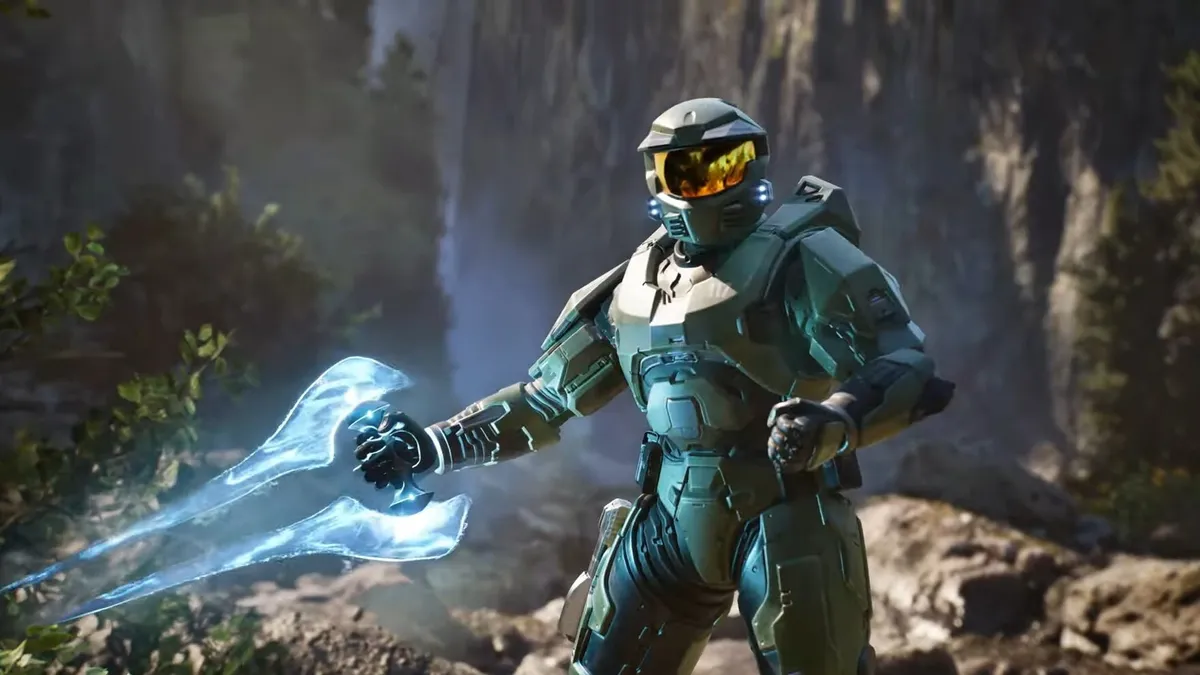
It's with that in mind that you can't really draw any other conclusion: putting Halo on other platforms like PlayStation is chaos-brained insanity. The brand damage is absolutely immeasurable, and it will continue to dog Xbox long into the future.
This was a historic mistake made by people thinking quarterly, rather than by people thinking about Xbox's long-term health. The astronomically stupid self-immolating decision will continue to have long-term consequences for the Xbox brand and its relevance both with customers, developers, and distributors alike.
The memory-pocalypse is expected to last through to 2028 I've been told. Xbox is a vast and expensive operation, more so than ever now Activision-Blizzard is part of the equation. When Call of Duty has an off-year it drags the entire operation down with it, as evidenced by last year's Black Ops 7 fiasco. But therein lies the core problem: gaming is not a quarterly business, nor has it ever been.

To treat Xbox like an Azure or an Office 365 is fiscally negligent. Gaming is a hit-driven business, curated over decades of goodwill building, nostalgia, and cultural attachment. Microsoft shouldn't be thinking quarter-over-quarter for Xbox, in a universe where games take literal years to make.
You. Cannot. Run. Xbox. Like. Azure.
As such, I think Microsoft needs to stop capitulating to Steam, PlayStation, and other competitors who are actually competing to end with Xbox, and instead capitulate to reality: Xbox needs exclusive content.
Microsoft needs to soak the insane decisions of the last couple of years, and accept reduced margins to subsidize the mistakes, while it rebuilds the culture around the brand, and return to meeting expectations of the community and the wider industry at large.
Master Chief should be Xbox's Mario, Gears of War should be Xbox's God of War — the mascots that sells the ecosystem. Instead, they've become a symbol of Microsoft's wholesale unwillingness to compete: quick and cheap ports for a quick buck. How sad.
Gaming is about the characters, the worlds, and the communities around those icons. It's about building up generational cultural cache. Master Chief should be Xbox's Mario, Gears of War should be Xbox's God of War — the mascots that sells the ecosystem. Instead, they've become a symbol of Microsoft's wholesale unwillingness to compete: quick and cheap ports for a quick buck. How sad.
I think Asha Sharma understands the value of exclusive games. Asha's previous company, Instacart, built itself up on long-term exclusivity contracts with the likes of Aldi and others. But, will she be able to convince Microsoft's bean counters to think about Xbox's generational value, its cultural value, rather than its quarterly value?
The most likely scenario in my mind is that, eventually we will return to exclusive games. There's no other path forward in my view. It might not be until after the memory-pocalypse ends, but I wonder if it'll be too late by then.

Join us on Reddit at r/WindowsCentral to share your insights and discuss our latest news, reviews, and more.

