


It's a little conspicuous that, in among all the strategy changes at Xbox thus far, new CEO Asha Sharma hasn't mentioned Xbox Game Pass all that much.
Inspired by the Netflix and Spotify era, Xbox built Game Pass, as an all-you-can-eat subscription service serving everything from AAA blockbusters to hidden indie gems. During its heyday, it was hailed as "the best value in gaming," and often times seemed too good to be true. Increasingly, it looks like it might be the case.
Xbox's huge cuts this past month have been driven in large part due to a decline in Game Pass revenue and a decline in Call of Duty, so I'm told. Last year's Black Ops 7 didn't resonate as dominantly as the franchise previously has, as strong competition from Battlefield 6 and Arc Raiders ate into its traditional user base. Call of Duty: Black Ops 7 still went on to sell monstrous amounts, but the operation is so vast and expensive, even small disruptions can have big consequences.
Indeed, the fact Call of Duty showed up in Xbox Game Pass disrupted the business model at both ends. Fewer people purchased Call of Duty outright, and the Game Pass price hike to pay for it led to an exodus of users over time, disrupting both business models quite heavily. There are various other factors, but that's the core of what went down, ultimately. As user behavior evolves, is Xbox Game Pass now having a net negative impact on Xbox's overall operation?
Bloomberg's Jason Schreier discussed sentiments I've also heard about Xbox Game Pass' impact on Microsoft's gaming studios, in no uncertain terms.
"There are a lot of people out there in studio leadership within Xbox who absolutely detest Game Pass," Schreier said on his Triple Click Podcast, "[They] think it has destroyed the value of their games, think it has taken away the value from all games in general and has been a detriment to the games industry in those people's view, because of how it devalues games."
I was curious what my own sources felt on the topic. Speaking to a former Xbox studio lead, they were pretty upfront about echoing what Schreier reported: "Giving games away for 'free' in Game Pass from day 1 sends a message to consumers that the games don't have inherent market value. It almost creates an assumption that these titles could not sell on their own," one said. "It felt like a race to zero."
I asked another former Xbox lead with intimate knowledge of the Game Pass strategy previously, who explained that the idea around the whole platform was to offer core games a stable revenue stream as many core users increasingly opt for free-to-play titles, or wait for deep cuts and sales, such as those often found on Steam.
They explained that Xbox has an engagement formula it uses to allocate profits from Xbox Game Pass back to studios. Although some studio figures I've spoken to feel that these accounting mechanisms aren't transparent, nor are they motivating for studios — whose bonuses have traditionally been tied to direct sales rather than oft-vague "engagement" metrics.
Circana Player Engagement Tracker US MAU charts for June 2026: - Meccha Chameleon debuted on top of the Steam US monthly active user chart - Destiny 2 jumped to 5th from 32nd in May on Steam - Where Winds Meet launched in top 10 on Xbox with Game Pass release
— @matpiscatella.bsky.social (@matpiscatella.bsky.social.bsky.social) 2026-07-19T13:46:40.715Z
Despite Xbox Game Pass, it is true that the top 10 most-played charts are generally dominated by the same handful of free-to-play titles, or service titles, that monetize primarily via bite-sized microtransactions. Xbox Game Pass was designed to encourage users who are perhaps less inclined to spent $70 on a full priced title to try something outside of their typical free-to-play habits.
There was a time early in Xbox Game Pass' life where the instant-audience Game Pass would grant helped games achieve free-to-play-like virality, actually boosting retail sales. As Xbox Game Pass habits become embedded and expectations become set, it seems the positive impacts of Xbox Game Pass become increasingly difficult to quantify.
It's true that Xbox Game Pass by itself is driving billions in revenue for Microsoft, and consumers obviously love it. Many independent developers have remarked on funds from Xbox Game Pass as being a financial lifeline, too. But, Xbox is not exactly transparent about how the profits are allocated to first-party studios, even internally it seems from those I've spoken to on the topic.
If Game Pass is subsidizing studios over retail sales, the harm of any potential decline seems to be distributed across the board, even across studios and teams that might've otherwise had good years in a traditionalist retail model. That is speculative, though, given how opaque the Xbox Game Pass business model is. We don't have a crystal ball to deduce how well a game might've performed outside of Game Pass, as well.
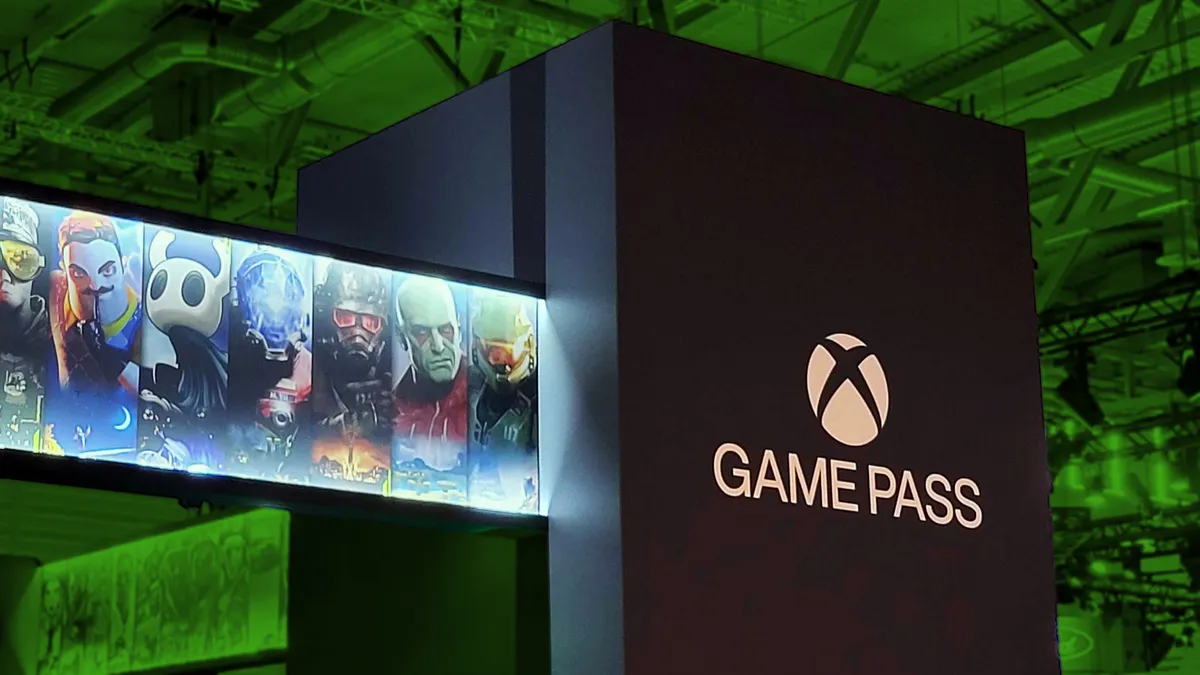
Jason Schreier speculates that Microsoft might move away from its day one Xbox Game Pass model. Microsoft hasn't signalled intent to do that (yet), but the fact that it will no longer include the latest Call of Duty titles in the service could be a hint.
I suspect what we might get instead is some sort of "build your own" Xbox Game Pass, where users can pay a premium for titles like Call of Duty, Forza Horizon, or even things like World of Warcraft's or Minecraft's subscriptions on an à la carte basis. Microsoft's Xbox margins are being crushed by a variety of crises, whether it's tariffs, supply chain problems, geopolitical issues, or the on-going memory crisis. Microsoft has also seen interest in its Xbox hardware reach unprecedented declines, owing to the fact it pivoted away from any form of exclusive content.
Xbox Game Pass has remained a bright spot in Microsoft's overall gaming offering with consumers. Even as exclusive games failed to materialize, games got cancelled, and price hikes bit, Xbox fans and customers could usually point to Xbox Game Pass as a reason to stick with the platform. That changed when Microsoft hiked its price to $30 last year to offset Call of Duty potential losses. Without a strong line-up of exclusive titles, Microsoft is likely cautious to do harm to one of the only unique selling points Xbox Series X|S consoles have left.
RELATED: Xbox's Todd Howard on the future of Fallout, Starfield, and The Elder Scrolls
Right now I would imagine Microsoft is looking at every lever it can pull to boost up Xbox's margins. It has angled for devastating and potentially self-defeating layoffs in the short term. We've seen price hikes on hardware. I suspect addressing ways to tighten up the Xbox Game Pass model might be next.

Join us on Reddit at r/WindowsCentral to share your insights and discuss our latest news, reviews, and more.

