


What you need to know
- Phil Spencer, executive vice-president of Gaming at Microsoft, has provided additional context around the removal of HDMI-in, SPDIF optical audio, and the IR blaster with Xbox Series X.
- Spencer attributes the decision to low usage, alongside efforts to streamline the design and cost.
Xbox Series X introduces countless advancements over the Xbox One family, on track for a release this holiday, kickstarting Microsoft's next-generation gaming plans. But its arrival also removes some hardware features commonplace across existing consoles, including the HDMI-in port, SPDIF optical audio, and IR blaster. While primarily remnants of Microsoft's early ambitions for Xbox One, positioned as a media hub, their removal hasn't gone unnoticed.
Executive vice-president of Gaming at Microsoft, Phil Spencer, has provided additional insight into the decision to remove the trio, discussing how their absence aids the form factor while keeping down per-unit cost. Spencer's response comes via IGN's Unlocked podcast, when the discussion shifted toward the removal of the optical port, and its implications for optical-based accessories, like Astro headsets.
"The optical audio port — we had a conversation with headset manufacturers before all of this," said Spencer. It comes after Astro already confirmed plans to introduce USB compatibility via an update, working with Microsoft to overcome the removal of optical audio. "So, when we stood up and said your accessories are going to work, we weren't walking a tightrope there. We'd already had the conversations. We saw so much of the energies going into so many of the codecs, delivering those over either HDMI or USB."
"We also frankly know how many people use it today on the console. We also do the math of, we have to put a part in every console that x-per cent of the people use. Is there a better place for us to spend that money if we can support it in a different way?"
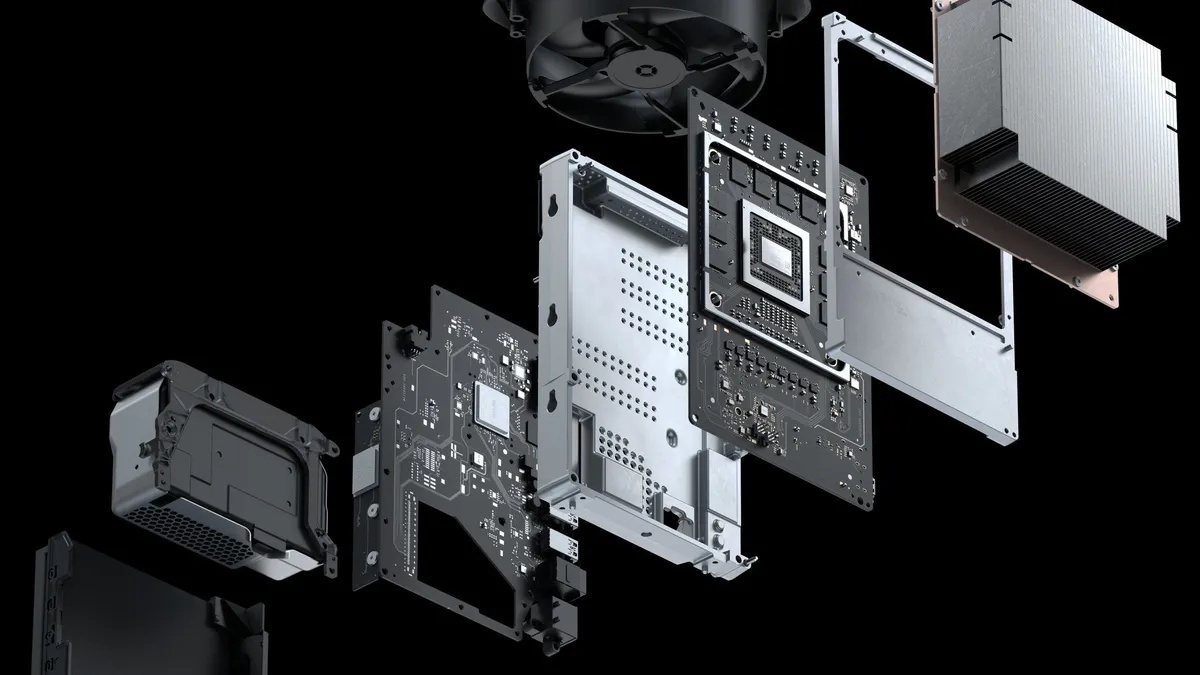
Spencer explains how a similar philosophy led to the removal of HDMI-in, previously used as HDMI passthrough for cable boxes, and the IR blaster for select accessories. With both heavily centered around Microsoft's former TV and general entertainment focus for Xbox One, it appears usage failed to justify its inclusion for the next generation.
"The decision about HDMI-in, decisions about the Kinect port, decisions about IR blaster on the front — all of these decisions are things that we think through very deeply and try to figure out where the plans are. And I know with everything that we don't do, that we used to do, there is going to be somebody who's disappointed. It's not the funnest part of the job, but I think we have to plan for the future."
Xbox Series X is currently set to launch holiday 2020, with pricing and release dates to come.
Xbox Series X/S
Main
- Xbox Series X: Everything we know
- Best games coming to Xbox Series X/S
- List of Xbox Series X specs
- What is the Xbox Series X release date?
- How much does Xbox Series X cost?
- Why you can't preorder Xbox Series X yet
- Best Xbox Series X Headsets

