


Enjoy our content? Make sure to set Windows Central as a preferred source in Google Search, and find out why you should so that you can stay up-to-date on the latest news, reviews, features, and more.
Valve's upcoming Steam Machine is a highly anticipated, console-like gaming PC that's expected to launch in early 2026. It was first revealed on November 12, with the spec sheet showing off a semi-custom AMD Zen 4 processor with integrated RDNA 3 graphics.
Despite the overwhelming fanfare surrounding the Steam Machine announcement, one spec stood out to a lot of PC gamers. Rather than using the latest HDMI 2.1 standard, originally unveiled in 2017, the Steam Machine uses an older HDMI 2.0 hookup.
Now, the HDMI 2.0 "decision" has been at least partially cleared up. Speaking with Ars Technica, a Valve representative has stated that the Steam Machine's hardware does indeed support HDMI 2.1. The problem? It all boils down to how the HDMI Forum — the group that essentially gatekeeps the connection standard — handles licensing.
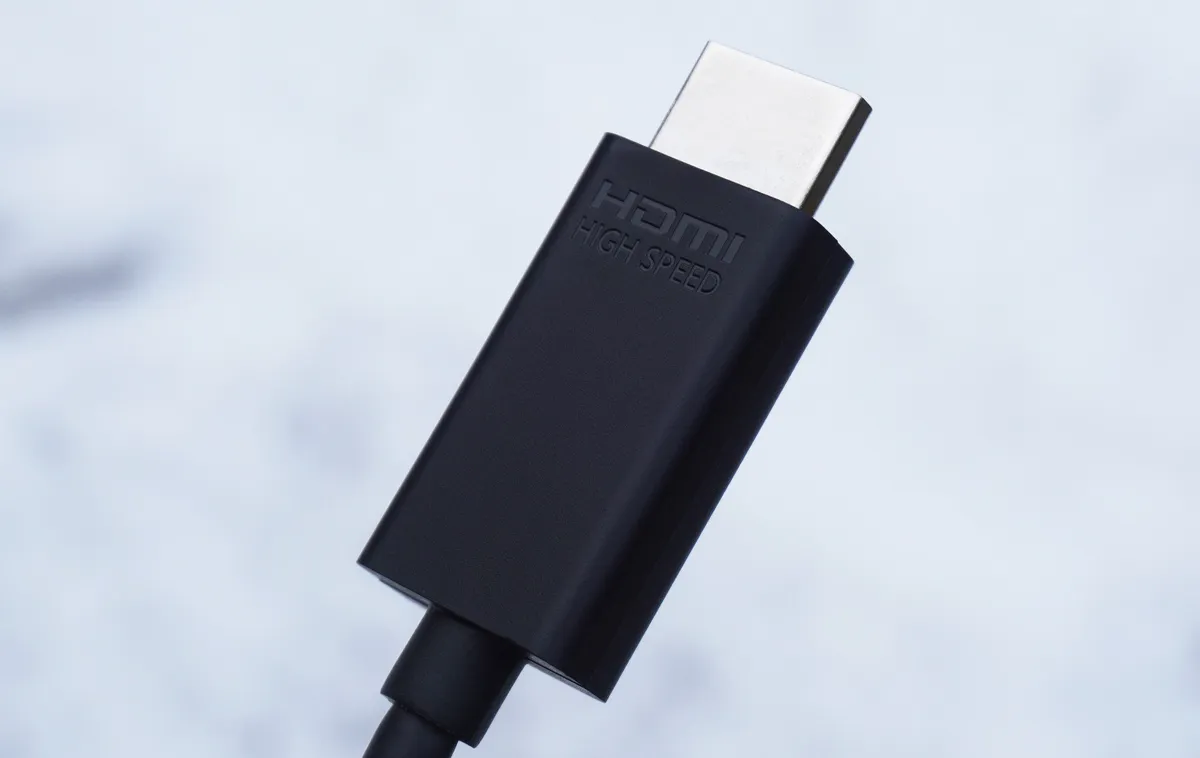
At this time, the open-source implementation of HDMI 2.1 is blocked by the Forum. And since Valve's own SteamOS operating system relies on open-source AMD drivers to function, the full feature set of HDMI 2.1 just isn't possible.
This has led to complications during development, with Valve having to validate the Steam Machine's port in Windows (and not its native SteamOS) while testing. The Valve rep told Ars Technica that "we've been working on trying to unblock things there" in terms of the HDMI port's performance, which includes bumping HDMI 2.0's theoretical limit of 4K@60Hz to 4K@120Hz.
That bump is thanks to something called chroma sub-sampling, which compresses color data. This gets more data down the pipeline than the Linux drivers for HDMI 2.0 can technically handle.
Due to the compression, however, video quality has a tendency to degrade. Is it noticeable enough to ruin your experience? For most people, not likely. And anyway, it's not like the Steam Machine only offers HDMI 2.0. The other video connection, DisplayPort 1.4, offers far more bandwidth, and it's easily capable of 4K@120Hz.

👉 HDMI vs. DisplayPort: Which is better for PC gaming?
There's another sticking point due to Valve's HDMI 2.0 blockade. The older standard lacks HDMI-VRR support, afforded by HDMI 2.1, a Variable Refresh Rate (VRR) technique that helps smooth out and sync refresh rates. While the Steam Machine fully supports AMD FreeSync over HDMI, not all TVs are compatible.
Again, this sort of technical grit isn't likely to stop the vast majority of gamers who want a Steam Machine from picking one up when it launches in 2026. It does, however, demonstrate some of the lesser-known complications that arise when developing for Linux.
Valve does indeed have enormous sway in the PC gaming world, and it will be interesting to see if it can influence the HDMI Forum's decision to keep its 2.1 driver closed up and out of the world of Linux.

Follow Windows Central on Google News to keep our latest news, insights, and features at the top of your feeds!

