


Microsoft's share price has slid 22% in the past year, as investors increasingly cast doubt on the firm's long-term AI strategy.
Artificial intelligence has been billed as the next coming by Big Tech, with everyone from Amazon to Google trying to figure out how to leverage the expensive technology to generate profits. The problem is, nobody is even close to having an answer.
Generative AI is incredibly costly to run, and the return on investment is unclear at best. Many companies are starting to discover that, in fact, it's cheaper and more effective to simply use human labor. Companies that previously laid off engineers in favor of AI models later found themselves crawling back to those fired, and others have put large restrictions on token expenditure as returns remain elusive.
I saw a clip on CNBC from Ed Zitron, creator of the Where's Your Ed At newsletter and host of the Better Offline podcast recently. It summarized Microsoft's AI conundrum in pro wrestling terminology — which appealed to my simple brain. His full analysis is anything but simplistic, though. It speaks to the hard reality companies like Microsoft are facing: Is any of this actually worth it?
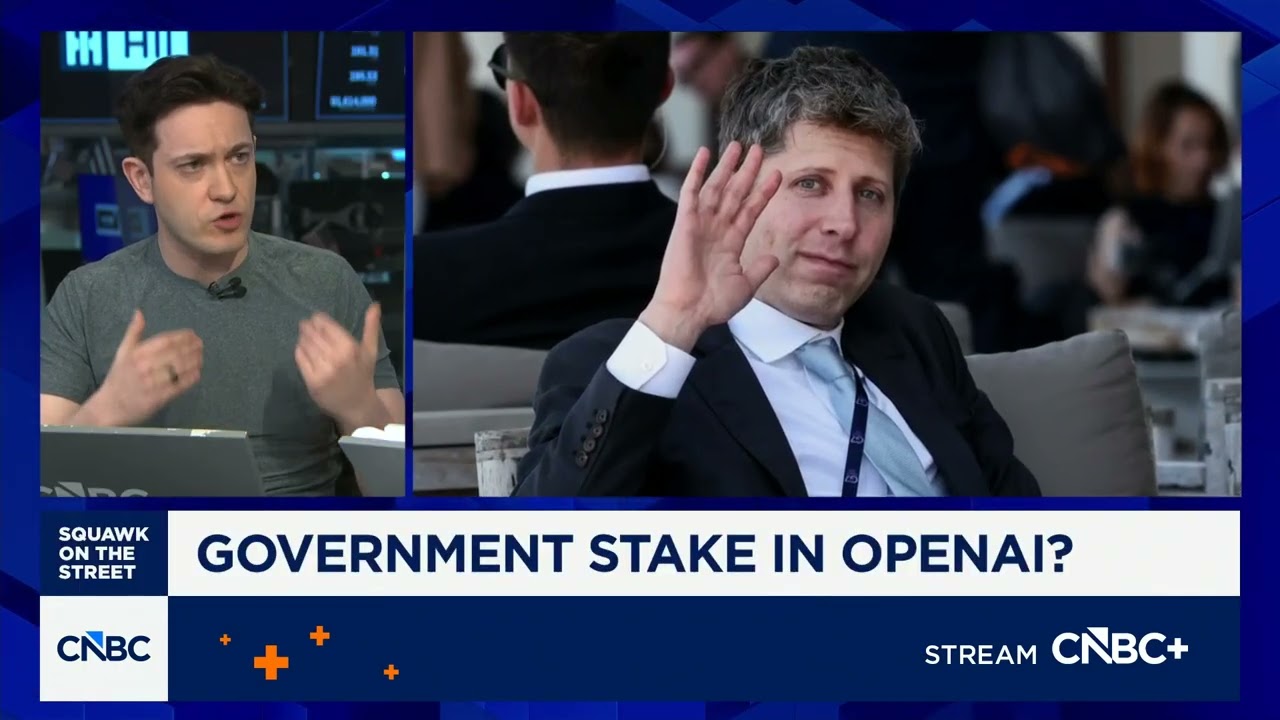
Zitron describes the challenges of companies like OpenAI and Anthropic joining SpaceX in going public, describing how the company's financial realities betray the almost demented hype around them.
"They'd be the first to be this bad, other than WeWork, and this is so much worse than that. OpenAI burned $20.9 billion dollars in 2025. The problem with these companies is ... their margins are getting worse. Their costs increase linearly with their revenues. There's no proof they can improve their margins. No amount of specialist silicon will bring these costs down.
"We're at a point where OpenAI is pushing their IPO to 2027 because they couldn't get a trillion-dollar valuation. People are wising up to the problem of generative AI: there's not really a business there."
Zitron posits that none of the hyperscalers and companies like OpenAI and Anthropic "encourage waste," while potentially stealing ideas generated by companies using their models, citing Claude Design and Figma. Indeed, the only public company that seems to be flying on its AI hype right now is Google. I would argue that's less to do with innovating, and more because they've found a way to steal revenue from human creators via Gemini's Google Search summary box — instantaneously creating infinite, dynamic (albeit hallucinating) ad-scaling opportunities.
This wholesale content theft is not as readily available to OpenAI, Anthropic, or Microsoft. Google Search remains the dominant tool for browsing the web, and thanks to Chrome and Android, Google owns the entire stack here.

Microsoft very much does not own the entire stack. It barely owns a stack at all here.
Microsoft's partnership with OpenAI is on the verge of collapse, pending contractual obligations that will expire over the next few years. It's already ditching OpenAI's pricey models in favor of supposedly more-efficient MAI home-grown models in some products. Microsoft Copilot is already barely used, despite being baked into Windows. It languishes at lower than 10% of the market, according to estimates, far behind the likes of Claude, Gemini, and ChatGPT.
CEO Satya Nadella's decision to give up on Windows Phone and internal Android projects has precluded Microsoft from any form of mobile play here. Mobile is where all new consumer tech will thrive, whether or not it's AI or something else. The historical open nature of Windows prevents it from reaching consumers with any of its products. Nobody uses Bing, Edge, or Copilot, and it's a result of Microsoft's wholesale lack of foresight.
Microsoft bet that it could provide the underlying infrastructure instead, and has spent monstrous amounts of CapEx on data centers in the past few years. But Zitron posited in a large report from May that it might be exaggerating, or perhaps even outright lying, about its data center expansion plans. Indeed, there's little evidence that Microsoft has actually expanded its capacity since 2024. Zitron tracked a variety of Microsoft-announced data center projects and found them in various states of incompletion.
Is this a signal that there's no real demand? Is Microsoft intentionally stalling and dragging out construction because it knows there's no actual ROI incoming from these projects?
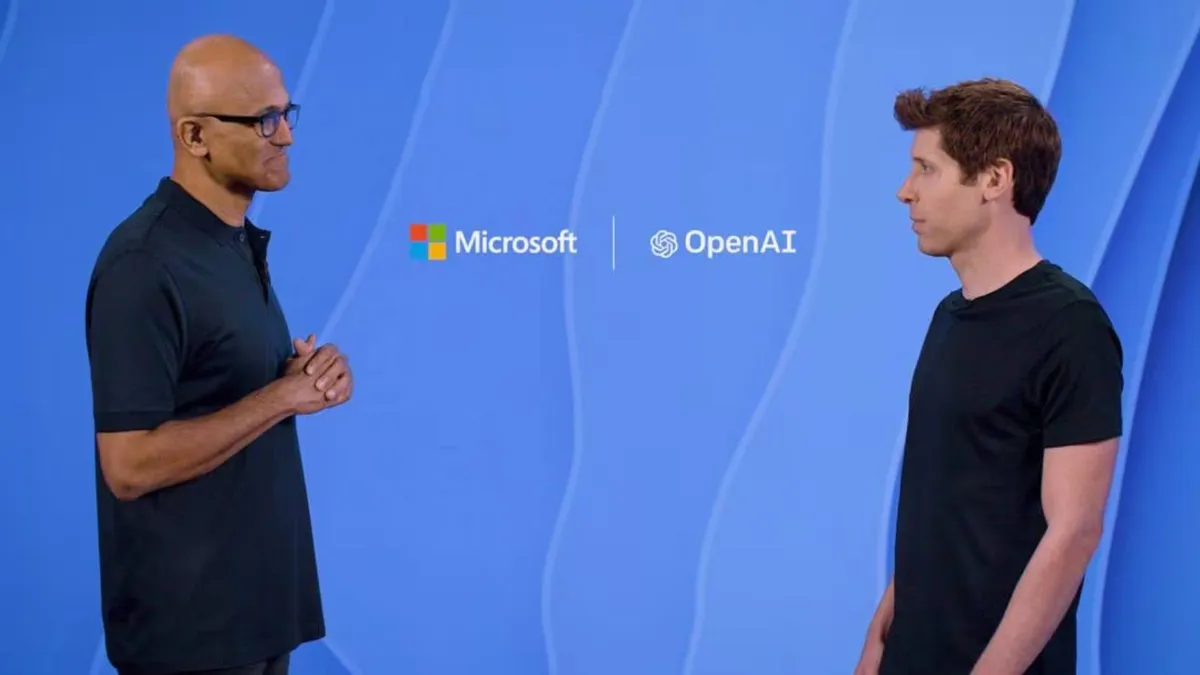
AI-adjacent stocks, including SpaceX, Oracle, and Microsoft, have all been in near free-fall decline recently, as investors seem to bet that there's gross over-extension going on. Meta is also reportedly spinning up a cloud company to try and offload excess compute it had previously invested in AI specifically, despite not having any actual demand.
"The only reason Big Tech is investing in this is that they've run out of hypergrowth ideas," Zitron said, on the general AI industry. "They don't have a next iPhone, they don't have a new Google Search. They've put over a trillion, with trillions more to come, into a kind of dead-end industry. When that ends, they'll have to admit that they don't have anything else."
"In the future, I see [AI] as a boring hardware-based business, kind of the Oracle licensing hardware model. I think this is a $10 to $30 billion TAM [total addressable market] industry, pretending to be a $1 trillion industry."
"Everyone is just kind of pretending. It's the kayfabe of a tech industry that really has run out of ideas."

Join us on Reddit at r/WindowsCentral to share your insights and discuss our latest news, reviews, and more.

