


OpenAI is on the hook for hundreds of billions of dollars, but profitability today seems like a total fantasy. How can it survive? More investment, of course.
Following reports that various companies, from Microsoft to Amazon and Softbank, are all looking to help prop up the struggling ChatGPT maker, NVIDIA CEO Jensen Huang recently fielded questions about its own firm's involvement.
OpenAI is facing huge pressure from Google Gemini, whose resurgent models have beaten OpenAI not only in general benchmarking, but also efficiency. Google Gemini exists within a company that controls the entire stack, from server tech to models, to research, and then endpoints. OpenAI relies on inefficient and complex partnerships with third-party companies, such as NVIDIA and Microsoft, in order to operate.
Many of these deals don't exactly favor OpenAI particularly well, sealed in the company's early years. OpenAI has also been struggling to get users to actually pay for its services. Despite having hundreds of millions of monthly active users on ChatGPT and its other products, the vast majority of those users are completely unmonetizable.
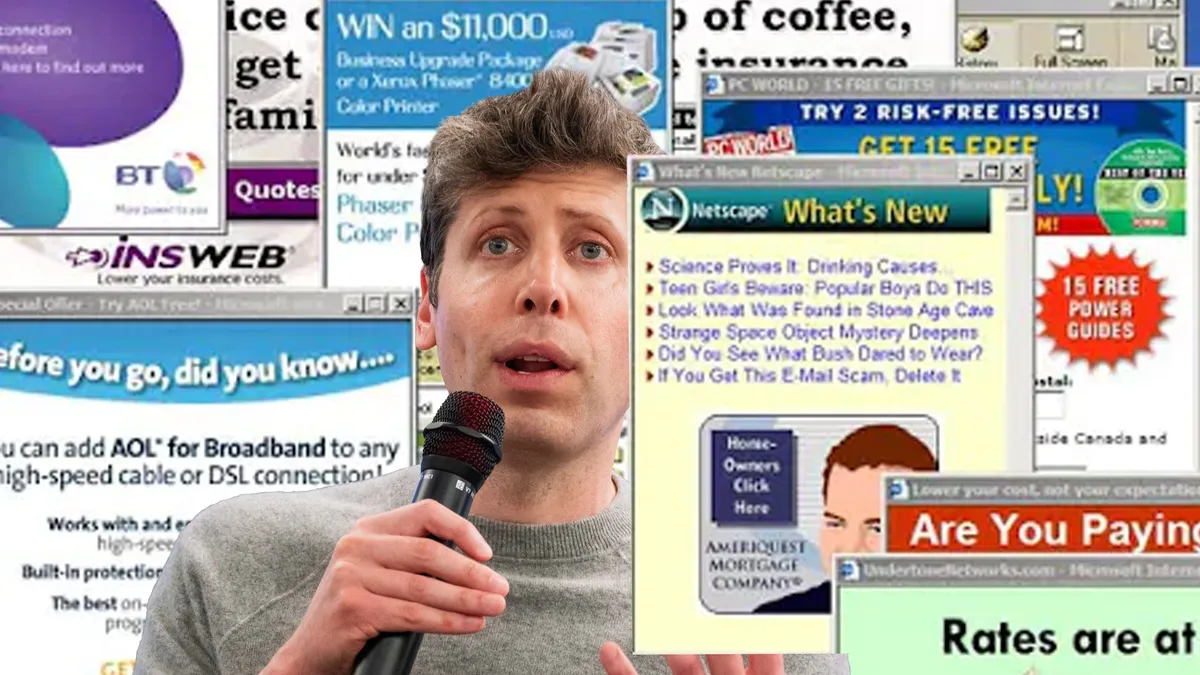
OpenAI has been flirting with including ads and product recommendations to build revenue, but doing so risks exacerbating ChatGPT's exodus to Google Gemini and other competing products.
Speaking with CNBC, NVIDIA CEO Jensen Huang said that reports that his firm was "unhappy" with OpenAI were "nonsense."
Jensen Huang was responding to reports that the chip giant and the world's most valuable company was exploring a $100 billion investment in OpenAI. The reports began circling last fall, although the investment never materialized. Why? NVIDIA was reportedly unhappy with OpenAI's business model, which, on paper, doesn't seem like a sure-fire thing to the untrained eye. NVIDIA apparently disagrees.
"We're going to make a huge investment in OpenAI," Huang said. "I believe in OpenAI, the work they do is incredible. They are one of the most consequential companies of our time, and I really love working with Sam."
Huang said that Sam Altman is still working on OpenAI's latest investment round, with some reports suggesting it could come with valuations of anywhere up to $830 billion dollars — which would be record-breaking.
"We will invest a great deal of money, probably the largest investment we've ever made," Huang said, but denied reports that it would be anywhere near the previously-rumored $100 billion.
OpenAI's future hangs in the balance

The entire circus around artificial intelligence doesn't look to be ending any time soon. Despite having no apparent path to profitability, insiders at companies like Microsoft, NVIDIA, Amazon, Softbank, and various others are still lining up to burn cash on the chatbot maker.
On the face of it, OpenAI could only realistically achieve serious returns for investors by replacing human workers at a scale unlike anything we've ever seen in history. The idea that OpenAI can possibly deliver on some of these sky-high valuations doesn't seem feasible without pandemic-scale automation being the real play here. If all ChatGPT ends up boiling down to is a "better search engine," that hardly seems like enough to justify the frenzy revolving around it.
None of Sam Altman's loftier promises have come true. OpenAI has yet to deliver any real, tangible benefits for society at scale, beyond novelties and modest productivity gains in document-heavy industries. Given how much large language models actively cost to run, it might simply end up being not be worth the effort.
Investors handed Microsoft a $440 billion rout last week, after the firm failed to show that its AI investments were delivering the types of returns that would justify its infrastructural capital expenditure.
There's clearly going to be winners and losers as a result of this new computing paradigm, but increasingly it feels like these companies know something about OpenAI that the rest of us don't ...
If I had to guess based on the situation on the ground, Google is going to end up being the frontrunner, with Microsoft absorbing the charred remains of OpenAI when payments finally come due. But what do you think?


Follow Windows Central on Google News to keep our latest news, insights, and features at the top of your feeds!

