


Windows Central Verdict
World of Warcraft: Midnight is the middle act of the Worldsoul saga. Xal'atath has succeeded in her plan to subvert Azeroth's champions once again, potentially leading the planet to ruin. But hey, at least you'll have a cozy house to wait out the apocalypse in. Midnight is potentially one of the most pivotal expansions in recent WoW history, but the expansion is creaking under the weight of its sheer ambition. A variety of bugs, gameplay disruption, and polish issues hold back what is otherwise a very solid expansion.
Reasons to buy
- +
High stakes story with some impressive atmospherics and cinematics
- +
Fantastic new zones that bridge nostalgia and newness
- +
Player Housing is absolutely incredible
- +
Endgame has tons of stuff to do
Reasons to avoid
- -
Class "pruning" efforts have been a mixed bag, with some improvements and some big downgrades
- -
The new player experience is *still* terrible
- -
Story beats lack polish and iteration
- -
Outstanding bugs, issues, and legacy feature neglect are compounding over time
- -
Where's the Horde?
Why you can trust Windows Central Our expert reviewers spend hours testing and comparing products and services so you can choose the best for you. Find out more about how we test.
I should preface this by saying I have over 15,000 hours played in World of Warcraft, and have been playing largely non-stop since the U.S. launch back in 2004. I've played WoW at its best and at its worst, and never in my wildest dreams did I think back when I was a teenager that I'd still be playing it even now.
It's a testament to Blizzard and World of Warcraft's development team that the game is still as popular as it is. Nothing I say here can detract from that success story. But as a long-time player and passionate fan, Midnight has been something of an inflection point for the current regime, I feel. It's as if the update cadence is creating cascading quality issues that are coming to a head in Midnight.
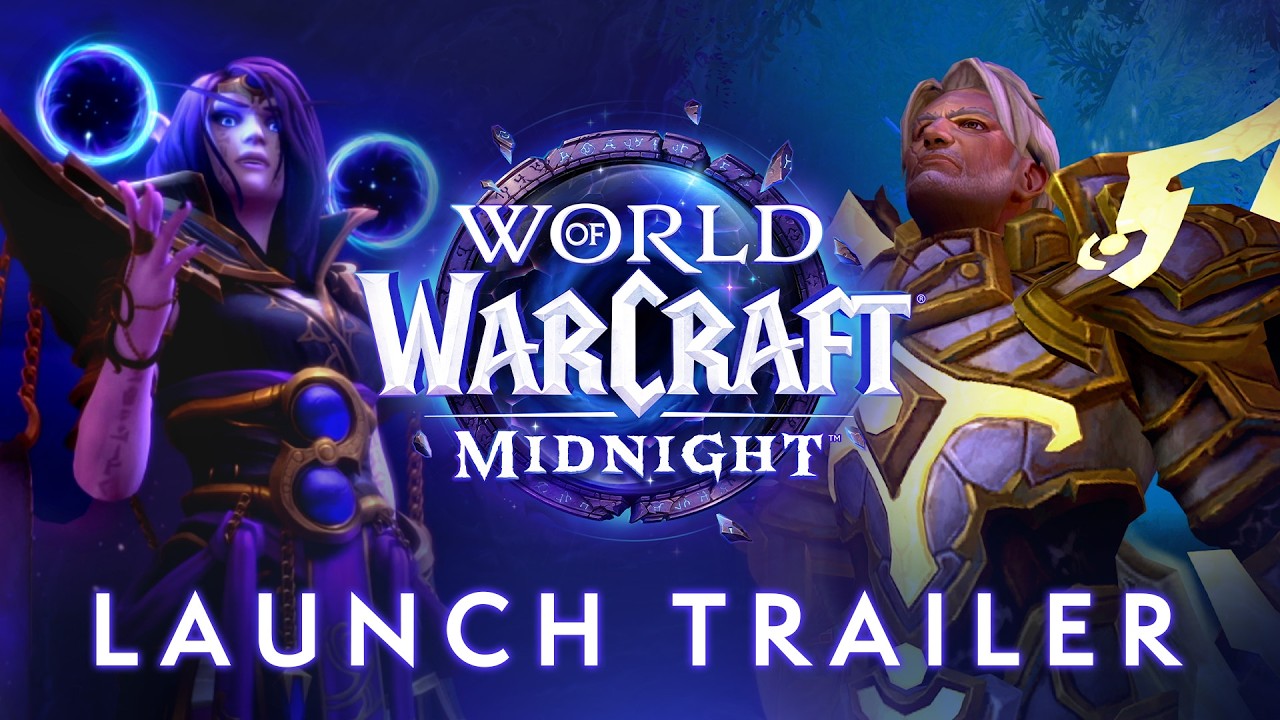
It's difficult to review an "ongoing" game in that context. What Midnight does well it does very well. Player Housing is easily the most ambitious new feature WoW has added since launch, and it's absolutely brilliant. Endgame content remains infectious and satisfying. And the new (old) zones are equal parts nostalgic and fresh.
But, Blizzard's current "ship first, questions later" patch cadence is hurting the overall experience in a way that compounds with every patch.
World of Warcraft: Midnight review — Art and Setting

World of Warcraft: Midnight is the dark middle act of a trilogy saga, dubbed the Worldsoul arc. Players are hunting Xal'atath across Azeroth and even the cosmos itself, in a high-stakes game of cat and mouse that threatens the entire planet.
Xal'atath's sights have become firmly set on the Sunwell in the northern end of the Eastern Kingdoms, which is where the bulk of the game plays out. Herein, we see zones like Zul'Aman, Silvermoon City, and Eversong Woods revamped to upgrade their two-decade-old textures and design, and the result is as stunning as we've come to expect from Blizzard's art department.
Silvermoon City is incredibly impressive, and arguably now represents the best "city" design in the entire game. Previously destroyed by the Scourge in Warcraft 3, Silvermoon City has been fully rebuilt by the magical Blood Elves, who have since reconnected with the religion of Light. The font of power, the Sunwell, is visible from miles away. All the way from Zul'Aman, you can see the font of power radiating in the distance, which creates a sense of scale that defies World of Warcraft's aging engine. What Blizzard is still able to draw down from this game's engine is nothing short of incredible.
Perhaps the only downside is that it feels like there's comparatively little here compared to previous expansions. It's hard to do direct comparisons, particularly given how densely packed Silvermoon City, Zul'Aman, and the new zone Harandar are. But previously, we explored entire continents in World of Warcraft full-price expansions, rather than a few contained zones.

It doesn't feel like we're getting as much "bang for our buck" with Midnight, particularly since Harandar was quite clearly originally intended to be shipped with the previous expansion, The War Within. Although it's true that having access to rapid flight out of the gate is probably impacting my perception of the size of Midnight to some degree ... but I don't remember feeling that way about Dragonflight, which also had flying mounts almost immediately.
There was probably a missed opportunity here to explore more of the northern end of the Eastern Kingdoms, revamping down into the Plaguelands, maybe. Given that the story actually takes us to some of the other old zones in the region, the graphical whiplash can be jarring at times. I'm cognizant of the fact that World of Warcraft: Midnight also includes Player Housing, which has been an absolutely massive undertaking for the art team, likely detracting resources from beefing up the Midnight setting.
Even if it's "fewer" zones than previous expansions, what we did get is impeccable regardless. The music in Silvermoon and Eversong is masterful in its blend of nostalgic notes and forboding undertones. The Voidstorm is also a uniquely vast and terrifying expanse, offering a glimpse at the fate that should befall Azeroth if the player champions fail.
Blizzard's side quest content continues to deliver at a strong clip, too, adding a ton of context to these new landscapes — even if the core campaign story delivery has some issues.
World of Warcraft: Midnight review — Story

Story delivery in WoW has been controversial for some years now. With Battle for Azeroth, Blizzard controversially sundered the Horde vs. Alliance dichotomy that has defined player identity for decades, casting Horde players in the role of a genocidal army led by, essentially, a dictator — for reasons that remain somewhat unclear at best, and straight up dumb at worst.
This was followed by Shadowlands, which demystified and muddled Azeroth's afterlife, and to this day, has lowered the stakes for "dying" in the game's universe. None of this exactly went down well, and the disruption to the lore has continued to ripple throughout subsequent expansions.
In a vacuum, the Worldsoul saga has had some pretty great moments, delivered in part by Blizzard's industry-leading cinematics team. It's the story beats that tie the events together that I feel could use more work and iteration, and I suspect it's Blizzard's self-imposed patch cadence preventing the overarching story writing from reaching a higher quality bar.

We're in the second year of the Worldsoul Saga, although the events leading up to this have been brewing since World of Warcraft: Legion all the way back in 2016. Xal'atath's victories in The War Within have afforded her the power to open a gateway to a void-corrupted planet known as Predacea, or the Voidstorm as it is now known to most of Azeroth.
Xal'atath's ultimate goal remains to be seen, but the epic stakes playing out here are incredibly intriguing for lore fans, particularly given that we know the final part of the trilogy is known as "The Last Titan." Who is the last Titan? Is it franchise antagonist staple Sargeras? Is Xal'atath going to make some kind of void Titan with Azeroth's worldsoul? There's a ton of intriguing and exciting questions about where it could all go, and it's certainly holding my attention.
Where Midnight struggles is often in the details. WoW has become so vast and complex, with literal hundreds of characters and plot threats that run concurrently or not-so-concurrently. There's also time travel, regions where time travels slower or faster, and everyone has a favorite character or faction that feels either well-served or neglected based on the current patch iteration.

World of Warcraft: Midnight does incredibly well when weaving in some of these smaller stories. A couple of side quests in the Voidstorm, despite being delivered wholly via text, without cutscenes or motion capture, nearly made me tear up. Blizzard continues to do some incredible work here in low-stakes side-stories, continuing a trend that has held true for quite some time now.
However, when stories require a bit more iteration and attention, Midnight doesn't always deliver, continuing another trend. Story beats that could've used a strong motion-capped cinematic often get undermined with canned in-engine animations that really look silly in 2026. Characters often behave in decidedly uncharacteristic ways, particularly if you read some of the World of Warcraft official lore books and novels.
Furthermore, I can't overlook the fact that we used to get Horde and Alliance-specific storylines in expansions past. Blizzard now ships one single storyline per expansion, which largely ignores decades of faction conflict. It harms the sense of belonging World of Warcraft used to deliver like no other game in history, particularly given the fact the main factions, particularly the Horde, really are totally absent. You're telling me that a major Horde city is being actively attacked, and not even the neighboring Forsaken are involved?
For all of Blizzard's efforts to make player expression central to the game, the fact World of Warcraft's main story only very rarely now represents the franchise's historical factions is a big problem for me. I'm cognizant of the fact I may be in the minority here, though — this is just my opinion, after all.
What is perhaps less subjective is how buggy and unpolished aspects of Midnight have felt, which, like the game's story delivery, could be due to favoring patch rapidity over polish.
World of Warcraft: Midnight review — Gameplay and Endgame

Midnight has been somewhat pivotal for World of Warcraft for a variety of reasons. We now have Player Housing, after waiting decades, and it's arguably one of the best systems of its kind in all of gaming, really. Blizzard also massively restricted UI addons, breaking features players have relied on for literal decades. It also did a big pruning pass over the game's various classes, with the goal of reducing ability bloat. The success of some of these initiatives has varied quite wildly.
Player Housing is a big plus point for me. The system is completely optional and unrelated to player power. It's also incredibly generous, allowing every single player to have two houses per account (one for Horde, one for Alliance), with a dedicated plot of land with very large interior item budgets.
The exterior restrictions on Player Housing are a bit annoying (as are the prices for furnishings), but Blizzard said it's working to improve this over time. But on the interiors, creative players have been able to build absolutely incredible works of art, using thousands of furnishing assets and almost developer-grade environmental tools to create realistic home spaces.
Boss kills, crafting, reputation, PvP, PvE — the huge variety of sources for housing items means you're never far away from building something cool. My skills here are vastly limited, but I'm working towards building a museum of sorts where I can store artifacts from all of my achievements and accomplishments in WoW.

The new Prey system in WoW is also quite interesting, and has potential to be even better if Blizzard iterates further on it. You can now take on bounty targets of sorts while out and about in the world, adding extra challenges to world quests and general outdoor gameplay. Blizzard has perhaps identified that the outside world in WoW has become far, far too easy in recent years, to the point of being utterly unengaging. Prey brings some of that challenge back, but I feel like there's more Blizzard could do here. The recent outdoor Heroic mode from Legion Remix felt like a step in this direction, but it sadly didn't materialize into retail (yet).
World of Warcraft's raids change it up a bit for Midnight. Instead of a single raid, we now have three separate raids in different environments. It's an interesting approach, and ties into the game's story — without spoiling.
Raiding and dungeoneering in WoW continues to be fun, and the new smorgasbord of soloable Delves are interesting with interesting new mechanics. But it has been a bit of a roller coaster with all the changes Blizzard has injected via class pruning and addon restrictions.
Blizzard intentionally restricted UI addons from accessing a variety of features with Midnight, arguing that the addons shouldn't feel necessary to play optimally. Blizzard moved some of the functionality from these addons into the default UI, but its implementation for some of these features has been clunky at best. For example, healers are struggling with dispel visibility right now, as the default UI doesn't give clear enough information compared to third-party addons. Some of my spells have weird interactions with the new personal resource viewer as well, offering poor differentiation between a spell coming off cooldown or actually being active as a buff. Augmentation evokers can no longer see their contributions to group damage clearly, either, using the Blizzard-made damage meter, which is egregious in my opinion.

Additionally, some of the class changes have been a mixed bag. Unholy Death Knights got an impressive rework, turning them into an undead army master, fulfilling a necromancer fantasy. Other classes have had controversial reworks. Survival hunters got a shotgun, for example, which, for some players, interferes with their racial hunter class fantasy. Could you see a classic Legolas-style elf using a shotgun? Would an undead sniper use a regular eagle for spotting, or would he use a bat or something more racial flavor-appropriate?
But therein lies some of the problems with modern WoW. As the game has grown and become bloated, different parts of the game that desperately need attention get increasingly neglected. The new player experience is still absolutely abysmal, designed to haphazardly speed newcomers through the game to the more lucrative endgame. The problem is, they won't get a good knowledge of WoW all up, let alone learn the game's setting or emotionally connect with their chosen class or faction. The confusing mess of overlapping systems and outdated quests still hinders the experience, as someone who has tried to get multiple people to play WoW since Midnight launched.
Blizzard also adds new races without addressing issues with previous ones. I want playable Ogres, High Elves, Broken Draenei, and Forest Trolls as much as the next person — but it's irritating that the previous ones are neglected as Blizzard rushes ahead with the new. The new Haranir have an obscene amount of customization compared to some of the existing races. Dracthyr added in The War Within still can't access transmog equipment, for example. It also doesn't help that Haranir also have a ton of clipping issues with certain types of armor and skins on top.
It feels odd to be complaining about getting "new" anything, but if it comes at the cost of quality, I think Blizzard could have a bit of a rethink here to some degree — across the board.
World of Warcraft: Midnight review — Conclusion

All up, I think Blizzard could stand to take a little more time iterating on the game before shipping. Whether it's bugs with the new UI features, rough edges on new additions to the game, iteration to major story beats, or general polish — to use that famous Pandaren proverb, slow down.

World of Warcraft is still incredibly fun with friends, particularly if you're an experienced player. However, the new player experience is still confusing and marred by legacy overlapping content. Blizzard probably needs to consider remaking the base experience with low-stakes evergreen content for new players before it can be truly something recommendable. If you're considering returning, new Player Housing features, tons of endgame content, and new class designs and specs make Midnight a great time to return to the game.
World of Warcraft still delivers for me, arguably more than ever in fact. That's both a good and bad thing, in some ways. The patch cadence and roadmap has been impressive, for sure. Blizzard has maintained a patch cycle that has kept players well-endowed with things to do, new goals to chase, and meaningful story beats to explore. But the speed does feel like it comes at the cost of quality in some regards.
Haranir are great, but perhaps polishing up the existing races might've been more positively received than adding yet another elf variant to the game. Some of the new class features and Apex talents are fun, but the polish issues with some specs are undeniable. Baking more features into the default UI is welcome, but if Blizzard's versions are less polished than the previous third-party options — that's a problem.
I don't think anyone would mind if Blizzard took a little more time to bake things before rushing to shipping. I play WoW a ton, and I feel like I'm barely able to do everything I want to do right now before another patch drops. Perhaps it's all designed around subscription retention data above all else, and I appreciate that the business logic has to come first in some regards.
But, Midnight proves to me that polish issues can and will compound over time if they're left unaddressed. I think the game would be in a healthier foundation for growth if a little more time and attention was being paid to every corner of the game, even if it means slowing down a bit.

Join us on Reddit at r/WindowsCentral to share your insights and discuss our latest news, reviews, and more.

