Windows Central Verdict
Pragmata is a genuinely moving look at what it means to be human. The story of Diana’s curiosity and growth sits alongside combat that carves out its own space in a genre full of games that all start to blur together. The hacking system can get messy in the thick of a big fight, but it’s different enough from everything else out there that I’m willing to forgive the moments where it loses its footing.
Reasons to buy
- +
Dashing chaotic combat
- +
Story that reminds us of what it means to be human
- +
Beautifully distinct environments
Reasons to avoid
- -
Some forgetful circumstances
- -
Combat can sometimes get in its own way
Why you can trust Windows Central Our expert reviewers spend hours testing and comparing products and services so you can choose the best for you. Find out more about how we test.
When I sat down to play Pragmata, I wasn’t sure what to expect.

Title: Pragmata
Genres: Action-adventure
Released: April 18, 2026
Developer: Capcom
Available on: PC (Steam), Xbox Series X|S, PlayStation 5
Price: $59.99
Xbox Play Anywhere: ❌
Xbox Game Pass: ❌
This was the first game of the year I went into completely blind, withholding expectations while only knowing a fragment of the story. I even ignored the demo for Pragmata that I saw everyone raving about on social media.
As you can tell, I wanted to be surprised, and surprised I was. In all the best ways.
From the combat to the story's redefining of human nature, Pragmata pulls on the heartstrings when it needs to, while balancing the cute, relatable AI Diana against the dark onset of the protagonist’s situation.
Hugh, our game’s main character, finds himself alone on an AI-controlled moon base that looks to eradicate him at every turn. With the help of Diana, he hopes to make contact with Earth and get the hell off this rock before anything too damning happens.
Pragmata Review: Story
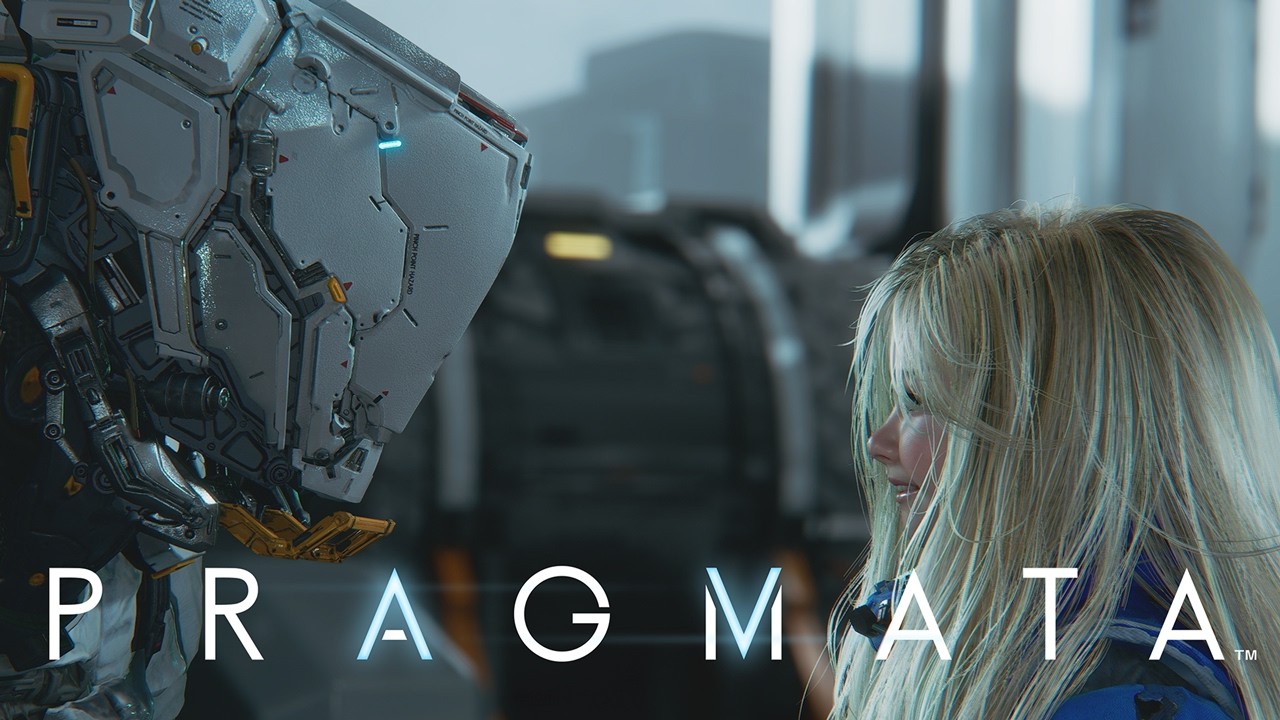
As I said previously, Hugh finds himself stranded alone on a moon base after a terrible run-in with the base’s local AI, IDUS, which has gone rogue.
Hugh and his crewmates are on a space flight to the moon to make contact with the corporation's local workforce. Contact was lost some days ago, and it’s up to him and his team to reestablish it between Earth and the base.
What seems like a routine mission is quickly turned on its head as his crewmates are killed or separated within minutes of their landing at the facility. Separated and alone, an android he later names Diana saves his life and wakes him up moments before IDUS initiates a protocol to terminate unwanted guests of the facility.
The timing of Pragmata’s release feels almost too perfect. It launched only days after the successful completion of the Artemis II moon mission, arriving at a moment when humanity is actively planning to build a permanent base on the moon in the middle of an AI boom.

A game about the terrifying consequences of AI on a lunar base could not have found a more fitting moment to land.
As the story progresses, so does your connection to the good AI, Diana. While her inherent ability to hack IDUS and fight against the onslaught of robotic enemies is terrific, it’s her insanely close nature to being a child that brings charm to the game’s story.

You’ll often share these child-like moments with her through REMs, or Earth Memories, that resemble some form of item from Earth. These include crayons, slides, and more, each offering Diana another toy to play with and another look for Hugh to treasure as he watches Diana learn more about the world around her.
The one thing I found less compelling was the juggling between this humanity exploration and Hugh’s situation. Hugh was often very protective or loving toward Diana, giving her plenty of childlike answers to her many questions.
This seemed to be at odds with the situation that Hugh found himself in, where it felt like the fact that his entire crew was gone was somewhat forgotten about. While it’s mentioned more than once after the fact, the weight of the horrific situation he finds himself in never really feels dire like you’d imagine it to be.

The counter to this is again, the story of Diana, which largely carries the game and is an absolute treasure to enjoy. Which, in turn, he makes heavy use of.
As cute as she is, Hugh utilizes Diana to combat IDUS in an attempt to contact Earth and make it home. Her caring nature doesn’t subvert her ability to offer Hugh a way out of his dire situation, and is all the more welcome as the circumstances on the lunar base play out.
He’ll also make use of the base’s unique feature, Lunafilament. This substance grants the ability to print anything literally into reality. From basic household items and weapons to entire compounds and lifeforms.
Pragmata Review: Combat and gameplay

Now it’s time to talk about the combat, because it’s where Pragmata immediately sets itself apart. The game weaves hacking into its shooter mechanics in a way that feels genuinely fresh. Not a gimmick bolted on, but a core part of how every encounter plays out.
If you’re looking for the standard point-and-click shooting mechanics of most shooters, Pragmata isn’t going to be the game for you. You’ll have to delicately or chaotically smash your face buttons in the direction of hacking completion before enemies take any meaningful damage.
Every enemy in the game must first be aimed at, in an attempt to “open” them to damage through a hacking interface that Diana grants Hugh. Initial offerings task the player with navigating through the interface to cross paths with nodes that offer more “hack time” upon completion for Hugh to dish out damage with his weapons.

These hacks can be supplemented with abilities that offer longer hacks, the ability to hack multiple enemies at once, stun-locks, and more. All of which can be bundled into one hack, or spread out as you see fit, as each ability is only activated when used during a hacking process.
All of this hacking plays out in real time, which is both fun and somewhat annoying at times. While battling enemies in smaller groups is manageable, it’s during moments of larger groups that you might find the hacking game more aggravating than fun.
Having to dodge enemy attacks, even when telegraphed, can be challenging when solving a hacking puzzle on the side of the screen. This overcomable annoyance is highlighted when taking on larger groups because you’ll also be dealing with enemies behind your character, making charge attacks or shooting from a distance.
The game is definitely challenging, and to a point where I absolutely love it, but I can’t help but shake the feeling that some of the challenge comes in the form of uncontrollable chaos that is beyond the player’s ability to control.

I use Elden Ring as an example, where chaos in that game is often caused by the player’s inability to manage it, or you find yourself throwing up because you ran into a dozen enemies without tackling them one at a time. Pragmata doesn’t offer that same tempo; instead, it throws those enemies at you without total ways to avoid damage.
Rather, you’ll find yourself needing to take damage in order to dish it out or at least make headway if you’re not equipped with the perfect build of hacking abilities for Diana.
Now, don’t get me wrong! Overall, I love the combat in Pragmata, and can’t wait to continue my playthrough to gather all the collectibles in the map (yes, you can double back to areas to unlock items you didn’t otherwise grab your first time through), but that doesn’t mean I don’t see the faults in it as well.
Like the fact that finishers are all the same across enemies and bosses. With a finisher for normal enemies and a separate one for bosses. Some added flair would have gone a long way.

Now, let’s talk weapons.
These weapons initially include a pistol that regenerates ammo over time, but quickly branch out into weapons like the Shockwave. The Shockwave is a devastating up-close shotgun that packs a punch and carried me through the game’s early heavy enemy combatants.
You’ll later obtain a railgun-like weapon, as well as a stasis deployment gun, grenade launcher, and plenty more! All of these weapons, but the pistol, need to be replenished in your base or picked up off the ground during lunar base exploration.
I won’t spoil too much, but you’ll find plenty of other weapons as well as other regenerative weapons later on. All of which can be upgraded back in your base that I eluded to earlier.
Speaking of, while out in the world, Hugh will come across multiple opponents that will deplete precious resources, such as armor regeneration and ammo for your secondary weapons. Thankfully, a small sort of sanctuary will be open to him and Diana, called The Shelter.

In the Shelter, players can upgrade their weapons with various buffs that include damage output, ammo count, or other effects native to the weapon itself. You can also increase base stats, such as your health and Diana’s hacking output.
These buffs aren’t anything spectacularly game-changing, but you can also unlock new abilities within the Shelter. Some of the early ones include a time slow upon successful enemy dodges, and the ability to get to your feet immediately after being knocked down.
These are fairly basic, but each one offers a counter to enemy annoyances or grants Hugh (hehe Hugh Grant) a boost to his power level that will continue to be challenged as he progresses through the base. The game’s basic path forward.
You’ll start near the loading dock, but as you continue, Hugh will find new ways forward into different parts of the lunar base. These include large cityscapes like New York and a “printed” Lunafilament forest.
Your Shelter will also get access to upgrades through the Camp bot, which offers services in exchange for collectible Shelter upgrades and Camp coins that you can find throughout the world in the form of quest items or item boxes.
Pragmata Review: Performance

I did my playthrough on Windows PC through Steam. My setup includes a 9800X3D, RTX 5080, and 64GB of CL30 6000Mhz DDR5 RAM. I played at 4K resolution.
Cranking everything to the max besides the normal PC player annoyances of Bloom and other effects we all seem to love to hate together, I was averaging around 55 FPS with DLSS set to Quality. Making use of 4X framegen, I was able to attain a steady 120+ FPS without any noticeable latency issues. These metrics include the use of Path Tracing as well.
What I did notice were some weird stutter or FPS issues with loading screens or interfaces. Occasionally, I’d see drops into the sub-40s as the game loaded the next cutscene or jumped from a conversation with the Camp Shelter bot.
Again, this was while playing at max settings in 4K, where the framerate held above 120 through combat and other intense scenes. It was only during down times or transitional cutscenes with characters at the Shelter that I’d see these weird drops. Disabling Path Tracing, at least for me, seemed to completely alleviate this issue, which leads me to believe something with this setting is causing a reload between certain scene transitions.
For the most part, performance was great during the moments you needed it to be, and I don’t think these drops were anything horrible, but it’s something that should be noted for the overall metrics junkies like me.
We also tested it on Xbox Series X, and found it to be a smooth experience with no crashes. The game runs at 60 FPS flawlessly in performance mode, although you lose some visual depth and sharpness in trade off. As is tradition.
Pragmata Review: Should you buy it?


Pragmata is a genuinely moving look at what it means to be human. The story of Diana’s curiosity and growth sits alongside combat that carves out its own space in a genre full of games that all start to blur together. The hacking system can get messy in the thick of a big fight, but it’s different enough from everything else out there that I’m willing to forgive the moments where it loses its footing.
Pragmata hit me the way Enslaved: Odyssey to the West and the original Dead Space did, games I look back fondly at, remembering them for everything they did right while giving me a lasting sense of happiness. And I’m already planning to go back through it for a full 100% run, which tells you everything.
That drive to find everything is something most modern games fail to incite in me. Pragmata’s classic linear design keeps it from ever feeling like a chore. You’re never staring down an open world checklist or cracking open a guide just to find the last collectible. Everything feels findable and doable.
What Pragmata does, it does with real conviction, and that deserves recognition. Capcom keeps finding ways to deliver, and Pragmata is the latest proof that the studio’s standards are only getting harder to meet.
Pragmata is a genuinely moving look at what it means to be human. The story of Diana’s curiosity and growth sits alongside combat that carves out its own space in a genre full of games that all start to blur together. The hacking system can get messy in the thick of a big fight, but it’s different enough from everything else out there that I’m willing to forgive the moments where it loses its footing.