When I first tried the ROG XREAL R1 at CES 2026, I remember thinking, “Okay, AR glasses might finally be ready for actual gaming.” Not productivity demos or floating YouTube windows (though they're great for that). Not the usual “imagine the future” pitch.
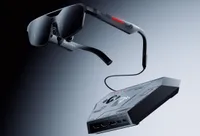
Today, ROG and XREAL are making that pitch global. Preorders for the ROG XREAL R1 gaming AR glasses are opening worldwide, and this time the message is clear that these are built to be a legitimate gaming display you can wear on your face.
Also, they're not cheap (as you're getting a control dock with it) at $849.99 at Best Buy, but hey, maybe XREAL will come out with something on the other extreme at the low end for entry level? I think that is in the realm of possibility.
We've seen a few of these come close (you could always use XREAL's for gaming), but the R1 feels different because it’s unapologetically focused on one thing: turning your handheld or PC into a massive, ultra‑fast, portable gaming theater.
They're like the XREAL One Pro AR glasses, which we previously reviewed, but tweaked to the extreme for gaming nerds. That's totally something I'm on board with.
A 171-inch display strapped to your face

The headline spec is the same one that caught my attention back in January: a 171 inch virtual screen running on a 240Hz micro‑OLED panel with 0.01ms response time. In the press release, ASUS calls it the “world’s first 240Hz micro‑OLED gaming AR glasses,” and the numbers back it up.
“240Hz micro‑OLED gaming AR glasses deliver ultra‑smooth visuals on a massive 171‑inch wearable display,” the release states.
This is the first time I’ve seen AR glasses where the refresh rate isn’t an afterthought. If you’re playing shooters, fighters, or anything fast, this matters.
ROG Ally integration is the secret weapon
At CES, the thing that surprised me most wasn’t the display. It was how tightly the R1 integrates with gaming handhelds like the ASUS ROG Ally and new Xbox Ally series. The glasses act as your giant screen, while the Ally stays active as a control panel (basically, dual-display functionality). You can tweak brightness, aspect ratio, tint, 3D mode, and more without pausing your game.
The press release highlights this again:
“The Ally’s built‑in display remains active to allow real‑time adjustments… without interrupting gameplay.”
This is the kind of detail that separates a gimmick from a gaming tool.
3DoF spatial modes make AR feel less like a tech demo
The R1 uses XREAL’s new X1 spatial computing chip to deliver native 3DoF, letting you “pin” the display in space or have it follow your head. Anchor mode was the standout for me at CES, and has been a hallmark of the higher-end XREAL glasses before. You look at the screen, and it stays exactly where you left it. Turn away, and the lenses automatically adjust transparency so you can see your surroundings.
It’s subtle, but it makes the glasses feel less like a toy and more like a real display.
The ROG Control Dock turns this into a PC battlestation

For PC players, the R1 pairs with the ROG Control Dock and ASUS DisplayWidget Center. You get keyboard‑and‑mouse control over spatial layout, GamePlus tools, and AI‑enhanced visual tweaks. It’s the kind of ecosystem play ROG loves, and it makes the R1 feel like part of a larger strategy rather than a one‑off experiment.
This also helps explain the slightly higher-than-expected price of the whole package.
Bose audio, electrochromic lenses, and the little things
The R1 also includes:
- Sound by Bose for spatial audio
- Electrochromic lenses with auto‑tinting
- Three manual tint levels
- Instant transparency mode
- 700‑nit peak brightness
- 91g weight
I'm an unabashed fan of Bose's sound profile, as they're local here in Massachusetts, so for me that's a big selling point. The rest are all similar features found in XREAL's Pro-level glasses, but to see them tuned for gaming should be a treat.
Why this launch matters

We’ve seen AR glasses before. But we haven’t seen AR glasses built for gamers first. The R1 feels like the first attempt at a category that could actually stick: wearable gaming displays.
Not VR or mixed reality. Not productivity overlays.
Just a giant, fast, portable screen that works with the devices you already own (while ASUS focuses on its own handhelds and gaming PCs, it works with anything, including Steam Deck, so I'll be excited to try it out on my Lenovo Legion Go 2, which is my go-to these days).
Will this work? I dunno. The experience will be A+, but I'm still skeptical about glasses going mainstream, especially at the $849 price. That said, going for the "wow" factor to draw attention to this genre, then offering lower-priced versions later, could be a winning strategy. I guess we'll find out!
What do you think, gaming AR glasses, yay/nay/depends on the price?
Preorders and what’s next
Preorders open:
- May 15 via Best Buy
- May 17 via XREAL’s official store
We’ll have a review unit soon, and I’m genuinely curious to see how the R1 performs outside the CES bubble. Specs are one thing. Real‑world gaming is another.
If the R1 can deliver the same experience I had in Las Vegas (but consistently, comfortably, and across multiple devices) this might be the first pair of AR glasses I’d actually recommend to gamers, assuming the price doesn't hurt you.
And that’s a sentence I didn’t expect to write in 2026.

Join us on Reddit at r/WindowsCentral to share your insights and discuss our latest news, reviews, and more.