


Things aren't looking up for Microsoft's AI aspirations right now, with reports that OpenAI has declared "code red."
It's no secret that Microsoft and other major tech companies are vying for a top spot in the artificial intelligence race. Utilizing a range of technologies from large language models (LLMs) and image-creating diffusion models, Microsoft partnered early with OpenAI to commercialize the technology. Microsoft baked ChatGPT, OpenAI's artificial intelligence chat bots, directly into Windows itself via a product called Copilot. DALLE image generation models also appear in Copilot and Bing, and a variety of Microsoft's Azure enterprise products also come with OpenAI technologies.
Microsoft was an early investor in OpenAI, giving it a head start in the AI race. Microsoft tripped over itself producing AI products in attempts to maintain this lead, cramming Copilot into everything from Notepad to Microsoft Paint — the results thus far have been incredibly mixed (to be generous).
Windows' AI "Recall" feature was called a privacy disaster when it was announced, owing to the fact it records everything from your screen so it can "remember" things for you. Other features like Click-To-Do and Copilot itself have also failed to light the world on fire, even as ChatGPT became a household name boasting 500 million monthly active users. Microsoft's Windows chief got trolled on social media to high heaven by declaring Windows will evolve to bake in more AI, as users reject the costly tech.
Microsoft's AI coding features in Visual Studio and the like are generally regarded as useful, however, and Copilot is often a more affordable way to access some of OpenAI's more advanced models.
Even if Microsoft's own AI features don't land, at least it can provide the cloud back end for the world's premier AI tools in ChatGPT, right? Well, even that potential is starting to look a little shaky right now.
The last couple of weeks have seen Google Gemini surge ahead. The latest Google models, namely Gemini 3, have OpenAI's ChatGPT-5 beaten in many performance tests. ChatGPT and by extension, the ChatGPT-powered Microsoft Copilot on the backfoot. Google's new Nano Banana Pro image generation tools are also running rings around DALLE and other competitors too. OpenAI is reportedly in panic mode.

Reported early this morning by The Information and corroborated by WSJ and Business Insider, OpenAI CEO Sam Altman has reportedly shelved plans to bake ads into ChatGPT to focus on beating Google Gemini.
Altman shared a memo with staff reportedly, warning that Google Gemini represented a serious existential threat to the entire company. To that end, OpenAI has cancelled planned marketing campaigns, ad experiments, agentic features, and other monetization layers to focus on improving its models. Altman reportedly said that growth could slow to the "single digits" through 2026, as it doubles down on investing in leapfrogging a resurgent Google.
Just last week, HSBC and others offered a bleak outlook on OpenAI's business model, as it bleeds out cash like a wounded animal, with even optimistic analyses suggest it will need hundreds of billions to stay afloat.
OpenAI had been setting aside cash specifically to grow its monetization layers, which is arguably desperately needs if it plans to service the $1.4 trillion (with a T) in compute commitments it has made to companies like Oracle and Softbank over the next decade.
With Google Gemini rapidly overtaking ChatGPT in capabilities, both on the image gen and text gen fronts, Microsoft's half-hearted approach is starting to look strangely similar.
Analysis: I hate to bring up Windows Phone again ... but ...
Google's stock price took a hit in the early days of the AI race as many investors betted on Microsoft and its partnership with OpenAI to lead the charge. However, things seem to be rapidly changing on that front.
Google's AI tools baked into its products are, dare I say it, actually occasionally useful. Gemini's ability to automatically generate calendar invites in Google Apps and transcripts from Google Meets are a daily convenience for me. Google's photo enhancement tools on its Pixel phones are second-to-none, and Nano Banana's uncanny ability to create accurate info-graphical representations of huge walls of dry text data has huge potential.
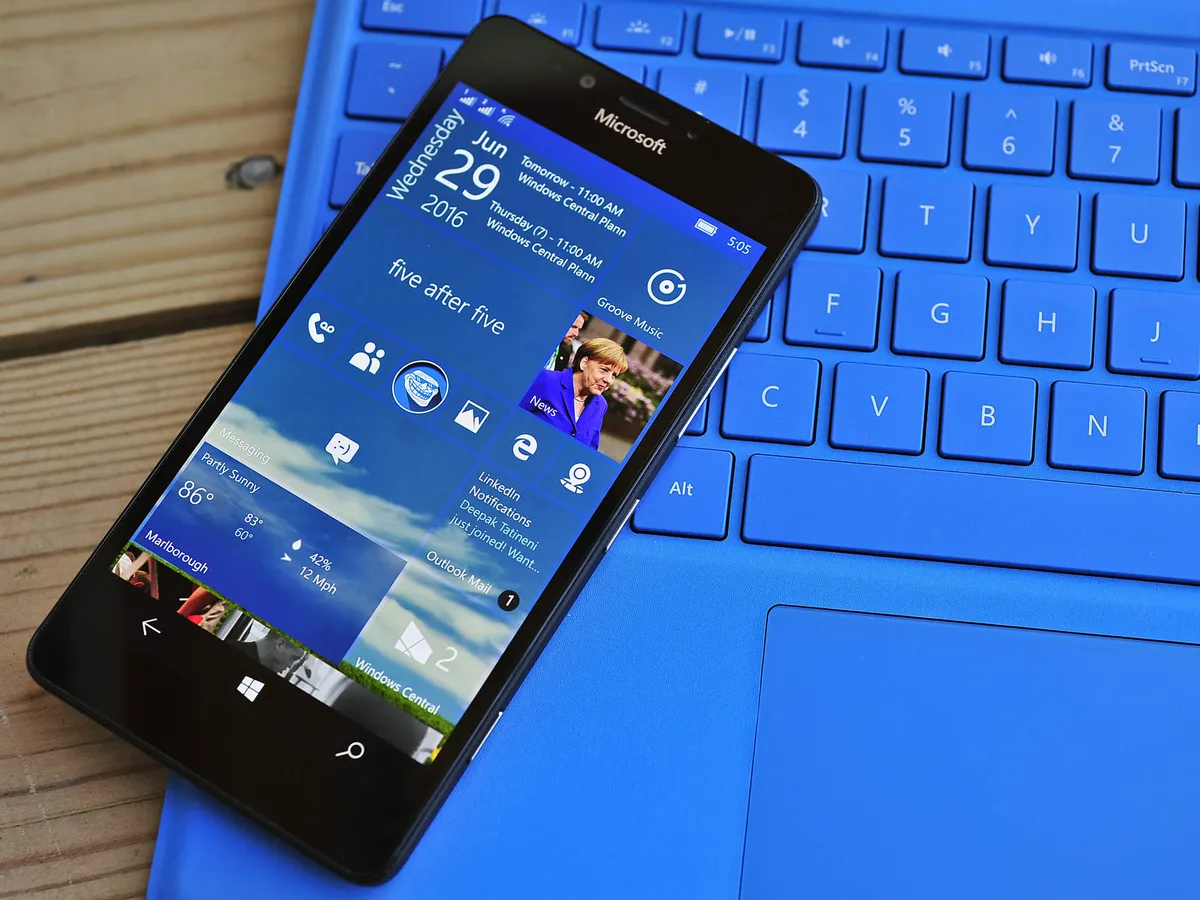
Microsoft famously seceded mobile computing to the likes of Google and Apple with the advent of the smartphone. It partnered with Nokia, later acquiring them, for its Windows 10 Mobile push. When Satya Nadella became CEO, he got cold feet when it didn't instantaneously didn't work out, writing down the whole acquisition.
Sound familiar?
The inability for Nokia and Windows to operate smoothly together meant competitors could more easily forge ahead, polishing the software stack and baking in interoperability that locked users into entire ecosystems. For whatever reason, Microsoft CEO Satya Nadella has always neglected the physical aspect of Microsoft's ecosystem, forgetting that, you know, users need an actual endpoint to interact with its products. It's hard to not draw parallels between Nokia and Microsoft and OpenAI and Microsoft — which both rely upon and seemingly work against each other.

Google's massive advantages both in consumer and enterprise AI are gradually coming into view. Its Android features are actually useful, and far more powerful than any of the consumer-grade AI features in Windows today. Generative erase and object removal tools in the Microsoft Photos app are straight up broken, with no sign of a fix on the horizon. I shouldn't have to reach for my phone to do the most basic editing, in a universe where Microsoft considers itself to be an "AI company." This is even before you consider Google's home-grown Tensor AI hardware accelerators, dramatically lowering its costs over NVIDIA-based solutions. Microsoft has its own Maia and Cobalt silicon in play here, but hasn't really disclosed how it stacks up to the competition.
Either way, herein lies the familiar issues. OpenAI and Microsoft aren't working directly together to bring features directly to users. OpenAI is barely supporting Windows, opting instead to support Mac first inexplicably. Microsoft's own AI tools are half-baked at best, irritating at worst. Microsoft has no control over the defaults on iPhone or Android, meaning its tools will never see use on mobile, and by extension, won't be able to harvest the necessary data to improve either.
RELATED: Why Microsoft won't be the ones to mainstream consumer AI
Google's seamless integrations with Search, Android, Google Apps, and most likely, eventually YouTube and others, gives it an incomprehensible advantage that Microsoft really should've seen coming. Much like Google Search back in the day, it's not hard to imagine a scenario where Gemini snowballs (owing to its superior access to user data) to a point where OpenAI and Microsoft can't ever dream of catching up. Without a constant stream of investor confidence, OpenAI will fall apart faster than a chocolate teapot, while being half as tasty.
Seriously, though, in a weird way it all comes back to the lack of a mobile hardware footprint. Microsoft CEO Satya Nadella's term will be remembered for short-termism, fickleness, and egregious ambivalence towards consumer-oriented use cases. Sometimes you can't just acquire your way to success. There needs to be a real top-down vision and customer-first vision, and that's what Microsoft is really lacking here.

Follow Windows Central on Google News to keep our latest news, insights, and features at the top of your feeds!

