


In case you missed it last week — and unless you were totally offline, I'm not sure how you could — the leading graphics hardware and AI software manufacturer NVIDIA got a thorough thrashing from the gaming community when the company announced DLSS 5, the latest iteration of its popular Super Resolution technology.
Releasing this fall, DLSS is exclusive to NVIDIA's RTX 50-series GPUs, and uses generative AI to enhance in-game scenes with photorealistic lighting. That description alone sounds okay, but when people actually began to see the before and after comparisons, it became apparent that DLSS 5's effects made in-game characters look like AI slop. Even game devs who agreed to let NVIDIA demo the tech with their games were shocked.
In response to widespread backlash against what appeared to many to be an AI filter akin to what you'll find in smartphone apps, NVIDIA CEO Jensen Huang infamously commented "they're completely wrong," which naturally stoked the flames of controversy more and brought on further criticism. Now, though, he's backpedaled, saying he gets it because "I don't love AI slop myself."
"I think their perspective makes sense and I can see where they’re coming from, because I don’t love AI slop myself," he explained to Lex Fridman in a new interview. "You know, all of the AI-generated content increasingly looks similar and they’re all beautiful and so I’m empathetic towards what they’re thinking."
A better response to consumers than saying "they're completely wrong," certainly (though the words ring a bit hollow, given how all-in NVIDIA is with AI). Huang, though, still took issue with the perception that DLSS 5 is just a filter, reiterating that it's not post-processing, doesn't change model geometry or textures, and that its implementation will be controlled by developers.
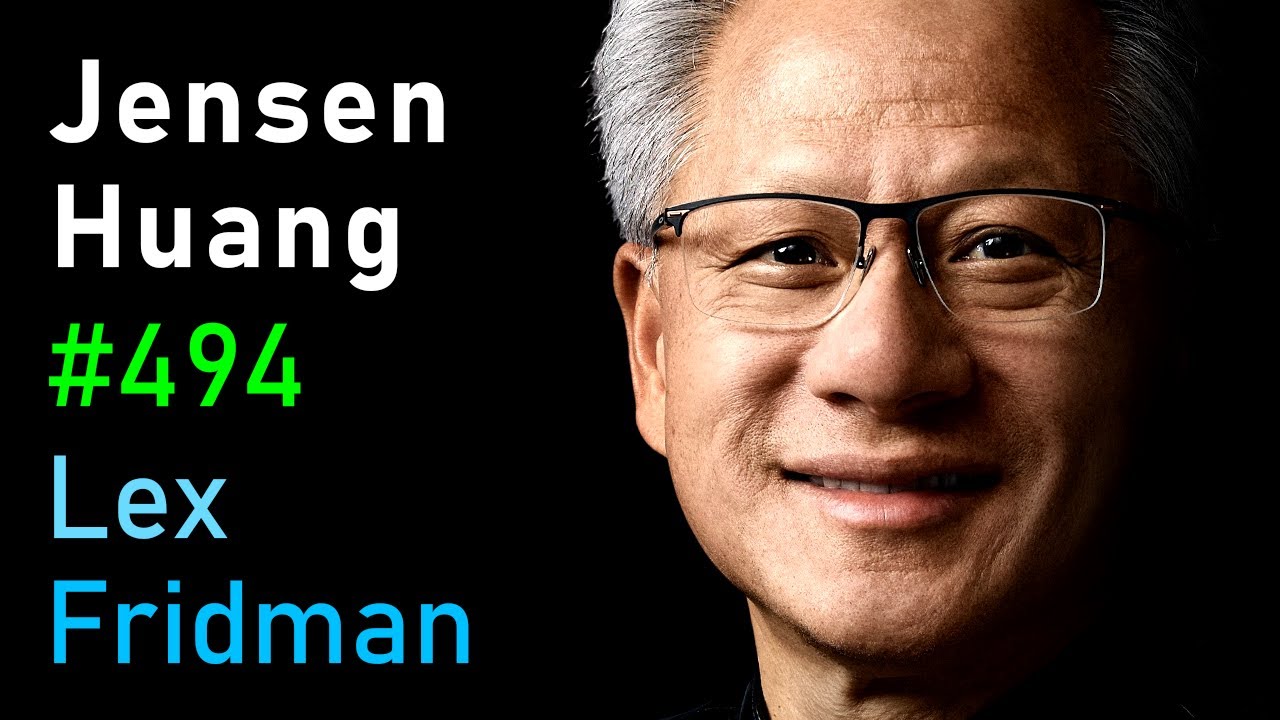
"That’s just not what DLSS 5 is trying to do. I showed several examples of it but ... the artist determined the geometry we are completely truthful to. The geometry maintains in every single frame," he asserted. "It’s conditioned by the textures, the artistry of the artist. And so every single frame, it enhances but it doesn’t change anything."
He went on to note that "the system is open" and that developers could tweak and train DLSS 5 to change in-game scenes in a particular desired way. It's not a post-processing layer, but rather a tool game devs can choose to support in their projects by integrating it as they see fit.
"I think that [people] got the impression that the games are gonna come out the way the games are shipped the way they do, and then we’re gonna post-process it. That’s not what DLSS is intended to do," Huang said. "DLSS is integrated with the artist, and so it’s about giving the artist the tool of AI, the tool of generative AI. They could decide not to use it, you know?"
Ultimately, this should clear up misconceptions that people have about DLSS 5, though I firmly believe NVIDIA might not have found itself so deeply mired in controversy if it had just explained this clearly from the get-go, and if Huang led with this instead of deciding to blow off the concerns of its customers at first.
It would have also served NVIDIA well to not show off DLSS 5 in a way that made the faces of fan-favorite characters from games like Resident Evil Requiem immediately trigger feelings of uncanny valley. But regardless, it is good to know that game developers will have full control of how it looks in their games, if they even choose to support it at all.
🗨️ How do you feel about DLSS 5?
NVIDIA's DLSS 5 technology was extremely controversial the moment it was revealed thanks to how uncanny it made characters and NPCs look in games like Resident Evil Requiem and Starfield, leading to scathing backlash. Over the last several days, though, NVIDIA has clarified several things about it — even if it's done a pretty terrible job from a PR perspective while doing so.
Now that we have more information, I'm curious: what do you think about DLSS 5? Let me know in the comments, and vote in our poll:

Join us on Reddit at r/WindowsCentral to share your insights and discuss our latest news, reviews, and more.

