I am a big fan of the Xbox Ally, and use mine almost every day. The pint-sized PC packs a powerful punch, able to run high-end titles like Forza Horizon, Cyberpunk 2077, The Witcher 3, and practically any other PC game you can throw at it. Add in the upcoming Xbox Ally X AutoSR, and you've now got a device that can very almost match the Xbox Series S in performance on TVs as well, and potentially exceed in some cases.
Much like other gaming handhelds, storage can become a problem over time. Windows 11 takes up a lot of space, and as games get bigger and bigger (Forza Horizon 6 is over 120 GB on PC), grabbing a solid Xbox Ally storage expansion solution is usually a good idea.
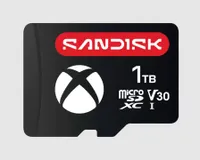
Up until recently, I was using an old Samsung microSD card in my Xbox Ally, but it's not exactly designed with gaming in mind, and it's definitely no longer the fastest option out there. It was "fine" for 2D games, but could struggle on more demanding ones. That's why I was curious to check out Sandisk's "Designed for Xbox" 1TB microSD card, to see how much of a difference it might make, if any.

There's not a lot to say about the design here. Sandisk says it's "Designed for Xbox Ally" and other gaming handhelds, but it doesn't really do anything that its non-branded, comparable-spec SD cards do. In the United States, it is priced at $199.99, matching its non-branded 1TB equivalents. Outside of the United States, though, it's absurdly far more expensive.
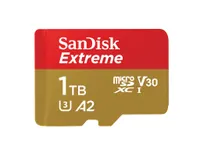
For whatever reason, it's over $50 more expensive than the non-branded equivalent version in the United Kingdom, meaning that nobody outside of the United States should ever consider buying this. Just buy the non-branded version without the "go faster" stripes.
Indeed, there's no real difference here on paper. As far as I can tell, it sports the same operating temps, drop and shock protection, X-Ray protection, and lifetime warranty guarantee as the non-branded Sandisk microSD Extreme V30 models.
The more premium Sandisk models use higher-grade NAND to support better thermal endurance. The previous ASUS ROG Ally, you might remember, had a design flaw where its fans would actually melt SD cards in their slots. The Xbox Ally range has no such flaw, thankfully, but heat is always a concern with regard to these cards, as you might expect.
Sandisk says this card has been "engineered" with gaming in mind, similar to its other gaming handheld products, tuned for decompression and thermal stability. Against my rather old Samsung microSD card, I definitely saw a definitive performance boost.

In testing, the Xbox Ally microSD card from Sandisk did quite easily clear its listed performance claims, almost doubling that of my aging Samsung microSD card. Cheaper V30 cards often fall short of their listed claims, and this card did seem to maintain its speeds even after running games in Turbo mode, under high thermal load. Although the Xbox Ally X has pretty impressive cooling over its predecessors, operating well within the listed optimal operational temperatures of this card.
In real-world performance, though, microSD storage is always going to come up short against full NVME storage, external or otherwise.
Loading games was noticeably slower, as you might expect, but nothing too headache-inducing, particularly if you're used to old-school read/write speeds. Where the headaches arrive is actually during gameplay. In big, complex open-world titles that require a lot of data streaming, I got a lot of rubberbanding and freezes. Forza Horizon 5 struggled on this microSD card, which is hardly unexpected.

It did, however, perform great in visually impressive, slower, single-player kind of titles. Lies of P performs incredibly well on this microSD card, for example, and it'll easily crush any indie game with more simplistic visuals and the like. You just have to keep your expectations in check here, ultimately. MicroSD storage can only do so much.
Overall, it's just another solid microSD card from Sandisk. Xbox fans who want Xbox-branded everything might enjoy the visuals, but really, it's just a paint job.
MORE: Best Xbox Ally accessories (2026)
There's no real discernible benefit I can see in buying this over one of Sandisk's other comparable UHS-I A2 V30 microSD cards, which, at least in the United States, sport equivalent pricing. Outside the United States, though, there's absolutely no reason whatsoever to buy this given the discrepant pricing.