


Windows Central Verdict
I wanted to know if the simplest, entry-level NAS options could run a home media server without struggling with basic transcoding, and I'm satisfied that the DH2300 fits the bill. UGREEN doesn't expect you to have encyclopedic knowledge of networking or storage formats, and it even works with years-old mechanical drives if you don't want to commit to multi-terabyte server equivalents. Setting up containers in the essential "Docker" app requires a few extra tweaks, but I'm confident anyone can figure it out with the DH4300 Plus app package.
Reasons to buy
- +
Affordable and capable, runs home media servers
- +
Works with standard drives
- +
Easy to set up and use
Reasons to avoid
- -
Apps like Jellyfin and Plex need Docker, which is hidden by default
- -
Fixed 4GB RAM
- -
No M.2 NVMe support
Why you can trust Windows Central Our expert reviewers spend hours testing and comparing products and services so you can choose the best for you. Find out more about how we test.
I'm not a NAS guy, well, I certainly wouldn't have ever considered myself one until today. I'd think, "Home servers with hundreds of terabytes of storage? What on earth could people possibly be storing?", but now I'm starting to understand after testing this entry-level UGREEN option — turns out you don't need to go all-out in some effort to rival enterprise-grade server farms.
The crux of my quaint little NAS adventure wasn't even unique, by any means. In fact, if you're even remotely interested in the category, you've probably seen the question asked a million times: Can I ditch streaming services and just digitize all of my media without burning even more money away? Yes, you can, and I did it as a novice with no notions of how you're "supposed" to use a NAS.
Yes, you are encouraged to use RAID-optimized storage drives that are explicitly designed for this situation, but I decided to dive into this hobby about a week before Christmas — no chance of ordering multi-terabyte mechanical drives in this festive chaos. So, why not throw in any old drive I have lying around and see if it works for this UGREEN NASync DH2300 review? Worth a shot.

I've been hopelessly attached to PCs, laptops, mobile devices, and a disorganized pile of external storage for years. While this is my first hands-on experience with a NAS, I'm no stranger to networking and local backups.
Where can you buy the NASync DH2300?

UGREEN's broad range of cables, chargers, and other tech accessories is often available from local US retailers, but its NAS options are slightly more limited.
Price (MSRP): $209.99 at Amazon.com
Connectivity: 1Gb Ethernet, 2x USB-A, 1x USB-C 3.2 Gen 1, HDMI 2.1, NFC
Processor: Rockchip RK3576
Memory: 4GB LPDDR4X
Max capacity: 60TB (2x 30TB)
Array: JBOD, Basic, RAID 0, RAID 1
Dimensions: 15.1 x 9.8 x 21.3 cm
Weight: 979g (2.15 lbs)
Easiest of all, you can pick up the NASync DH2300 from Amazon.com for $209.99 at its MSRP, though it has recently dropped as low as $167.99 in sales.
Alternatively, you can grab the DH2300 from Newegg below MSRP on occasion, and even Walmart lists this UGREEN NAS with first-party shipping.
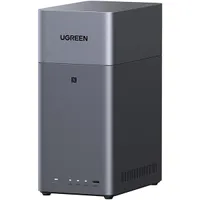
You get a DC 12V/6A power adapter and a Cat7 Ethernet cable in the box, along with screws and a screwdriver to fit 3.5" or 2.5" SATA drives into its drive bays. It's a diskless system, so you'll need to provide your own storage, using UGREEN's compatibility list for official (but optional) guidance.
Is the NASync DH2300 a good NAS?


To say my NAS opinions are limited would be like saying your local beach is the shallow end of the ocean: I've never needed to compare individual enclosures like this. There's a proverbial iceberg of considerations that experienced enthusiasts would explain to me if I asked, but I wanted to approach this from a beginner's perspective. In that scope, the NASync DH2300 has been great.
I threw in an old WD Blue 3.5-inch mechanical drive, and it worked just fine despite never being designed for a NAS.
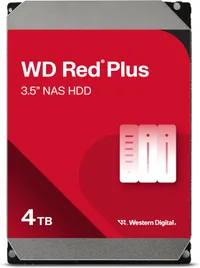
Now, I know UGREEN recommends drives designed for home servers, like WD Red Plus, Seagate IronWolf, and Toshiba N300, but they can be an expensive commitment if you're on the fence about a NAS. I've built more custom desktop PCs than I can count, and moving exclusively to M.2 NVMe SSDs has left me with a pile of discarded but functional 2.5 and 3.5-inch drives.

Sure enough, proper NAS drives will almost certainly offer better dollar-per-terabyte value at the extreme high end, but I threw in an old WD Blue 3.5-inch mechanical drive, and it worked just fine despite never being designed for a NAS. It's not that I'm encouraging this practice, but it does work with regular drives. That might be obvious to some, but it was enlightening to me.
You can set up the DH2300 in a variety of ways, including with NFC-compatible smartphones with UGREEN's mobile app. Personally, I usually stick with browser-based dashboards for anything on my network, and that's the avenue I took by navigating to find.ugnas.com, which was laughably easy. After that, I could create folders on the NAS and drag any files I wanted directly into the browser tab.
Does the NASync DH2300 have any issues?

The NASync DH2300 only has one glaring software issue and one hardware gripe. First up, my driving goal behind this NAS experiment was to see if one of the cheapest examples could run a Jellyfin (an alternative to Plex) home media server and stream DVD, Blu-ray, and UHD backups to each device in my house. To do that, I first needed an app called Docker, which was curiously absent from the "App Center."
Despite its removal, I can still install a Docker .upk package intended for the DH4300 Plus, and that works on the DH2300.
Now, I know that Docker was available for the DH2300 after seeing recommendations from NAS enthusiasts. UGREEN had apparently delisted it from its App Center because the 4GB of RAM in this unit isn't technically enough for its minimum requirements. Despite its removal, I can still install a Docker .upk package intended for the DH4300 Plus, and that works on the DH2300.
Otherwise, the plastic drive-bay caddies are relatively basic. They aren't toolless, so you'll need to use the screws included in the box to secure your drives. This isn't a problem; more of a reflection on its price range and the omission of luxuries, since I know that UGREEN's more expensive DXP2800 keeps it toolless. Removing Docker, however, gives it less of that "idiot proof" edge.
Should you buy the UGREEN NASync DH2300?

✅ You should buy it if..
- You want to run a basic home media server
- You're overpaying for cloud backup services
- You're interested in NAS but don't want to overspend
❌ You should not buy it if..
- You need high-end hardware transcoding
- You want to transcode media to multiple devices
- You can't run an Ethernet cable to your network
The NASync DH2300 can stream backups of my Blu-rays, stored as .mp4 files with H.264 (AVC) video and Dolby Digital (AC3) audio, without transcoding via Jellyfin to nearly every device in my house — and for that, it's perfect. Once I enable more intense streaming, CPU usage spikes, and brief hardware encoding experiments with RKMPP and VA-API both failed, so I stick with direct streams.
Again, this is a whole new world to me, and I'm perfectly happy with streaming one file at a time, finally able to watch the movies and TV shows in our physical library that have always been missing from streaming services. It's disappointing that UGREEN removed Docker from its App Center, leaving users to figure out the DH4300 Plus workaround, but it hasn't soured my opinion on the DH2300.

It's an entry-level NAS, but capable enough to run 60 TB of storage with all the apps I need for my quiet home. If you're a novice like me, start with UGREEN.

Follow Windows Central on Google News to keep our latest news, insights, and features at the top of your feeds!

