To some, the most important feature of a Windows laptop is its webcam quality, since so many of us are taking online classes and video calls in hybrid work and education settings. While there aren't necessarily any models specifically optimized for professional meetings, there are standouts that naturally offer the clearest audio and video in conferences thanks to their choice of components.
As you might expect, our team at Windows Central has tested its fair share of laptops — myself included — and checking the quality of built-in webcams and any improved microphone arrays is always a priority for us. Integrated cameras still carry a stigma, but they're far better than they used to be, and these PCs proved it in our reviews.
The best laptop for video conferencing
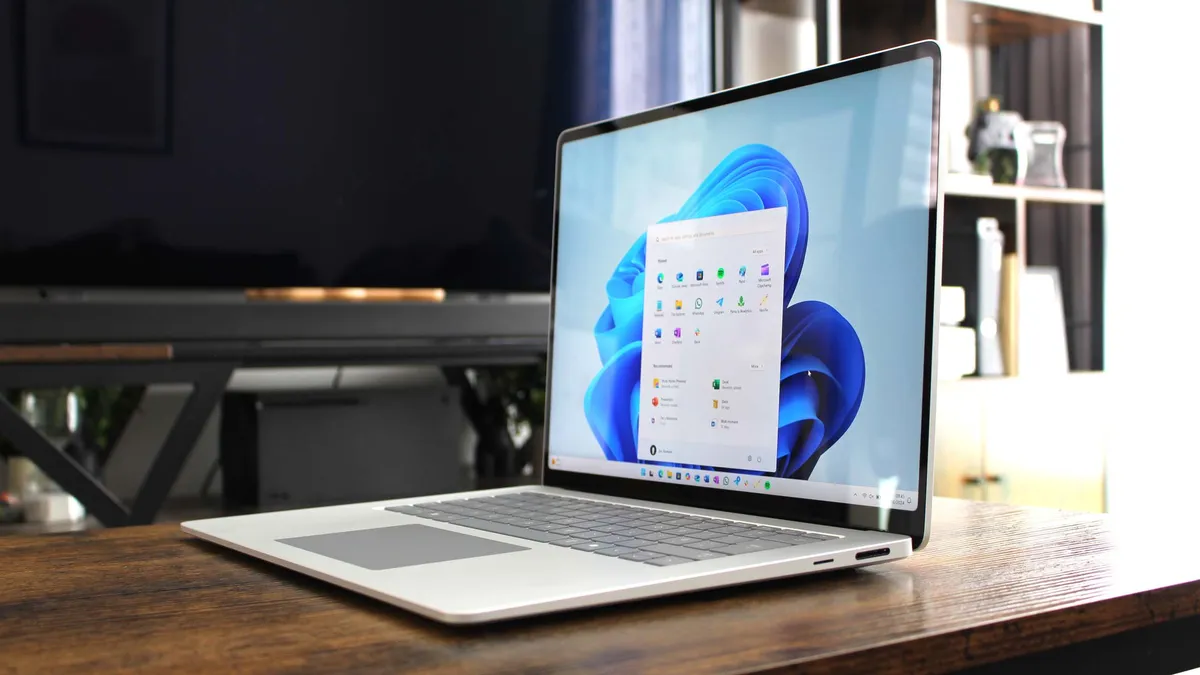

The Surface Laptop 7 is an easy top pick, even if you weren't focusing on video conferencing features. It was one of the first Copilot+ PCs to be announced with Qualcomm's Snapdragon X Systems-on-Chip (SoC), and it remains our top pick despite Microsoft subsequently launching the Surface Laptop for Business 8th Edition.
Senior Editor Zac Bowden reviewed the Surface Laptop 7 and concluded that it's the best clamshell laptop on the market thanks to its long battery life and svelte design. On the topic of hardware needed for video calls, Bowden said:
"Surface has always had a great webcam and microphone, and the same holds true here on the new Surface Laptop 7. Starting with the webcam, we've got a 1080p shooter that looks crisp and clear, with no visible artifacts or noise in normal lighting conditions. [...] The microphones are just as good, utilizing Microsoft's "Studio Mics" in a dual-setup configuration which are clear and very audible, even at a distance. You should be able to attend meetings with these microphones with no problems at all."
- Read our full Microsoft Surface Laptop 7 review
The most versatile PC for video conferencing

The Surface Pro 11 was revealed alongside the Surface Laptop 7 as one of the first Copilot+ PCs. Unlike the Laptop 7, the Pro 11 is a 2-in-1 device with a removable keyboard/touchpad and a built-in stand. It's a sleek 13-inch tablet available with an OLED touch display with Dolby Vision support, inking capabilities, 120Hz refresh rate, and up to 900 nits of brightness with HDR enabled.
Windows Central Editor-in-Chief Daniel Rubino gave out a Best Award in his Surface Pro 11 review, remarking on the subject of video and audio hardware:
"Microsoft pulls no punches with the front-facing camera on the Surface Pro 11 as it packs one of the largest, by megapixel count, cameras I have seen on any laptop at 12.2MP (4:3, 4032x3024). [...] The colors were punchy and warm, and the sharpness was exquisite."
It would be nice to have a privacy shutter and some human presence detection (HPD), but at least there's an IR sensor for biometric security.
- Read our full Microsoft Surface Pro 11 review

Best premium laptop for video conferencing


The OmniBook Ultra 14 is ultra-modern, sporting the latest Snapdragon X2 Elite processor from Qualcomm that helps deliver all-day battery life in a fantastically slim Windows laptop. It's one of the best-looking examples we've seen in a while, and at 14 inches, it's portable while still offering an OLED touchscreen with deep contrast.
It's an all-around winner, with one of its only downsides relating to its glossy display. If you're away from harsh light interference for most of your day, it shouldn't matter, and the rest of its features more than make up for it. Zac Bowden gave it a perfect score and covered its built-in camera:
"(The) Webcam is also pretty good. It's a 5MP sensor that looks fine in daylight, but gets quite noisy in low-light environments. It is flanked by IR sensors, which support Windows Hello face unlock [...] It also features wake on approach and screen dimming when you look away."
- Read our full HP OmniBook Ultra 14 review
What to look for when buying a laptop
Finding the right laptop to handle daily or even weekly Zoom meetings is extra important these days, as many people continue working from home. It doesn't matter if you're using Zoom or any of the other video conferencing apps — like Microsoft Teams and Google Meet — as your laptop needs the same quality webcam, speakers, microphones, and display.
You also need to consider the laptop's performance abilities, portability, battery life, and overall design. For example, not everyone needs to pay for the extra engineering that goes into a convertible device, while others will gladly hand over the money in order to secure 360-degree hinges and inking abilities.
With all that in mind, our top picks are all Copilot+ PCs with Qualcomm Snapdragon X/X2 chips. Surface devices have traditionally offered quality cameras and speakers, and that's no different with the Surface Laptop 7 and Surface Pro 11. Elsewhere, HP offers a high-end clamshell alternative in its OmniBook Ultra 14, if you're craving more premium performance.
FAQs
Can I use my phone as a camera on Windows 11?
Yes, many Android phones can be used as a webcam with Windows 11 (and Windows 10). All you need is a USB cable to connect the phone to your PC. Android, by default, chooses the stock connection option, which charges the phone's battery. However, you can change this behavior in your phone's settings, making it act as a camera instead.
Ben put together a great guide on how to use your Android phone as a webcam on Windows 11 that will take you step-by-step through the setup process. This is a great hack, should you find yourself stuck without a working or acceptable webcam when a video meeting invite pops up.
What laptop specs do I need for video conferencing?
The beauty of video conferencing software is that it doesn't take a powerhouse PC to run. For example, Zoom only requires 4GB of RAM and a dual-core CPU with a 2GHz frequency; these specs are surpassed in the vast majority of even semi-modern laptops.
Of course, buying a faster laptop means there's far less chance you'll experience issues while video conferencing. Zoom actually recommends having at least 16GB of RAM for smooth operation, and I recommend the same if you're frequently involved in video meetings.
All of the laptops I've included in this list can and will deliver a smooth video conferencing experience — from performance to battery life to camera quality — so no worries on that front.
What Wi-Fi speed is required for video conferencing?
The laptops I've featured here all have modern wireless networking abilities. Wi-Fi 7 is the latest standard, but Wi-Fi 6E and Wi-Fi 6 are still available in plenty of laptops and won't pose a problem for video conferencing.
Even older Wi-Fi standards will work fine as long as your ISP plan is up to snuff. On that note, Zoom recommends having at least a 3.8Mbps download speed and 3.0Mbps upload speed if you want 1080p quality in a group setting.
The laptops will all easily handle the wireless traffic from video conferencing, so as long as your internet plan is good enough (and there's a quality router to direct traffic), you shouldn't have any issues.
Why are laptop prices so high in 2026?
Laptop (and practically any other devices that use memory) prices have risen throughout 2026 due to an ongoing RAM shortage. The cause? AI datacenters that require copious amounts of memory and their associated AI firms that are securing DRAM orders for months and years to come.
I wish I could say that there was an end in sight to the rising costs, but, if anything, the situation could worsen as new AI supercomputers demanding tons of NAND storage are about to be built into datacenters. That will place SSDs on the wish list alongside RAM, further driving up the cost of consumer PCs.
How we test laptop webcams and microphones
Every laptop that comes our way for review at Windows Central undergoes a similar bout of testing. We use a colorimeter to test the display's color accuracy and brightness, a FLIR camera to test thermal management, and a decibel meter to test fan and overall system noise.
It's then on to synthetic benchmarking software, including top tests from Geekbench, Cinebench, PCMark, 3DMark, CrossMark, CrystalDiskMark, and more. For battery life, we use a mix of real-world experience, battery report averages, and specific battery benchmarks.

Because we essentially "adopt" a laptop for regular use while it's in the review process, we can get a good idea of how well the PC delivers on its hardware promises for features like the camera and speakers. That's especially important in this instance. We use a laptop's webcam for our frequent video conferences, asking for opinions on quality. Local picture quality for stills and video is also taken into account.
If a laptop's webcam or speakers are lacking, you can be sure you'll hear it about it in our reviews.

Join us on Reddit at r/WindowsCentral to share your insights and discuss our latest news, reviews, and more.