


It's time for more Apple shenanigans, once again targeting Fortnite and other similar games.
Apple has been fighting Epic Games and other developers for years over access to its iOS platform. Apple has famously been operating iPhone and iPad development in a closed format since its inception, gouging developers with exorbitant fees and restrictions designed to give it complete control over how money flows through its borderline monopoly.
Companies like Epic games took the fight to Apple over this, and actually won repeatedly. Apple isn't backing down, though, making a mockery of legislation designed to lower costs for consumers and creators alike.
Fortnite is the biggest game in the world right now, and Apple has been fighting tooth and nail to prevent Epic from reaching customers on mobile without paying huge fees to the iPhone maker. Epic CEO Tim Sweeney took to X to describe what's going on.
"Sadly, Fortnite will not return to iOS in Japan in 2025 as promised," Sweeney lamented. "Apple was required to open up iOS to competing stores today, and instead of doing so honestly, they have launched another travesty of obstruction and lawbreaking in gross disrespect to the government and people of Japan."
"They're charging a competition-crushing 21% junk fee on third-party in-app payments, and 15% for purchases made on the web (a practice the US District Court already found to be illegal in the contempt of court proceeding that Apple lost and the 9th Circuit Court upheld)," Sweeney explained on X. "They're introducing new anticompetitive warning screens meant to mislead customers into believing their privacy and financial security are at risk when dealing with Apple competitors."
Can you imagine the gamer and regulator uproar that would ensue if Microsoft required all games from Steam and Epic Games Store to call its commerce surveillance API and report all transactions back to Microsoft?That's what Apple just announced in Japan.December 18, 2025
Tim Sweeny rightfully examines what would happen if Microsoft attempted to pull shenanigans like this with Windows. Microsoft was famously slapped down by regulators in the late 90s and early 00s for bundling Internet Explorer on Windows, "supressing" competing browsers like Google Chrome from reaching customers. Microsoft was forced by regulators to offer a browser choice when Windows launched, as some of you older readers might recall. Ironically, it led to Google ending up with a monopoly over practically the entire internet — but that's a discussion for another article.
Microsoft does levy a fee for developers accessing Xbox Series X|S consoles, but it would be insane to call Xbox a monopoly controlling access. The business model for consoles revolves entirely around that fee, as Xbox Series X|S and PlayStation 5 devices are effectively sold at cost. iPhones are definitively not sold at cost, providing Apple and its shareholders large margins on both the hardware, and the software via huge developer fees — fees which customers like you end up having to pay usually.
On Windows PC, Microsoft takes a 0% cut for apps and services going through the platform. Windows is fully open, as it should be, and developers and creatives are free to build businesses without restrictions. Even on the Microsoft Store itself, app fees are only levied if you actually use Microsoft's payment systems. For traditional core games, Microsoft takes only a 12% cut on transactions for games sold specifically through the Xbox PC app, vs. Apple's ~30% standard fees and 27% external payment link fees. The EU forced Apple to lower its fees to 13%, matching Epic Games' and Microsoft's, while opening up the platform to alternative store fronts on top.
Microsoft and Xbox customers have benefitted from Apple vs. Epic
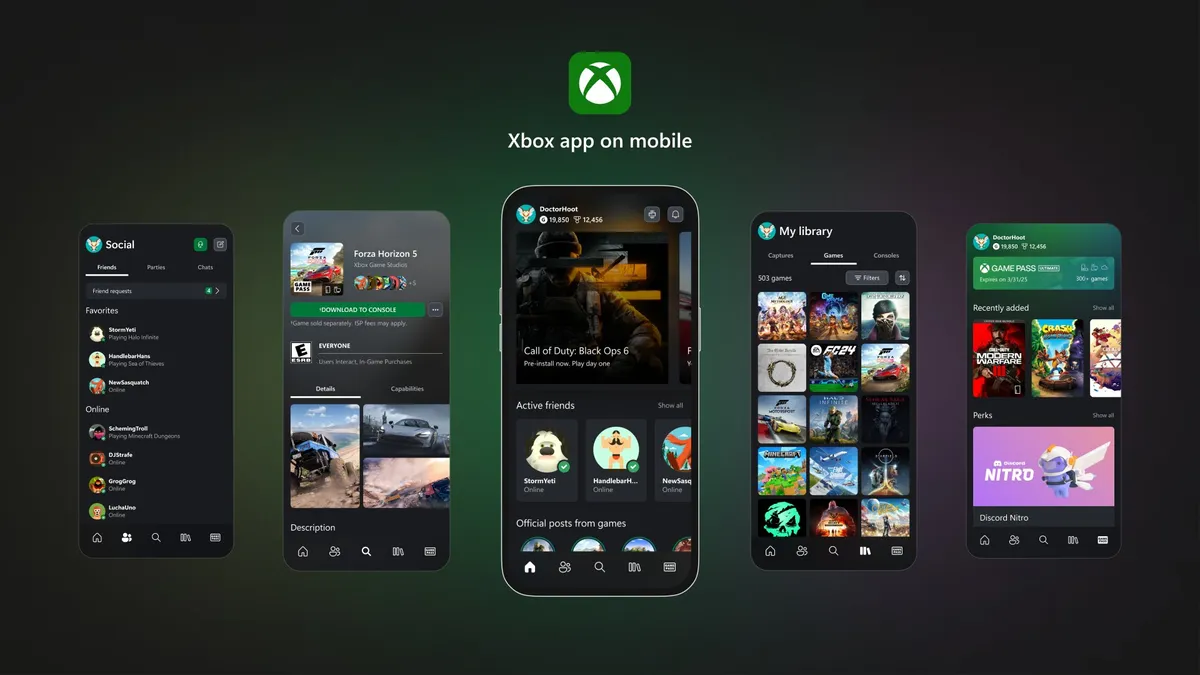
Thanks to court rulings targeting Apple and Google Play alike, Microsoft has now been able to begin selling Xbox games directly on its Xbox mobile app once again, thanks to these court rulings. That means Microsoft and its creator partners have a new vector to access customers, without having to pay arbitrary fees to Google in the process.
Mobile gaming remains the fastest growing industry segment, so for Google and Apple to have complete control over this limits creativity and has encouraged developers to opt for predatory business models (pay to win, etc.) in order to remain viable.
Microsoft and its Xbox Cloud Gaming platform has been effectively blocked on these platforms as well for native play, as Apple and Google's rules work against competing stores. Imagine if Microsoft attempted to block Steam from running on Windows all up? Customers and regulators would be (rightly) in total uproar — yet for some reason, we accept Apple and Google doing the same thing across their mobile phone duopolies. Microsoft has also cited Apple and Google's draconian rules for preventing its own mobile game store launch.
Microsoft is hardly innocent of doing things like this in the past (and even the present), but these "junk fees" and arbitrary costs end up being passed onto consumers. Microsoft obviously benefits from iOS and Android becoming fully open platforms in a universe where it has no mobile platform of its own, but customers and developers alike should also benefit from removing unnecessary added costs. Decreasing the barrier to business viability will boost creativity and innovation on top, and will serve to (hopefully) only hurt Wall Street in the process.

Follow Windows Central on Google News to keep our latest news, insights, and features at the top of your feeds!

